The Mystery of the Mothman Sightings
In November 1966, something strange loitered in the skies and woods near Point Pleasant, West Virginia. Locals reported seeing a large humanoid figure with wings and glowing red eyes, perched near the abandoned World War II-era TNT area on the outskirts of town. On November 15, the first widely reported sighting came from gravediggers in nearby Clendenin, who claimed a massive, winged shape darted among the trees above them while they worked by moonlight.
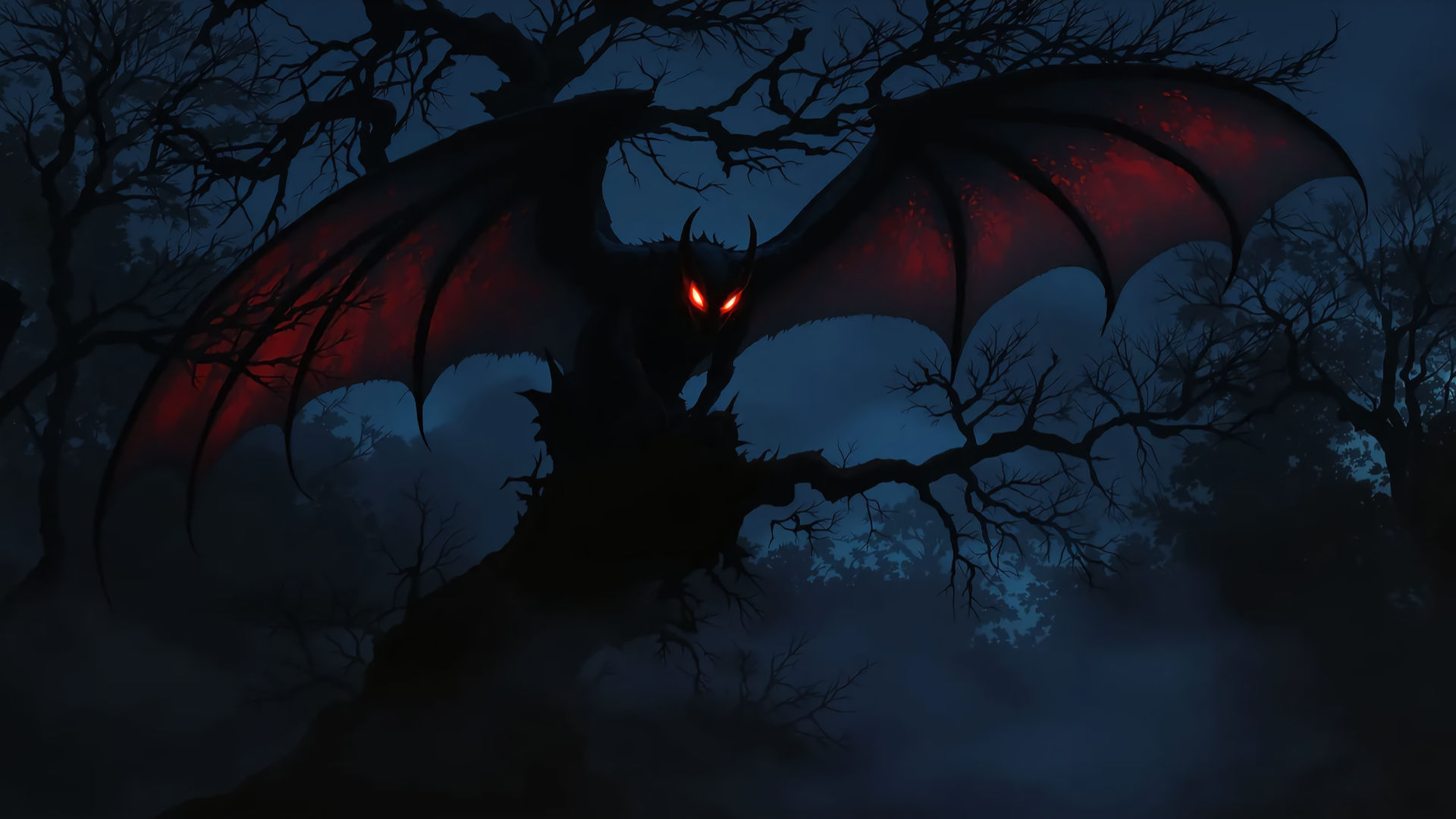
Just three days later, two young couples, Roger Scarberry and Linda Scarberry, and Steve Mallette and Mary Mallette, claimed they were chased by a creature while driving near the “TNT Area”. They described a being roughly six to seven feet tall, with wings spanning up to ten feet, and eyes glowing like red headlights. When their headlights struck it, the entity turned and swooped above their car, its wings brushing the roof as if to terrify them into flight.
These early reports ignited local suspicion, fear, and fascination. Newspapers dubbed the creature the “Mothman”, and the town’s name entered folklore. During the following months, hundreds of reports poured in, some credible, many vague, of a tall, winged figure with glowing eyes in the darkness and an unshakeable feeling of dread among witnesses.
The Rise of a Legend
From the abandoned munitions site, the sightings seemed to spread, capturing national attention by late 1966. The fact that the region had been a wartime facility added to the creepy backdrop: shell casings, tunnels, odd noises and rumours of government experiments formed the soil of the story.
As the legend grew, the creature’s appearance evolved: some described it standing quietly near their car at dusk, while others said it flew silently and swiftly overhead. One volunteer fireman reportedly said he saw “a huge bird with red eyes” above a wooded hill near Point Pleasant. The phrase “stood on the bridge” later entered the lore when the fatal collapse of the Silver Bridge in December 1967 killed 46 people; some alleged the creature was seen on or near the bridge the night before.
After the bridge collapse, the sightings abruptly declined in Point Pleasant. Many locals interpreted this as the creature’s departure, its job done. Others saw it as the end of an era in local panic. Either way, the Mothman had taken flight from the area and settled into legend.
Descriptions and Behaviour
The weirdness of the Mothman accounts rests in what people remember and how they felt. Witnesses commonly report a humanoid torso, wings growing from the back, two large red eyes that glowed like embers, and a height of six to eight feet or more. Wingspans of eight to ten feet or even more are cited in some versions.
Beyond physical descriptions, the creature’s behaviour was unnerving. It was said to follow cars at speed, perching silently on rooftops or telephone poles, and sometimes make a shrill screech. Witnesses often said they felt their lights, engines, or even radios flicker in its presence. One local family claimed their TV turned to static just before the creature appeared near their home.
No clear capture, photograph, or conclusive physical trace ever emerged. Some think the red eyes were simply the reflection of a flashlight off bird-like eyes; others point to the rusted munitions site and argue the creature was an experimental aircraft or a chemical-mutated beast. Either way, the mystery deepened through fragments, memories and fear.
The Theories: Natural, Psychological, Paranormal
Misidentified Wildlife
One of the most straightforward explanations lies in misidentification. Wildlife biologists pointed to the sandhill crane, an oversized American bird with a seven-foot wingspan and red skin around the eye, as a potential candidate. In the right moonlight, even a heron or owl might appear man-like and monstrous.
Others argued that the abandoned TNT plant had chemical leaks or unexploded ordnance that could have altered wildlife behaviour or created hallucinations. A “monster crane” might have been real, only its effects were magnified by fear and local mythology.
Mass Hysteria and Social Suggestibility
Point Pleasant was small and tight-knit. Some scholars suggest the Mothman sightings ramped up due to social contagion: once the story spread, new converts reported sightings they believed they had witnessed. Folklorist Jan Harold Brunvand observed that the story features many classic components of urban legend: fear of the unknown, communal reinforcement and appearance right before calamity.
For example, in a 2024 investigation into Chicago sightings, researchers found many reports were made from the same IP address or shared remarkably similar phrasing. This suggested not independent witnesses but a few participants influencing many reports.
Omen of Disaster
Another significant strand in the lore is the “harbinger of doom” theory. The Mothman became intertwined with the collapse of the Silver Bridge in December 1967. Newspapers and locals claimed the creature’s presence was a warning, or even the cause, of the tragedy.
Subsequently, the Mothman legend has been linked around the globe to other disasters: the 1986 Chernobyl disaster, nuclear reactor failures, natural catastrophes, and power failures. These associations enhance the mythic aura: the creature appears before calamities and disappears after.
Cryptid, Alien or Government Experiment
The most dramatic possibilities posit that the Mothman is a previously unknown species, perhaps mutated by chemicals or radiation; an alien scout monitoring humans; or a government experiment gone wrong. Some UFO researchers point to 110 reported sightings in Point Pleasant between 1966 and 1967, including entries in local police logs and national archives. Still, critics argue this number includes duplicates, retellings and hearsay.
The Evidence and the Gaps
Unlike classic cryptid cases, the Mothman legend is notable for the number of individual sightings, which clustered in a tiny geographic area over a short period. Witnesses describe the same region, often report the same red eyes or winged figure, and many fear the creature rather than celebrate it.
Yet gaps remain. No body, no wingspan measurement cast in concrete, no corresponding carcass. Investigations by the military or law enforcement remain undocumented or missing. Some supposed photographs have turned out to be animals or hoax footage. For example, science writer Benjamin Radford pointed out that in many reports, the “red eyes” could simply be the late-night flash of a flashlight reflecting off large bird eyes.
The site most linked to the sightings, the TNT Area near Point Pleasant, remains off-limits in parts and is regulated by the U.S. Army Corps of Engineers for environmental cleanup. Some say this further fuels the idea of government secrecy.
Yet, despite intense local interest, the legend remains confined to witness reports and folk memory. Over the decades, the story has grown, been rewritten, filmed, and mythologised. In minor excavations and field searches, nothing definitive has turned up.
Why the Legend Endures
The Mothman legend continues because it hits several deeper cultural chords: fear of the unknown, the power of communal storytelling, dread of disaster, and the lure of a creature just beyond explanation. The combination of a small town, an abandoned munitions facility, and a major disaster (the Silver Bridge collapse) created the perfect storm for an urban myth to take hold.
In Point Pleasant today, the creature is embraced by festivals, museums, a Mothman statue, and a steady trickle of tourists fascinated by the legend. The creature has transcended its place of origin and entered global folklore, inspiring books, documentaries, and TV shows.
In the Shadow of Wings
Whether the Mothman is a misidentified bird, a collective panic, a government experiment or something otherworldly, the sightings remain one of America’s most enduring mysteries. In the hushed nights around Point Pleasant, West Virginia, the red eyes still glow in legend, the wings still beat in imagination, and the question remains: did something real fly in the dark, or was it the dark flying in our minds? Until definitive evidence emerges, the Mothman will continue to haunt the woods, the hills and the stories of those who look up at night.
The Mothman Sightings FAQ
The Mothman is a legendary creature reportedly seen in Point Pleasant, West Virginia, during the 1960s. Witnesses describe it as a large humanoid with wings and glowing red eyes.
Sightings began in November 1966 and continued until the collapse of the Silver Bridge in December 1967, after which reports sharply declined.
No physical evidence has ever confirmed the Mothman’s existence. Theories range from misidentified birds to supernatural omens or psychological phenomena.
Many believe the Mothman sightings foreshadowed the Silver Bridge Collapse, a tragedy that killed 46 people. Some consider the creature an omen of disaster.