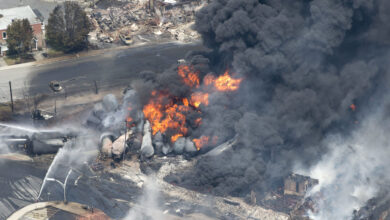


The Morro Castle Fire
When the SS Morro Castle entered service in 1930, she was presented as a sleek and modern answer to the growing passenger trade between New York and Havana. Operated by the Ward Line, the ship was built in Newport News, Virginia, and quickly became known for speed, comfort, and a touch of glamour on a route that appealed to tourists, business travellers, and Americans eager for a lively break beyond the restrictions of Prohibition-era life at home. She could carry nearly 500 passengers, with a crew of around 240, and over her first few years, she developed the reputation of a dependable and fashionable liner rather than a vessel anyone would associate with catastrophe.
By early September 1934, the Morro Castle was making what seemed like another routine return voyage from Havana to New York. She had departed Havana on 5 September, and as she steamed north along the American coast, the weather began to worsen. Clouds thickened, winds rose, and by 7 September the ship was encountering the signs of a developing nor’easter. Rain and rougher conditions encouraged many passengers to turn in early, which gave the voyage an oddly subdued atmosphere. There was little outward sign that this crossing would be remembered not for cocktails, card games, and sea air, but for one of the deadliest peacetime maritime disasters in American history.
The ship itself embodied the contradictions of its era. On paper, she was a modern passenger liner fitted with safety features such as fire doors, fire detection systems, lifeboats, and hydrants. Yet some aspects of her design and upkeep were far less reassuring. Later investigations would point to flammable decorative materials, structural spaces that could allow fire to travel, and practices aboard ship that may have increased the danger if a blaze ever took hold. None of that was obvious to the average passenger settling into a cabin or strolling through a public room. To them, this was a comfortable vessel on a well-established route, not a floating trap waiting for one disastrous chain of events.
What makes the opening of the Morro Castle story so chilling is precisely how ordinary it seemed. There was no dramatic collision, no wartime attack, and no single obvious warning that sent passengers running for the rails. Instead, the voyage began with the kind of confidence that ocean liners were supposed to inspire. That confidence would be badly shaken before the fire even began, because on the evening of 7 September the ship suffered an unexpected blow at the very top. Captain Robert Willmott became suddenly ill and died aboard ship, leaving command to Chief Officer William Warms. A luxury voyage had just lost its captain in heavy weather, and the most dangerous part of the story had not even started yet.
A Change of Command
The sudden death of Captain Robert Willmott changed the atmosphere aboard the Morro Castle long before the fire began. On the evening of 7 September 1934, while the ship was still making her way north through worsening weather, Willmott fell seriously ill. Reports at the time suggested that he had suffered severe stomach trouble and breathing difficulty before dying suddenly of what was officially recorded as a heart attack. His death was shocking enough on its own. A passenger liner in rough conditions had lost its master at sea, and command now passed to Chief Officer William F. Warms.
Under normal circumstances, a change of command at sea was serious but manageable. Merchant ships were structured for continuity, and senior officers were expected to step in if the captain became incapacitated. Yet the timing could hardly have been worse. The ship was moving through heavy weather off the American coast, visibility was poor, and many passengers were already below decks for the night. What had begun as an ordinary northbound run was becoming an uneasy voyage led by a new commanding officer who had inherited responsibility at a moment of strain. Even before a single flame appeared, the Morro Castle was no longer a ship enjoying a routine passage. It was a vessel unsettled at its centre.

The captain’s death also mattered for another reason. Willmott had been regarded as a disciplined and experienced commander, and his absence would later become one of the many details examined by investigators and journalists trying to understand how the disaster unfolded so badly. In the aftermath, some wondered whether a stronger hand on the bridge might have altered decisions once the fire broke out. That can never be known with certainty, but what is clear is that Warms took over under difficult conditions and was soon confronted with a crisis of terrifying speed. He did not have the luxury of settling into command gradually. Within hours, the ship would be fighting for survival.
There was also a darker shadow hanging over the captain’s death. In the years that followed, suspicion grew around the possibility that the fire had not been accidental. That suspicion eventually led some people to revisit Willmott’s sudden illness with a more sinister eye, especially once crew member George W. Rogers emerged as a central figure in later investigations and criminal proceedings. At the time, however, nobody on board could know how much mystery would attach itself to the events of that night. For the passengers, the death of the captain was simply a disturbing piece of news, if they heard of it at all. Most were far more concerned with the bad weather and the discomfort of the voyage.
That uneasy calm would not last. In the early hours of 8 September, while many aboard were asleep in their cabins, a fire broke out. Whatever uncertainty had followed the captain’s death was about to be replaced by something far worse. The ship had lost its commanding officer, and now it was about to lose control of itself.
Flames in the Dark Atlantic
In the early hours of 8 September 1934, the Morro Castle crossed the line from troubled voyage to full catastrophe. At about 2.50 in the morning, a fire was discovered in a writing room locker on B Deck. It was a dangerous place for a blaze to begin. The ship’s interior included wood panelling, decorative finishes, varnished surfaces, and other materials that could feed flames once they took hold. What might have been contained on a better-prepared vessel instead began to spread with frightening speed through passageways and public spaces. Within a very short time, smoke and heat were pushing through the ship while many passengers were still asleep.
The hour made everything worse. Most people aboard were in their cabins, disoriented, and in no position to understand immediately what was happening. Some woke to the smell of smoke. Others were roused by shouting, confusion in the corridors, or the growing sense that the ship was no longer moving normally. On a passenger liner at night, the difference between order and chaos could be measured in minutes. On the Morro Castle, those minutes were lost quickly. Fire alarms and emergency responses did not produce the swift, coordinated action that passengers would have expected. Instead, the fire gathered force while uncertainty spread almost as fast as the flames.
The weather outside turned a serious fire into a near-hopeless one. Strong winds fanned the blaze and helped drive it along the ship. Once flames broke outward and upward, the nor’easter gave them oxygen and momentum. The vessel’s forward motion also fed the fire, turning parts of the ship into a chimney-like system in which heat, smoke, and flame surged rapidly from one area to another. Investigators would later conclude that both the design of the vessel and the conditions that night contributed heavily to the disaster. This was not simply a case of a small onboard fire growing gradually worse. It became a fast-moving inferno on a large passenger liner in darkness and storm conditions.
There were also immediate failures in firefighting. Crew members attempted to use hoses and other onboard equipment, but accounts from survivors and later inquiries suggested that the response was disorganised and, in some places, ineffective. Some hoses reportedly lacked sufficient pressure. Some crew members seemed uncertain of their roles. Communication was poor. The fire doors and other safety measures that should have slowed the spread either failed, were mishandled, or could not compensate for the intensity of the blaze. At the same time, smoke made movement through the ship more difficult and dangerous, trapping some people in cabins and forcing others into desperate decisions.
By this point, the Morro Castle was no longer simply on fire. She was becoming unmanageable. Large sections of the vessel were turning into a furnace, lifeboat access was becoming increasingly difficult, and passengers were beginning to realise that remaining below meant death. The next stage of the disaster would not centre on the fire alone, but on panic, failed leadership, and the brutal struggle to escape a burning ship in the dark Atlantic.
Panic, Failure, and the Fight to Escape
As the fire spread through the Morro Castle, the disaster became a test not just of the ship’s construction but of the crew’s ability to respond under pressure. That test went badly. Survivors later described confusion, delays, and a lack of clear instructions at the very moment when passengers needed calm authority. Some crew members tried to help, but others appeared overwhelmed or unsure what to do. On a burning passenger liner at sea, hesitation was deadly. People needed to know where to go, which lifeboats could be launched, and how long they had before smoke and flames cut off every route. Instead, many were left to make those decisions for themselves.
One of the greatest failures involved the lifeboats. In theory, the ship carried enough boats and rafts to save large numbers of people. In practice, launching them in the middle of a night fire and heavy weather proved far more difficult. Intense heat drove people away from some boat stations, while the list of the ship and the force of the wind complicated efforts to lower boats safely. Some lifeboats could not be launched properly at all. Others were launched only partially filled. The result was cruelly familiar in major disasters: equipment existed, but the emergency around it made that equipment far less useful than passengers had been led to expect. The presence of lifeboats looked reassuring on paper, but paper does not lower a boat into rough water at two in the morning while a ship burns around you.
For many passengers, escape came down to choosing between fire and sea. Those trapped by smoke in cabins or corridors had only moments to act. Some wrapped themselves in wet towels or blankets in the hope of buying time. Others smashed windows and tried to reach open decks. Families were separated in the confusion, and not everyone who made it outside found safety waiting there. The ship’s sides were high above the water, and jumping was itself a terrible gamble. People risked injury on impact, drowning in rough seas, or being pulled under by the force of the ship’s movement. Yet for many, the ocean looked like the less certain form of death.
Acts of courage took place amid the collapse of order. Some crew members and passengers helped others along smoke-filled passageways, carried the injured, or tried to guide frightened people to the outer decks. There were stories of individuals giving up life jackets, helping strangers over railings, or refusing to save themselves before trying to save family members. These moments did not undo the scale of the failure, but they matter because disasters are rarely only about systems breaking down. They are also about the choices human beings make when there is almost nothing left to control.
By dawn, the Morro Castle was a blackened, burning shell, still afloat but devastated. Survivors were in lifeboats, in the sea, or clinging to debris, while rescuers converged on the scene. The worst of the onboard terror was ending, but the full horror of what had happened was only just becoming visible. The next chapter would bring rescue, death counts, and the grim spectacle of a burned-out liner drifting toward the American shore.
Rescue at Sea and Horror on the Shore
As dawn broke on 8 September 1934, the scale of the Morro Castle disaster became impossible to hide. What had been a modern passenger liner returning from Havana was now a burned and gutted wreck off the New Jersey coast. Rescue craft had been moving toward the ship through the night in response to the single SOS signal that the Chief Radio Operator, George Roberts had managed to send, but daylight revealed the full scene in brutal detail. Survivors were scattered across lifeboats, floating wreckage, and the rough Atlantic itself. Some had escaped burns only to face exhaustion, exposure, and the risk of drowning in the heavy seas. Others had made it into the water without life jackets and survived only because nearby vessels reached them in time.
Several ships answered the distress calls and moved in to help, among them the Monarch of Bermuda, the City of Savannah, and several smaller craft, while Coast Guard units and local rescuers joined the effort. Their work was made harder by wind, waves, smoke, and darkness, all of which had complicated rescue from the beginning. Pulling frightened, injured, and often half-conscious people from rough water is difficult under any circumstances. Doing it in the aftermath of a major shipboard fire, with bodies and debris in the sea, was something else entirely. Rescue crews were not simply gathering survivors. They were moving through the wreckage of a maritime nightmare.
One of the most haunting details of the disaster was how close the ship ultimately came to land. After the fire had torn through her, the Morro Castle drifted and eventually grounded near Asbury Park, New Jersey. This meant that by morning, crowds on shore could actually see the burned vessel. The sight of the blackened liner, so near the beach and yet the scene of such dreadful loss, gave the tragedy an almost surreal quality. It was not some distant ocean disaster disappearing over the horizon. It was right there, visible from the coast, like a warning dragged ashore for everyone to stare at. For people on the beach, the wreck was grim theatre. For families waiting for news, it was agony made visible.
Bodies began washing ashore along the New Jersey coastline, a detail that fixed the Morro Castle fire firmly in the public imagination. Newspapers carried shocking photographs and vivid reports of survivors, casualties, and the smoking hull. The final death toll was generally placed at 137 people, including passengers and crew, though some early reports varied as authorities worked to identify the dead and account for the missing. Many who survived carried severe burns, injuries from jumping, or the lasting trauma of a night spent trapped between fire and sea. The human cost did not end with those who died. It extended into hospitals, morgues, family homes, and headlines across the United States.
By the time the wreck sat stranded off the Jersey shore, the rescue phase was giving way to something colder and more methodical. Officials, journalists, and the public all wanted answers. How had a fire spread so quickly on a modern liner? Why had the emergency response failed so badly? And was this truly an accident at all? Those questions would shape the final stage of the story, where inquiry turned into suspicion, and suspicion into one of the strangest legacies in maritime disaster history.
The Investigation, the Suspicions, and the Legacy
Once the dead had been counted and the survivors brought ashore, attention turned to a question that follows every major disaster: how exactly had this happened? The official inquiries into the Morro Castle fire painted a bleak picture of systemic failure. Investigators criticised the crew’s response, the delay in sending distress calls, the poor handling of firefighting equipment, and the lack of organised evacuation. They also highlighted serious design and safety weaknesses, including highly flammable interior materials, gaps in the ship’s structure that allowed fire to bypass barriers, weak alarm audibility, and a hydrant system that lost pressure when too many outlets were opened at once. In other words, the fire was catastrophic not just because it started, but because the ship and its emergency procedures were badly equipped to stop it once it did.
The inquiry also examined the actions of the surviving officers and senior company figures. Acting Captain William Warms, Chief Engineer Eban Abbott, and Ward Line vice-president Henry Cabaud were all indicted on charges connected to negligence. Convictions followed, although some were later overturned on appeal. Even so, the legal proceedings reinforced the view that the disaster was not simply an unavoidable act of fate. The Morro Castle had become a case study in how poor preparation, weak leadership, and inadequate emergency discipline could turn a shipboard fire into mass death. The sea had supplied the storm, but human decisions had done much of the rest.
Yet the most enduring mystery concerned the fire’s actual cause. Officially, it was never conclusively determined. Several explanations were considered over the years, including faulty wiring, spontaneous combustion involving chemically treated materials in the locker where the blaze began, or overheating connected to the ship’s funnel arrangement. But one theory refused to die, that the fire was deliberate. Suspicion later settled heavily on George White Rogers, the ship’s chief radio officer, who had initially been praised for sending the distress signal under dangerous conditions. In later years, Rogers was linked in the public mind to the Morro Castle fire after other violent crimes and incendiary attacks drew attention to him, but no court ever proved that he had set the blaze aboard the ship. That leaves the Morro Castle in the uncomfortable category of disasters that are both historically documented and permanently unresolved.
The legacy of the fire was far clearer than its cause. Public outrage helped drive changes in maritime safety, particularly in fire prevention, ship construction, crew training, and evacuation standards. The disaster exposed how badly appearance and convenience had been allowed to outrank safety aboard some passenger vessels. It also served as a warning that regulations on paper mean very little if crews are unprepared to act under pressure. The image of the blackened Morro Castle stranded off the New Jersey shore became one of the defining symbols of maritime disaster in the twentieth century, not because it vanished into legend, but because it happened in full public view. A modern liner sailed into the night as a symbol of comfort and confidence, and by morning it had become a smoking monument to complacency, confusion, and fatal delay.
The Morro Castle Fire FAQ
The Morro Castle fire was a deadly shipboard disaster that took place on 8 September 1934 aboard the passenger liner Morro Castle as it travelled from Havana to New York.
The disaster killed 137 people, including passengers and crew, making it one of the deadliest peacetime maritime disasters in American history.
After the fire, the burned ship drifted ashore near Asbury Park, New Jersey, where it became a grim and highly visible symbol of the disaster.
The exact cause was never conclusively proven. Investigators examined accident theories and possible sabotage, and suspicion later focused on radio officer George White Rogers.
The disaster exposed serious weaknesses in passenger ship safety, firefighting readiness, and evacuation procedures, helping push improvements in maritime regulations.