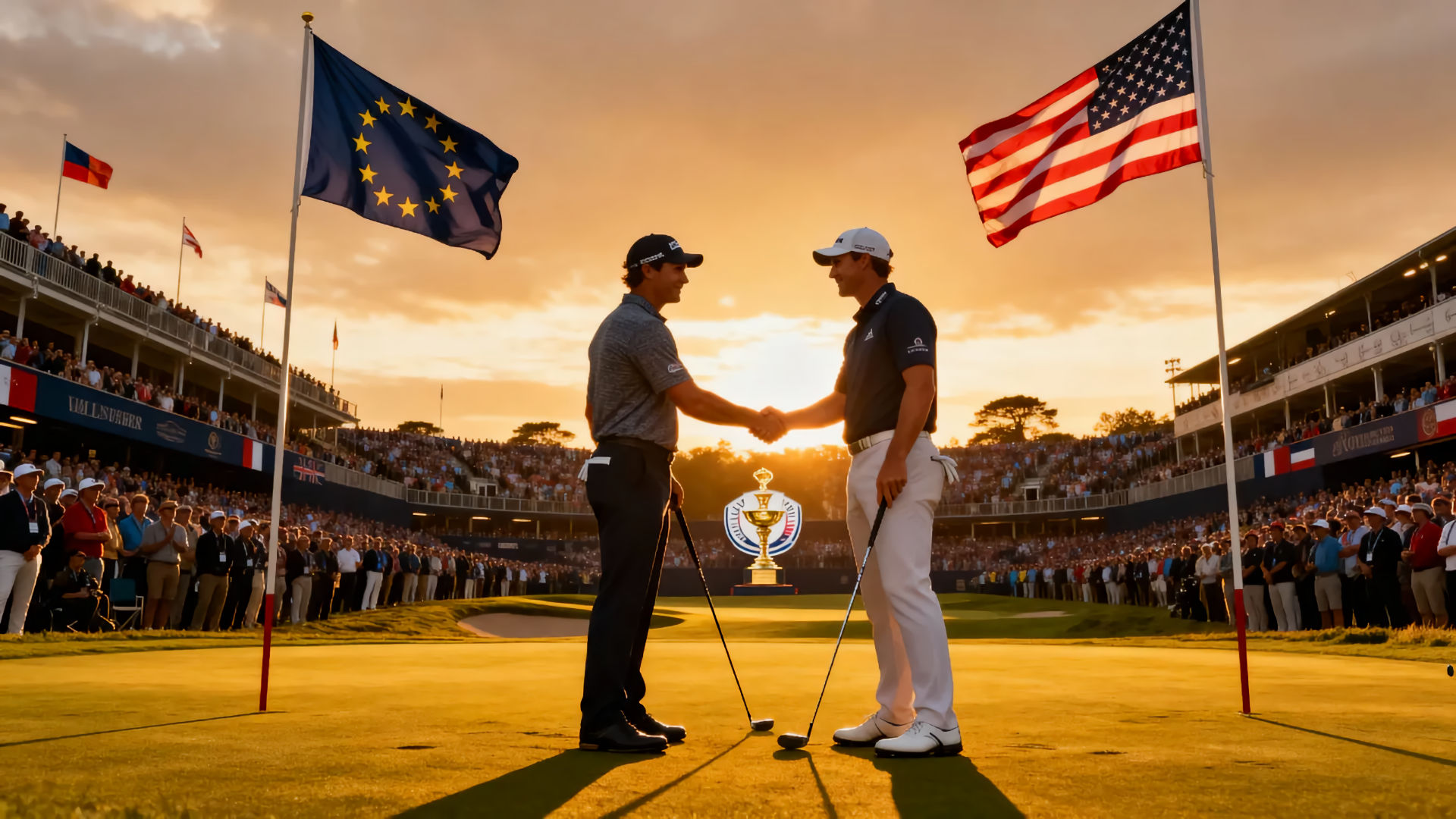
The History of the Ryder Cup
The story of the Ryder Cup begins in the early 20th century, at a time when golf was growing in popularity on both sides of the Atlantic. While the game’s roots were firmly planted in the fairways of Scotland, the United States was rapidly developing its own roster of talent and a strong golfing culture. What was missing, however, was a way to measure one side against the other, a true international contest that could bring together the best professional players from each continent. Out of this competitive spirit, and a dash of gentlemanly camaraderie, the Ryder Cup was born.
The idea of an international match between American and British golfers first took shape in 1921, when a team of American professionals travelled to Gleneagles in Scotland for a match against their British counterparts. The event was unofficial, but it stirred enthusiasm. A second match in 1926 at Wentworth, just outside London, further fuelled interest and demonstrated the appeal of transatlantic competition. It was there that English seed merchant and golf enthusiast Samuel Ryder attended as a guest, and was so taken by the spectacle that he decided to fund a permanent trophy and help formalise the event.
Samuel Ryder was a latecomer to golf, taking up the game in his 50s to improve his health, but he quickly became an avid player and supporter. He recognised that the sport was evolving, and he wanted to see professionals gain greater respect and exposure. His donation of a gold trophy, worth £250 at the time, sealed the deal. The first official Ryder Cup was held in 1927 at Worcester Country Club in Massachusetts, with a team of American professionals captained by Walter Hagen facing off against a British team led by Ted Ray.
The Americans won that inaugural contest by a convincing margin of 9.5 to 2.5 points, setting the tone for several years of American dominance. Yet the event itself was a success, not only in terms of sport but also in fostering international goodwill and a sense of shared sporting identity. The format, match play with foursomes, fourballs, and singles, encouraged teamwork and strategy in a game usually played solo. The Ryder Cup had found its footing.
As the 1930s progressed, the event became a fixture on the golfing calendar, held every two years, with hosting duties alternating between the U.S. and Great Britain. The foundations were laid for what would become one of the most prestigious and passionately contested competitions in all of sport.
Trials and Triumphs: The Pre-War and Post-War Years (1929–1959)
Following the successful debut of the Ryder Cup in 1927, the competition quickly established itself as a regular fixture in international golf. The second edition, held in 1929 at Moortown Golf Club in Leeds, England, saw Great Britain strike back, winning 7–5 on home soil. It was clear from the outset that national pride would be at the heart of the Ryder Cup, players weren’t just competing for individual glory but for their country and teammates.
However, throughout the 1930s, the American team began to assert dominance, led by iconic figures like Gene Sarazen and Walter Hagen. The matches became a transatlantic showcase of golfing talent, with each contest generating more attention and excitement. Still, the British team was consistently at a disadvantage, facing deeper American talent pools and more extensive resources.
The outbreak of World War II in 1939 brought a sudden halt to proceedings. The Ryder Cup was suspended for nearly a decade, with no contests held between 1939 and 1947. The hiatus mirrored the disruption felt in countless sporting events across the globe, and when the competition finally resumed in 1947, the world was a very different place.
That year’s match, held at Portland Golf Club in Oregon, was steeped in symbolism. It was about more than golf; it was a celebration of peace, recovery, and international friendship. Unfortunately for the British side, the Americans returned with renewed strength, winning 11–1 in what remains one of the most lopsided victories in Ryder Cup history.
The post-war years were challenging for Great Britain. Golfing infrastructure had suffered during the war, and many top players were either unavailable or past their prime. In contrast, the U.S. saw a golden era of golfers emerge, including Ben Hogan, Sam Snead, and Byron Nelson, household names whose precision and poise were difficult to match.
Throughout the 1950s, the competition became increasingly one-sided. The Americans won five of the six Ryder Cups held in the decade, often by wide margins. Still, the Cup retained its prestige, buoyed by tradition and the sense that it was still the pinnacle of team golf.
Yet beneath the surface, discussions were beginning to stir. The imbalance was obvious, and while the event still drew interest, there were growing calls for change, not in format, but in participation. The seeds were being sown for one of the most significant transformations in the Cup’s history: the expansion of Team GB to include all of Europe.
A European Renaissance: The Birth of Team Europe (1979–1995)
By the 1970s, the Ryder Cup had become worryingly predictable. The United States had racked up win after win, often with considerable ease, and the competition was losing its lustre. From 1947 to 1977, Team Great Britain, later known as Great Britain and Ireland, managed just one victory, in 1957. Fans and organisers alike recognised that something had to change to restore the Cup’s competitiveness and prestige.
The solution was bold: in 1979, the team representing Britain and Ireland was expanded to include continental Europe. The idea had been floated for years, but it was finally made official thanks to lobbying by influential figures like Jack Nicklaus, who believed a broader European squad would revitalise the event. This expansion meant that world-class players such as Seve Ballesteros of Spain and Bernhard Langer of Germany could now take part, bringing new energy and flair to the competition.
The early years of Team Europe were tough. The Americans won comfortably in 1979 and 1981. However, signs of a European resurgence soon emerged. In 1983, Europe came agonisingly close to victory in Florida, losing 14½ to 13½ in a match that could have gone either way. The tide was beginning to turn.
Then came The Belfry in 1985. It was a watershed moment; Europe defeated the U.S. 16½ to 11½, securing its first victory in 28 years. Ballesteros, Nick Faldo, Sandy Lyle, and Ian Woosnam were among the stars of this new European squad. The celebrations were jubilant, not just because of the win, but because it felt like the Ryder Cup had finally been reborn.
Two years later, in 1987, Europe pulled off something unthinkable: they won on American soil for the first time, at Muirfield Village in Ohio, a course designed by Jack Nicklaus himself. This victory was seismic, a clear signal that Europe was no longer the underdog.
The momentum continued into the early 1990s. Under the captaincy of Tony Jacklin, Europe developed a new team ethos, built on camaraderie, confidence, and meticulous preparation. The Americans were no longer untouchable, and the contests became more fierce, more dramatic, and far more balanced.
By 1995, when Europe staged a stunning comeback to win at Oak Hill Country Club, the transformation was complete. The Ryder Cup had evolved from a lopsided exhibition into a truly global spectacle. The era of European dominance was beginning, and fans on both sides of the Atlantic were loving every minute of it.
Modern Era Drama and Dominance (1997–2018)
The late 1990s ushered in a new golden era for the Ryder Cup, one defined by high drama, razor-thin margins, emotional victories, and a European team that was now a force to be reckoned with. The 1997 tournament marked a symbolic turning point: for the first time, the Ryder Cup was held in continental Europe, at Valderrama Golf Club in Spain, and captained by none other than Seve Ballesteros.
Ballesteros brought his signature passion and fierce competitive spirit to the role, and his leadership helped Europe eke out a narrow 14½ to 13½ win over the Americans. It was a moment of vindication, not just for Ballesteros personally, but for the very idea of Team Europe. The Ryder Cup was no longer just a transatlantic rivalry; it was a deeply emotional contest, grounded in national pride, personal ambition, and team unity.
The 1999 Cup at The Country Club in Brookline, Massachusetts, produced one of the most controversial moments in Ryder Cup history. The Americans staged a dramatic comeback on Sunday, capped by Justin Leonard’s long putt on the 17th hole, which was followed by wild celebrations that spilled onto the green before Europe had finished the hole. It ignited debate about sportsmanship and etiquette, and left a sour taste despite the USA’s 14½ to 13½ win.
But Europe would bounce back in emphatic style. The 2002 Ryder Cup at The Belfry saw the hosts reclaim the Cup under Sam Torrance, while 2004 in Oakland Hills marked a historic 18½ to 9½ blowout win for Europe, the largest margin in a modern Ryder Cup played in the United States. Captain Bernhard Langer’s meticulous planning paid off, and Team Europe’s performance was near-flawless.
In 2006 at The K Club in Ireland, Ian Woosnam led Europe to another dominant 18½ to 9½ victory, matching the previous record margin. The spirit of togetherness, fostered by European captains and strengthened by a sense of continental identity, had become a defining trait of the team.
Then came 2012, the “Miracle at Medinah.” Trailing 10–6 going into the final day, Europe mounted one of the most spectacular comebacks in Ryder Cup history. Led by José María Olazábal, inspired by the late Seve Ballesteros, who had died the year before, and fuelled by stunning performances from Ian Poulter and others, Europe won 14½ to 13½. It was the stuff of legend.
By 2018, when Thomas Bjørn captained Europe to a commanding 17½ to 10½ win in Paris, the modern narrative was clear: the Ryder Cup was now Europe’s to lose. A contest once dominated by America had evolved into one of the most fiercely competitive events in global sport.
The Ryder Cup Today and Beyond (2019–Present)
As the Ryder Cup entered its second century, its importance in the golfing calendar remained undiminished, arguably greater than ever. By now, it was more than just a biennial match between elite golfers from Europe and the United States. It had become a global sporting event that captivated fans with its unpredictable drama, emotional weight, and the rare sight of individual athletes competing as a team.
The 2020 Ryder Cup, originally scheduled to be played at Whistling Straits in Wisconsin, was postponed due to the COVID-19 pandemic, the first disruption since the post-9/11 delay in 2001. When it finally took place in September 2021, it saw a rejuvenated American team deliver one of the most dominant performances in the event’s history. Captained by Steve Stricker, the U.S. team featured a younger, analytically-minded lineup including Collin Morikawa, Xander Schauffele, and Scottie Scheffler. With a record-breaking 19–9 victory, the Americans made a clear statement: the era of European dominance was being challenged.
The win at Whistling Straits highlighted a strategic shift. The U.S. team, often criticised in the past for lacking cohesion, had embraced a more data-driven, collaborative approach. The culture, long fragmented by individual egos and mismatched pairings, seemed to be evolving. Younger players brought fewer scars from past defeats, and captains like Stricker leaned into analytics and personality chemistry to build team synergy.
Europe, for its part, entered a period of transition. Legendary stalwarts such as Sergio García, Ian Poulter, and Lee Westwood, icons of Europe’s Ryder Cup legacy, were nearing the end of their playing careers or were involved in the turbulent world of breakaway golf leagues. There were questions about who would carry the torch into the next generation. But if history has shown anything, it’s that Europe tends to rise to the occasion, particularly when underestimated.
The 2023 Ryder Cup, hosted at Marco Simone Golf and Country Club near Rome, provided a glimpse into that future. Under the leadership of Luke Donald, Europe reclaimed the Cup with a 16½ to 11½ win, showcasing new stars like Viktor Hovland, Ludvig Åberg, and Jon Rahm in commanding form. It was a reminder that European resolve, when unified, is still a potent force.
The Ryder Cup Today and Beyond
As the Ryder Cup continues to evolve nearly a century after its inception, its significance in the world of golf has only grown. What began as a friendly transatlantic contest now ranks among the most anticipated team events in international sport. In 2025, the Ryder Cup offered some of the most dramatic, high-stakes competition in decades, and reaffirmed Europe’s strength in the modern era.
The 2025 Ryder Cup, contested at Bethpage Black in New York, saw Team Europe claim a hard-fought 15–13 victory over the United States. This marked Europe’s fifth victory on American soil in the modern era and showcased a blend of veteran leadership and emerging talent that kept the pressure on their rivals throughout the long weekend.
From the outset, Europe set the tone. In the early sessions, especially the foursomes and fourballs, the visiting team dominated, setting a record pace going into the singles. Their performance was historically notable: Europe became the first team ever to sweep all four sessions on U.S. soil in a Ryder Cup, a testament to their depth and cohesion.
Yet the U.S. side did not go quietly. On Sunday’s singles, the Americans mounted a spirited comeback, winning a high total of 8.5 points and narrowing the gap relentlessly. That rally highlighted both the competitive fire of the home team and the emotional roller coaster the Ryder Cup has become for players and fans. Despite that push, Europe held on. Ireland’s Shane Lowry’s crucial birdie on the 18th hole to halve his match was one of the decisive moments that secured the trophy for the visitors. England’s Tyrrell Hatton also played a pivotal role by clinching the winning half‑point for Europe in his match.
The result deepened Europe’s modern legacy. Over the last 14 Ryder Cups, Europe has won the majority, reflecting a sustained era of competitiveness and strategic excellence rarely seen earlier in the event’s history. Although the United States remains ahead in all-time victories since 1927, Europe’s recent dominance underscores a profound shift in golf’s competitive balance.
Looking beyond 2025, the Ryder Cup’s future looks equally compelling. The next edition will be held in 2027 at Adare Manor in Ireland, providing a rare opportunity for the Irish golf community to host the Cup on home soil. This return to Irish links brings the event full circle, reminding fans of the shared heritage and evolving identity that make the Ryder Cup so unique.
Further out, venues like Camiral in Spain have already been confirmed for 2031, marking the continued expansion of the tournament’s global footprint and the deepening involvement of continental Europe in hosting one of golf’s greatest spectacles.
As the Ryder Cup moves forward, its blend of fierce competition, national pride, and unpredictable drama ensures it will remain a highlight of the sporting calendar, a compelling reflection of how tradition and innovation can coexist in one of golf’s oldest rivalries.
The History of the Ryder Cup
The Ryder Cup is a biennial team golf competition between Europe and the United States, played over three days using match play formats.
The first Ryder Cup was held in 1927, following a series of informal matches between British and American professionals.
Originally Great Britain competed against the United States, but the team expanded to include continental Europe in 1979 to improve competitiveness.
National pride, team formats, passionate crowds, and the absence of prize money combine to create unusually high emotional stakes.
The tournament alternates between courses in Europe and the United States every two years.