The History of Coins
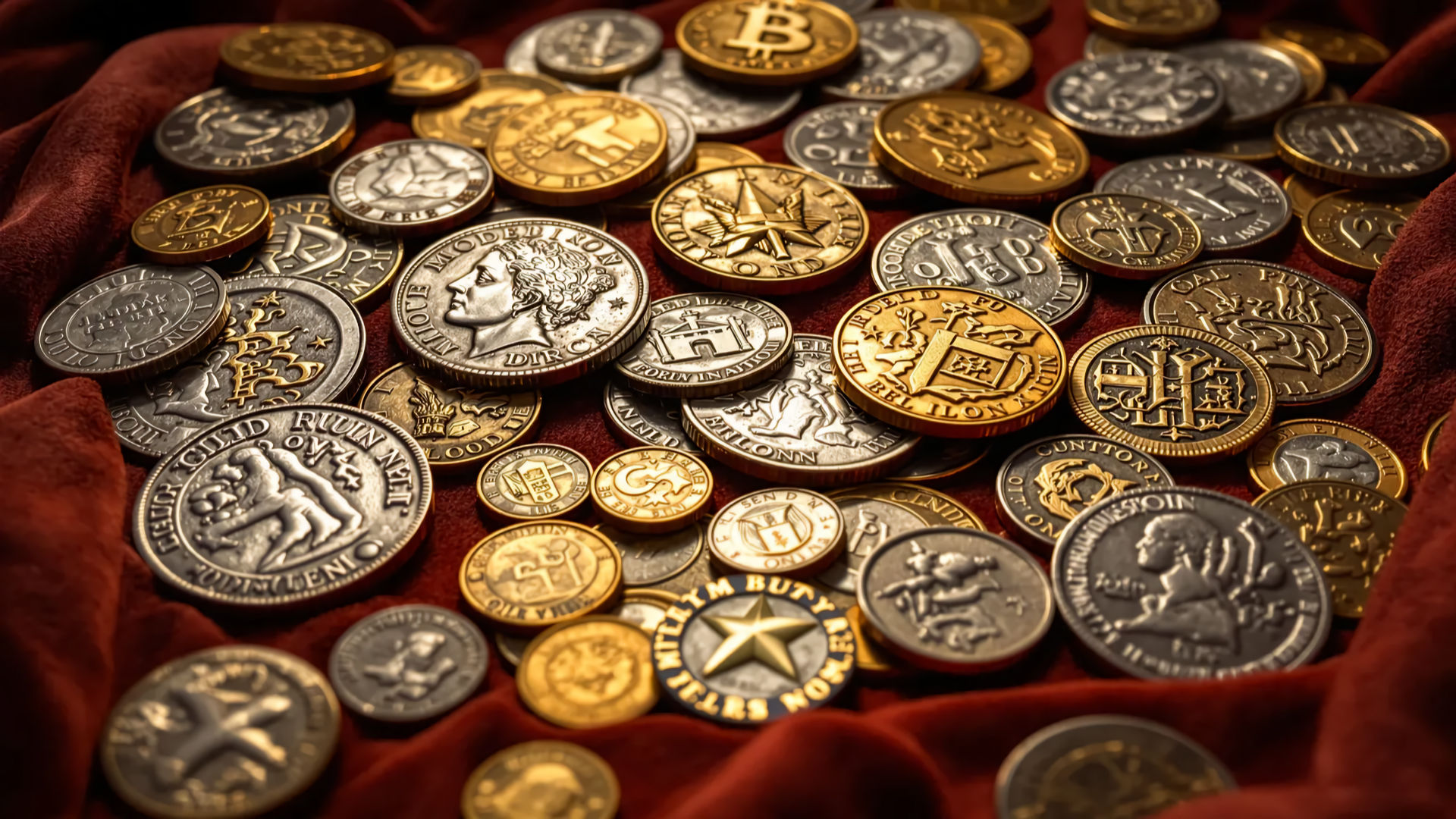
For more than two millennia, coins have shaped economies, cultures, and civilisations. These small, often round pieces of metal are far more than mere currency. They tell stories of power, trade, art, and identity. From their origins in ancient Lydia to the high-tech minting techniques of today, coins reflect the evolution of money, metallurgy, and society itself. This is the history of coins, the metal markers of civilisation.
The Birth of Coinage in Ancient Lydia
The first true coins are widely believed to have been minted in Lydia, a kingdom in what is now western Turkey, around 600 BCE. These coins were made of electrum, a naturally occurring alloy of gold and silver, and stamped with a symbol, often a lion’s head, to signify authenticity and weight. Under King Alyattes and later his son Croesus, Lydia’s coinage became more refined, leading to the creation of separate gold and silver coins.
This innovation revolutionised commerce. Before coins, trade was conducted mainly through barter or weighed metal. Coins introduced standardised units of value, simplifying transactions and allowing markets to flourish. The Lydian model quickly caught on. Neighbouring Greek city-states began minting their own coins, which became tools not just for trade but also for political propaganda. Each polis stamped its currency with symbols of local pride, Athena for Athens, an owl for wisdom, and Corinth’s Pegasus.
Greek and Roman Influence
The Greeks took coinage to new heights of artistic expression. Coins became canvases for miniature sculptures, featuring gods, animals, and mythological scenes. The drachma, one of the most famous Greek denominations, spread across the Mediterranean and influenced future currencies for centuries.
When the Romans rose to power, they adapted and expanded the use of coins across their vast empire. Initially, Roman coins were made of bronze, but under the Republic and especially the Empire, silver (denarii) and gold (aurei) became prominent. Roman coins were mass-produced, featuring the likenesses of emperors, which reinforced the ruler’s image throughout the empire. Some even depicted military victories or key public works, turning coins into propaganda tools.
The Romans also developed a more structured monetary system with clear denominations and minting protocols. Their coins facilitated trade from Britain to the Middle East and were often hoarded, buried, or lost, only to be rediscovered by archaeologists centuries later, offering a tangible connection to ancient life.
The Medieval Transformation
After the fall of the Western Roman Empire in the 5th century CE, Europe’s coinage system fragmented. Various kingdoms, from the Franks to the Anglo-Saxons, began issuing their own coins. These were often crudely made, reflecting the decline of central authority and minting expertise.
Charlemagne, the Frankish emperor, sought to restore order by standardising coinage across his realm. The silver penny (or denier) became a common European coin for centuries. Coins during this time were hand-hammered, meaning each was slightly different. They often bore religious symbols and the names of kings or bishops, reinforcing the link between faith, rule, and economy.
Outside Europe, Islamic dynasties were developing their own impressive numismatic traditions. The Umayyads and Abbasids minted beautiful gold dinars and silver dirhams inscribed with intricate Arabic script, often eschewing images in favour of Quranic verses. In China, meanwhile, round bronze coins with square holes became standard, frequently strung together and used for centuries.
The Renaissance and Coinage Innovation
The Renaissance brought renewed interest in classical antiquity, including coinage. Artistic expression flourished on coins, with more lifelike portraits and elaborate designs. Mints also began to experiment with new technologies. The screw press, introduced in the 16th century, enabled more consistent and detailed coin production.
Monarchs used coins to project power. Henry VIII of England, for example, famously debased his coinage by reducing its precious-metal content to finance wars. This led to inflation and public distrust, but also sparked later reforms. In 1696, the British government undertook the Great Recoinage, replacing worn and clipped silver coins with new machine-made versions.
By the 17th century, many European states operated sophisticated mints. Coins were often dated, and some bore edge inscriptions or reeding to deter clipping and counterfeiting. The modern notion of currency as a state-controlled entity solidified in this period.
Coins and Empires
As European powers expanded their empires, they brought their currencies with them. Spanish silver dollars, minted from New World silver, became a global currency, especially in the Americas and Asia. The “pieces of eight” were accepted from Manila to Boston.
Colonial mints were established across the globe, from Mexico City to Bombay, enabling local production and reinforcing imperial control. Coins from this era reflect the reach of empires and often blend local symbols with European monarchs. For example, early Indian rupees minted under British rule featured Mughal-style script alongside Queen Victoria’s portrait.
In Japan, the Tokugawa shogunate standardised coinage in the 17th century, issuing oval gold coins (kobans) and round copper and silver pieces, supporting the country’s internal economy and marking a shift from feudal barter systems.
The Industrial Age and Modern Minting
The Industrial Revolution transformed coin production. Steam-powered minting presses allowed for rapid, consistent output. In 1797, the British Royal Mint used steam presses to produce the “cartwheel” penny, a heavy copper coin designed to prevent counterfeiting.
This period also saw the birth of national currencies. In the newly formed United States, the Coinage Act of 1792 established the U.S. Mint and introduced coins like the cent, dime, and dollar. These coins not only standardised commerce but also reinforced national identity through imagery of liberty, eagles, and presidents.
Gold and silver standards emerged, linking paper money to fixed amounts of precious metal. Coins remained vital to everyday transactions, and their designs became more consistent, driven by innovations in metallurgy and anti-counterfeiting measures. Reeding, milling, and alloy use all helped preserve coin integrity.
The 20th Century and Beyond
In the 20th century, two world wars, the rise of fiat currency, and technological change reshaped coinage. Precious metal coins were gradually replaced by base metals. Gold coins disappeared from circulation, though they remained popular for collectors and investors.
Many countries introduced commemorative coins to celebrate events, anniversaries, or figures from history. These coins often pushed artistic boundaries and became coveted by numismatists. National identities continued to be expressed through coin imagery, from national animals to historical figures.
Technological innovations have continued into the 21st century. Modern mints use computer-aided design, lasers, and high-speed presses. Some coins now include holograms, colour, and microtext. Contactless payment systems and digital currencies may be reducing the everyday use of coins, but coins persist in vending machines, public transport systems, and as cultural artefacts.
Moreover, the rise of cryptocurrencies has sparked fresh debates about the future of physical currency. Yet coins remain deeply embedded in society. They’re given as tokens of luck, used in rituals and games, and passed down as heirlooms. The stories they tell, of emperors and empires, revolutions and reforms, remain timeless.
Coins as Cultural Artefacts
Beyond their monetary function, coins have immense historical value. Archaeological discoveries of coin hoards shed light on trade routes, political shifts, and cultural exchange. Numismatics, the study of coins, helps historians reconstruct economic systems and dating timelines.
In museums and private collections, ancient coins connect us with the past in ways few other objects can. Holding a Roman denarius or a medieval groat is to grasp a piece of human history, passed from hand to hand across centuries.
Even today, coin design is often a source of national pride and debate. New issues can generate headlines, from the first woman or person of colour on a coin, to changes in monarchs or slogans. Coins have always been more than just metal. They are storytellers, signifiers, and survivors of time, reflecting the people who made them, the systems they upheld, and the values they represented.
The History of Coins FAQ
The first known coins were minted in Lydia, in what is now Turkey, around 600 BCE. They were made from electrum, a naturally occurring alloy of gold and silver.
Ancient coins often featured symbols of rulers, gods, or city emblems, serving both as currency and political propaganda.
As empires expanded and trade networks grew, coinage spread rapidly. The Greeks, Romans, Persians, and Chinese all adopted and developed coin-based economies.
Coins remain a symbol of national identity and history. They are used for everyday transactions and are studied by numismatists to understand past societies.