Jane Goodall
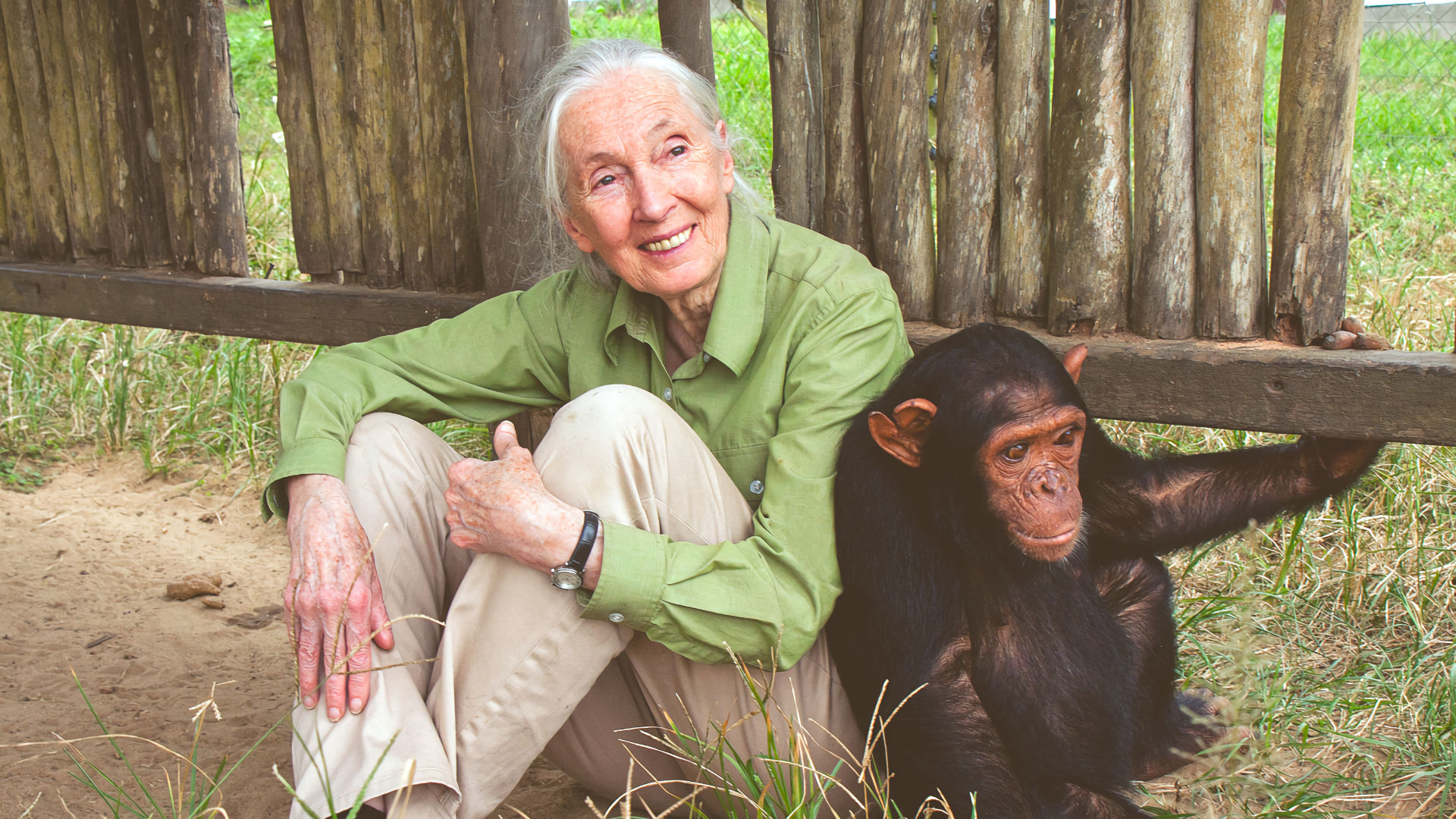
Jane Goodall did not set out to challenge the foundations of modern science. She did not arrive in Africa armed with theories, academic authority, or institutional backing. What she carried instead was patience, curiosity, and an unwavering belief that animals deserved to be understood on their own terms. From that quiet beginning emerged one of the most significant scientific and ethical transformations of the twentieth century.
Over more than sixty years, Jane Goodall reshaped how humans understand animals, intelligence, emotion, and responsibility. Her work revealed that the line once thought to separate humans from the rest of the natural world was far thinner than science had imagined. In doing so, she not only transformed primatology but also forced humanity to reconsider its place within nature itself.
Her life is a story of persistence against convention, of observation over assumption, and of compassion guided by evidence. It is the story of a woman who proved that changing the world does not always require power or permission, only attention and courage sustained over time.
An Unusual Beginning
Jane Goodall was born Valerie Jane Morris-Goodall on 3 April 1934 in London, during a period marked by economic hardship and the looming shadow of global conflict. From the very beginning, she exhibited a deep and unusual fascination with animals. Unlike many children, she did not view animals as toys or ornaments but as beings with lives worth observing.
Her curiosity was intense and sustained. She spent hours watching ants move through soil, birds build nests, and dogs communicate through posture and sound. She asked questions that adults often found inconvenient or difficult to answer. Rather than dismissing these questions, her mother encouraged them. That encouragement became one of the most important influences in Jane’s life.
One childhood incident became legendary within her family. Jane disappeared for several hours, causing panic among adults. When she was finally found, she was calmly observing a chicken coop, determined to understand how hens laid eggs. Instead of scolding her, her mother praised her patience and curiosity. That response reinforced a lesson Jane would carry throughout her life: that careful observation is valuable, even when it challenges expectations.
Books played a formative role. Jane read widely, but stories about animals captured her imagination most strongly. Tales such as Tarzan of the Apes and Doctor Dolittle planted the idea that humans could live among animals and learn from them. Although these stories were fictional, Jane treated them as inspiration rather than fantasy. She did not want to dominate animals. She wanted to understand them.
In an era when scientific careers were largely closed to women, particularly those without wealth or formal education, Jane’s ambitions seemed unrealistic. She was aware of this, but it did not deter her. After completing her schooling, she took whatever jobs she could find, working as a secretary, waitress, and film assistant. Every pound she earned went into a savings fund for travel. Africa, she believed, was not a dream but a destination waiting to be reached.
The Road to Africa
In 1957, Jane finally travelled to Kenya to visit a school friend. She arrived with little money, no formal scientific training, and no guarantee of opportunity. What she did have was time, attentiveness, and a willingness to listen.
It was in Kenya that she met Louis Leakey, a prominent palaeoanthropologist known for his work on early human evolution. Leakey believed that understanding primates was essential to understanding humanity’s origins. He also believed that traditional scientific training sometimes limited observation by imposing assumptions too early.
Jane immediately caught his attention. She listened more than she spoke. She asked careful questions. She noticed details others overlooked. Leakey recognised in her a rare quality: the ability to observe without interference.
At first, Leakey employed Jane as a secretary. Yet it quickly became apparent that her value extended far beyond administrative work. Leakey proposed that she study wild chimpanzees in what is now Gombe Stream National Park in Tanzania. It was an extraordinary suggestion. No woman had ever conducted such research alone in the wild, and Jane had no university degree.
Leakey believed that her lack of formal training was an advantage. She would not arrive burdened by theories. She would watch, record, and learn. Jane accepted the challenge without hesitation.
Arrival at Gombe
In 1960, Jane Goodall arrived at Gombe at the age of twenty-six. The landscape was rugged and unfamiliar. Dense forests bordered the shores of Lake Tanganyika. The climate was harsh. The isolation was profound.
At first, the chimpanzees wanted nothing to do with her. They fled at the slightest sign of her presence. For weeks, then months, Jane saw little more than fleeting movement in the trees. She recorded everything she could, mapping trails, noting feeding sites, and documenting patterns of sound and movement.
Many researchers would have tried to speed the process by baiting or interfering. Jane did not. She understood instinctively that trust could not be forced. She sat quietly, sometimes for hours, allowing the forest to return to its natural rhythm.
Slowly, the chimpanzees began to tolerate her presence. One male, later named David Greybeard, allowed her to observe him more closely. This marked the beginning of a relationship that would change science forever.
Discoveries That Changed Science
Jane’s earliest observations challenged one of the most deeply held assumptions in biology. She watched David Greybeard carefully strip leaves from twigs, fashioning tools that he then used to extract termites from their mounds. Tool use, once considered a defining human trait, was suddenly shared with another species.
The implications were profound. Either humans had to redefine what it meant to be human, or they had to accept that chimpanzees possessed qualities once believed to be uniquely human.
But tool use was only the beginning. Over time, Jane documented a complex social world among the chimpanzees. She observed friendships, rivalries, political alliances, maternal devotion, and grief. Mothers nurtured their young with patience and discipline. Young chimpanzees learned through imitation and play.
Jane also observed darker behaviours. Chimpanzees engaged in territorial aggression, sometimes attacking neighbouring groups with coordinated violence. These observations unsettled many scientists. Violence, it appeared, was not exclusively human.
Jane recorded these findings without judgement. She understood that complexity, not idealisation, was the truth of nature. Her work presented chimpanzees not as symbols of innocence but as beings with emotional depth and moral ambiguity.
Naming, Not Numbering
One of Jane’s most controversial practices was naming chimpanzees rather than assigning them numbers. Critics accused her of anthropomorphism, arguing that emotional involvement compromised scientific objectivity. Jane rejected this criticism.
She believed that recognising individuality enhanced accuracy rather than undermining it. Each chimpanzee behaved differently. Each had relationships, preferences, and histories that influenced behaviour. Ignoring individuality, she argued, distorted understanding.
Her detailed records proved her point. Over time, it became impossible to deny the consistency and depth of her observations. What had once been dismissed as emotional bias came to be recognised as methodological insight.
Academic Resistance and Recognition
Despite the significance of her findings, Jane faced resistance from parts of the scientific establishment. Her lack of formal credentials made her an easy target for criticism. Some argued that her conclusions were speculative. Others dismissed her work outright.
At Leakey’s encouragement, Jane pursued formal academic training and enrolled in a doctoral programme at the University of Cambridge. She became one of the few individuals admitted without an undergraduate degree.
Even there, she challenged convention. She refused to abandon her belief that animals possessed emotion and intelligence. Rather than conforming to established language, she insisted that science adapt to evidence.
Over time, it did. Jane’s research at Gombe became one of the longest-running animal studies in history. Her findings were replicated and expanded upon by other researchers. The field of primatology evolved in response to her work.
The Burden of Knowledge
As decades passed, Jane began to notice changes beyond chimpanzee behaviour. Forests were shrinking. Human populations were expanding. Wildlife faced growing threats from deforestation, poaching, and illegal trade.
Jane realised that observation alone was no longer enough. Understanding without action felt irresponsible. Knowledge, she believed, carried moral obligation.
In the 1980s, she made a difficult transition from full-time field research to advocacy. This shift was controversial. Some colleagues accused her of abandoning science. Jane disagreed. She saw advocacy as an extension of responsibility.
She founded the Jane Goodall Institute, which combined research with conservation and community development. The institute worked alongside local populations, recognising that environmental protection must address human needs. Education, healthcare, and sustainable livelihoods became central to conservation success.
Roots and Shoots
In 1991, Jane launched Roots and Shoots, a programme designed to empower young people to take action for animals, people, and the environment. Jane believed that hope resided in the next generation. Rather than overwhelming children with despair, she encouraged practical action.
Roots and Shoots grew rapidly into a global movement. Children planted trees, cleaned waterways, protected wildlife, and supported their communities. Jane emphasised that small actions matter, particularly when multiplied across millions of people.
The programme reflected her lifelong philosophy: change begins with individuals who care enough to act.
A Life in Motion
Jane Goodall’s work never stopped, even as she approached her tenth decade. Throughout the early twenty-first century, she travelled tirelessly, speaking to audiences from children in classrooms to world leaders at international summits. Her focus in later years shifted increasingly toward urgent global issues such as habitat destruction, biodiversity loss and climate change. She believed with deep conviction that the threats facing the natural world required not only scientific understanding but moral engagement.
In the months before her death, she was on a speaking tour in the United States, sharing updates on conservation efforts and encouraging intergenerational collaboration on pressing environmental challenges. That tour, and the many journeys before it, were a testament to her belief that the wisdom of lived experience must be communicated directly to the world. She spoke in a calm but unrelenting voice that blended hope with realism, urging people to recognise both the fragility and resiliency of life on Earth.
When she died on 1 October 2025 at the age of 91, she was in California, still travelling, still sharing her message of care and responsibility. The announcement from the Jane Goodall Institute emphasised that she had passed peacefully, surrounded by the work and audiences she loved. Her life in motion had become a life whose motion continues to ripple outward.
Rethinking Humanity
Jane Goodall’s legacy extends far beyond chimpanzee research. She fundamentally altered how humanity sees itself in relation to the natural world. Before her work in Tanzania began, it was widely assumed that humans alone possessed certain traits, such as tool use, complex social relationships, and emotional richness. Through patient observation in the forests of Gombe Stream National Park, she showed that many of these so-called uniquely human features appear in our primate cousins as well. That insight forced science to reconsider long-held distinctions between humans and other animals, blurring the line between species and inviting a more nuanced understanding of intelligence and emotion.
Her work challenged entrenched assumptions not only within biology and anthropology but within culture at large. Suddenly, the notion that humans sat entirely apart from nature seemed both scientifically inaccurate and morally untenable. In demonstrating the emotional lives of chimpanzees, including behaviours that reflected compassion, playfulness, grief and alliance building, she reshaped ethical conversations about how humans should treat other species. Her approach suggested that science need not be cold and detached to be rigorous, but could embrace empathy as a legitimate route to insight. By reframing humanity as a part of nature rather than apart from it, her legacy encourages a deeper respect for the web of life itself.
Honours and Enduring Influence
By the time she reached her nineties, Jane Goodall had received numerous honours from scientific institutions, governments and international organisations. She was made a Dame Commander of the Order of the British Empire, recognised with the Presidential Medal of Freedom in 2025, and served as a United Nations Messenger of Peace, among other accolades. These formal honours acknowledged not only her scientific contributions but also her role as a humanitarian and global voice for environmental stewardship.
Yet perhaps her most enduring influence lies not in medals or titles but in the people and movements she inspired. Her work opened doors for women in science at a time when academic and field research was overwhelmingly male-dominated. Her insistence on recognising individual animal personalities helped shift entire fields toward more empathetic frameworks. Her Roots and Shoots youth programme, started in 1991, became a worldwide network encouraging young people to take action for the environment, for animals and for their communities, instilling a sense of agency in new generations who will shape the world after her.
After her death, tributes poured in from around the world, scientists, activists, heads of state, educators and young conservationists all acknowledged her influence. Her institute continues its work, and many of the conservation and research programmes she championed remain active and expanding. Her impact touches not only primatology but broader conversations about climate, sustainability, animal welfare, and the interconnectedness of life on Earth.
Final Word
Jane Goodall’s life was a long journey from a curious child watching animals in a farmyard to a world-renowned primatologist, conservationist and advocate for the natural world. When she died, she left behind not just a monumental body of scientific work but a transformed global consciousness about the place of humans in nature. She showed that understanding begins with observation and that empathy and science can walk hand in hand.
She taught humanity to look beyond the surface, to recognise not only the behaviour of other species but the shared threads of emotion and intelligence that bind life together. Her work transformed how scientists approach animal behaviour, how educators teach about ecosystems, and how ordinary people think about the living world around them. Her message lives on in the countless individuals, programmes and communities shaped by her example. Her life stands as proof that one person’s curiosity, sustained over decades, can transform knowledge, inspire action and awaken compassion across the globe. The animal kingdom lost one of its greatest interpreters, and humanity lost one of its clearest voices for coexistence, but her legacy continues to resonate, inviting every generation to care more deeply, act more thoughtfully and steward the world with courage and kindness.