The History of Superheroes
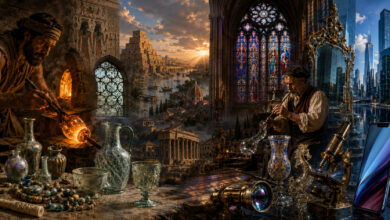
Long before superheroes flew across comic-book panels or leapt onto cinema screens, human societies were already telling stories about extraordinary figures who stood apart from ordinary people. In the ancient world, heroes were often semi-divine beings, warriors, kings, or wanderers whose strength, courage, and endurance lifted them above the rest of humanity. In Mesopotamia, the Epic of Gilgamesh presented a powerful ruler whose adventures explored mortality, duty, and fame. In ancient Greece, Heracles, Achilles, Perseus, and Odysseus offered different versions of heroism, from brute strength to cunning intelligence. These figures were not superheroes in the modern comic-book sense, but they established important patterns that later superhero stories would follow.
One of the most important of those patterns was the idea of exceptional power carrying exceptional responsibility. Ancient heroes often possessed gifts that ordinary people lacked, yet their stories rarely treated power as simple wish fulfilment. Heracles had immense strength, but also endured suffering and loss. Achilles was nearly invincible in battle, but doomed by pride and fate. Odysseus survived through wit and determination, but paid dearly for every misstep. That mixture of power, burden, and moral testing would become central to superhero fiction many centuries later. The modern superhero may wear a costume instead of a bronze helmet, but the deeper story often remains the same.
Mythological and legendary traditions in other places added their heroic templates too. In Norse mythology, Thor wielded his hammer against giants and monsters, defending both gods and humans. In Hindu epics such as the Ramayana and Mahabharata, heroic characters fought vast moral and cosmic battles. In Chinese literature, figures such as Sun Wukong, the Monkey King, combined supernatural power, rebellious spirit, and unforgettable style. These stories did not merely entertain. They reflected what societies admired, feared, and hoped for. Heroes became vessels for ideals, anxieties, and questions about justice.
As history moved forward, heroic storytelling shifted from myth into legend and folklore. Medieval Europe celebrated figures such as King Arthur and his knights, while outlaws like Robin Hood embodied a more grounded but equally enduring type of hero. Robin Hood did not have super strength, but he did have many superhero traits: a recognisable look, a moral cause, a signature skill, and a repeated mission against corruption. He defended the weak, challenged abusive authority, and operated with a kind of early vigilante identity. Looking back, it is not difficult to see why later writers would find such figures useful ancestors for modern costumed champions.
What these early heroic traditions created was a cultural foundation. They established that audiences are drawn to larger-than-life figures who act decisively in moments of crisis. They showed that hero stories work best when they combine excitement with ethical tension. Most of all, they proved that people have always wanted champions who could embody the values they felt were under threat. Superheroes would eventually emerge from printing presses and urban modernity, but the appetite for them was ancient. Before there were secret identities, there were myths. Before there were origin stories, there were legends. The modern superhero did not appear out of nowhere, because humanity had been rehearsing the idea for thousands of years.
Pulp Avengers and Masked Vigilantes
By the late nineteenth and early twentieth centuries, the old heroic traditions had not disappeared, but they had changed shape. Industrialisation, urban growth, mass literacy, and cheap popular publishing created new ways for heroic stories to reach huge audiences. Instead of travelling by oral tradition or in expensive books, larger-than-life characters now appeared in penny dreadfuls, dime novels, magazines, and newspaper serials. These new forms of mass entertainment produced fast-moving stories filled with danger, crime, adventure, exotic settings, and memorable protagonists. The path toward the superhero was becoming much clearer, even if the word itself had not yet been coined.
One key step in that journey was the rise of the pulp hero. Named after the cheap wood-pulp paper on which magazines were printed, pulp fiction thrived in the early decades of the twentieth century, especially in the United States. These magazines featured detectives, adventurers, scientists, aviators, and crime fighters who often seemed just a little larger than life. Characters such as Doc Savage, introduced in 1933, possessed extraordinary intelligence, physical perfection, scientific knowledge, and unwavering moral purpose. He was not superhuman in a literal sense, but he came close enough to suggest a new kind of hero for a modern age. He had a distinctive look, a headquarters, loyal allies, and a mission to combat evil on a grand scale.
Another crucial precursor was the masked vigilante. Characters such as Zorro, created by Johnston McCulley in 1919, introduced elements that would become superhero staples. Zorro had a dual identity, a dramatic costume, a calling card, and a theatrical sense of justice. He moved through a corrupt society as both an ordinary aristocrat and a feared defender of the oppressed. The Shadow, who first appeared on radio in 1930 and then in pulp magazines, deepened the formula even further. With his slouch hat, cloak, secretive methods, and eerie reputation, he created a dark urban mythology that would later influence Batman and many others. The Phantom, introduced in newspaper strips in 1936, added a skin-tight costume and a generational legend of a seemingly immortal masked hero.
These characters reflected their times. The early twentieth century was marked by war, organised crime, political unrest, rapid technological change, and growing anxiety about city life. Readers wanted heroes who could cut through corruption and danger with speed and certainty. Pulp heroes often acted where institutions failed. They could do in a story what ordinary citizens often wished someone could do in real life. They were practical fantasies for an age that felt increasingly chaotic.
At the same time, visual storytelling was becoming more important. Newspaper comic strips reached millions of readers every day and taught creators how to combine striking imagery with serial suspense. Adventure strips such as Tarzan, Buck Rogers, and Flash Gordon helped create the visual grammar of heroic action. Muscular bodies, futuristic gadgets, impossible escapes, and dramatic cliff-hangers all moved readers closer to the kind of storytelling that comic books would soon perfect.
By the mid-1930s, many of the ingredients were already in place. Popular culture had secret identities, symbolic costumes, crusading missions, stylised villains, and recurring universes of action. What it still lacked was a figure who fully fused mythic power, modern morality, and mass visual appeal in one package. That figure was just around the corner. The pulps and strips had built the stage, tuned the orchestra, and dimmed the lights. The audience was ready for someone who could do more than swing a sword or solve a mystery. It was ready for a hero who could seem almost godlike and still belong to the modern world.
Superman Changes Everything
In 1938, the history of superheroes changed dramatically with the publication of Action Comics number 1 by Detective Comics, later known as DC Comics. On its cover, a brightly dressed strongman lifts a car above his head while terrified criminals scatter. That figure was Superman, created by writer Jerry Siegel and artist Joe Shuster. Although earlier heroes had pointed the way, Superman brought together a unique set of elements that made him feel genuinely new. He was powerful in a way that earlier pulp characters were not. He had a civilian identity as Clark Kent. He wore a vivid costume with a cape and an emblem. He was at once an outsider, a saviour, and a champion of the everyday person. Modern superhero history effectively begins here.
Superman did not appear by accident. Siegel and Shuster were young men from immigrant families in Cleveland, Ohio, and their character reflected both the economic uncertainty of the Great Depression and the larger hopes of American society. Early Superman stories often focused on corruption, exploitation, and social injustice. He confronted wife-beaters, gangsters, crooked businessmen, and callous officials. Before he became the polished guardian of the planet, he was a fierce reforming force, almost a populist fantasy in tights. He did not simply entertain readers. He offered a sense that power could be used on behalf of those who had little.
The success of Superman was immediate and transformative. Publishers quickly understood that they had found something bigger than just another adventure character. Superman was not just popular; he was a model. Within a few years, a flood of new heroes followed. Batman debuted in Detective Comics number 27 in 1939, created by Bob Kane and Bill Finger. Unlike Superman, Batman had no superhuman powers, but he had a dramatic costume, a secret identity, a tragic origin, and a war on crime that gave him immense narrative power. Wonder Woman followed in 1941, created by William Moulton Marston and artist Harry G. Peter, bringing a female hero to the forefront with roots in myth, justice, and female empowerment.
The spread of these characters helped define what a superhero was. Costumes became more colourful and symbolic. Origin stories explained how heroes became exceptional. Secret identities created tension between public duty and private life. Villains became more theatrical and recurring. Sidekicks, gadgets, headquarters, and distinctive visual motifs all became part of a growing genre language. Comic books, once a newer and less respected medium, became the natural home for this type of storytelling. They were cheap, portable, visually dynamic, and perfect for young readers hungry for action and wonder.
The arrival of Superman also changed the scale of heroic fiction. Earlier masked heroes might defend a town, solve a crime, or stop a gang. Superman could leap over buildings, survive bullets, and confront threats beyond the reach of ordinary men. Even when his powers were more limited in the earliest stories than they later became, the principle had been established. The hero could now be something close to a modern myth. He could belong to the city and the stars at the same time.
By the early 1940s, superheroes were not a fringe novelty. They had become a major cultural force. Publishers rushed to create more titles, and readers embraced heroes as symbols of courage, excitement, and moral clarity. Superman had not just launched a successful character. He had created an entire storytelling mode. After 1938, heroism in popular culture would never look quite the same again.
War, Fear, and Power
The 1940s and 1950s proved that superheroes were deeply connected to the world around them. During the Second World War, superhero comics became patriotic, urgent, and openly political. Heroes were turned into symbols of national strength and moral righteousness. Captain America, created by Joe Simon and Jack Kirby in 1941, captured the mood with astonishing directness. His first cover famously showed him punching Adolf Hitler months before the United States formally entered the war. This was not subtle. Superheroes had become instruments of morale, propaganda, and popular identity. They were no longer just fantasy figures. They were enlisted in the emotional life of wartime society.
Many wartime comics placed superheroes directly into military or espionage settings. They battled Nazi agents, saboteurs, Japanese forces, and various enemy caricatures that reflected both patriotism and the uglier prejudices of the time. These stories now sit uncomfortably in places because they reveal the racism and simplification that war can produce in mass media. Even so, they demonstrate how closely superhero fiction tracked contemporary fears and loyalties. The genre was flexible enough to turn global conflict into colourful narrative form, and in doing so, it became part of everyday wartime culture for millions of readers.
After the war, however, the market changed. Returning soldiers, shifting tastes, and the cooling of wartime propaganda reduced the dominance of superheroes. Crime, horror, romance, western, and science fiction comics gained popularity. Some superheroes disappeared altogether, while others survived in reduced form. Superman, Batman, and Wonder Woman continued, but many lesser-known heroes faded from publication. This period showed that the genre was not yet guaranteed permanent supremacy. It could flourish, but it could also retreat when social conditions changed.
The 1950s brought a different kind of pressure. In the United States, public concern about juvenile delinquency and mass media led to fierce criticism of comic books. Psychiatrist Fredric Wertham’s 1954 book Seduction of the Innocent claimed that comics contributed to moral decline among young readers. Public hearings followed, publishers panicked, and the Comics Code Authority was established to regulate content. Although the campaign was aimed especially at crime and horror comics, the whole industry felt the effects. Superhero stories became safer, cleaner, and more tightly policed. The result was often imaginative, but it could also be strangely cautious, as if every adventure had first been inspected by an anxious headmaster.
Yet pressure also created reinvention. In 1956, DC introduced a new version of the Flash in Showcase number 4, widely regarded as the start of the Silver Age of comic books. This new generation of superheroes embraced science fiction, alternate worlds, bright visuals, and inventive plots. Green Lantern was reimagined. The Justice League of America brought major heroes together as a team in 1960. Superhero comics once again felt fresh and contemporary, now shaped by the atomic age, the space race, and a culture fascinated by technology and possibility.
This period showed something essential about superheroes. They were not static creations locked in the decade of their birth. They could absorb war, censorship, paranoia, optimism, and scientific change, then emerge in new forms. Their costumes might stay colourful, but their meanings shifted with the times. The superhero genre became a kind of cultural weather vane, responding to each gust of social anxiety and aspiration. By the end of the 1950s, superheroes had survived both overexposure and moral panic. More importantly, they had learned how to evolve. That ability to change while remaining recognisable would soon help them enter one of the most important periods in their history.
From Flawed Heroes to Global Icons
The 1960s reshaped superheroes by making them more human. This change is closely associated with Marvel Comics, especially the work of writer Stan Lee and artists such as Jack Kirby and Steve Ditko. Beginning with the Fantastic Four in 1961, Marvel introduced heroes who bickered, worried about money, made mistakes, and struggled with personal insecurity. These were not distant paragons who simply arrived to save the day. They were people with bills, grief, guilt, anger, and self-doubt. They still fought monsters and mad scientists, but they did so while sounding a bit more like real human beings.
Spider-Man, first appearing in Amazing Fantasy number 15 in 1962, became the clearest expression of this new approach. Peter Parker was a teenage hero dealing with school, work, loneliness, and guilt over the death of his uncle. His story connected power with consequence in a particularly memorable way. The famous idea that great power must come with great responsibility gave superhero fiction one of its defining moral phrases. The X-Men, also launched in 1963, explored prejudice and exclusion through mutant characters feared by the society they protected. The Hulk reflected anxieties about science, rage, and identity. Daredevil, the Avengers, and Black Panther further expanded the emotional and political range of the genre.
These changes mattered because they broadened the audience and deepened the storytelling. Superhero comics were no longer only colourful morality tales for children. They became places where readers could encounter emotional realism, social allegory, and ongoing character development. As the decades continued, creators pushed even further. In the 1970s, stories tackled drug abuse, corruption, racism, environmental collapse, and urban decline. Characters such as Luke Cage, the Green Lantern and Green Arrow partnership reflected changing conversations in American life. Superheroes were still escapist, but they were no longer sealed off from reality.
The 1980s marked another turning point as writers and artists re-examined the entire genre. Frank Miller’s The Dark Knight Returns in 1986 presented Batman as older, harsher, and more psychologically scarred. In the same year, Alan Moore and Dave Gibbons published Watchmen, a deconstruction of the superhero idea that asked what such figures would really mean in a world shaped by politics, nuclear dread, and human weakness. These works did not destroy superheroes, despite the occasional dramatic prediction from critics. Instead, they expanded what superhero stories could do. They proved the genre could sustain satire, tragedy, ambiguity, and literary ambition.
Meanwhile, superheroes continued growing beyond comics. Television kept them visible through serials, animated programmes, and live-action series. The 1978 Superman film starring Christopher Reeve showed that a superhero could succeed on the big screen with sincerity and spectacle. Tim Burton’s Batman in 1989 brought a darker visual style and major commercial power. Merchandising, toys, lunchboxes, posters, and later video games helped turn superheroes into permanent fixtures of popular culture.
By the end of the twentieth century, superheroes were no longer merely comic-book characters. They had become global icons. Their symbols were recognisable even to people who had never read an issue of a comic. The bat emblem, the Superman shield, the spider insignia, and the Captain America shield were now part of international visual culture. Superheroes had moved from print to a vast media ecosystem, carrying with them decades of reinvention. They had become, in effect, one of the modern world’s favourite ways of telling stories about power, identity, and hope.
Why Superheroes Still Matter
In the twenty-first century, superheroes achieved a level of cultural dominance that earlier creators could scarcely have imagined. The rise of the Marvel Cinematic Universe, beginning with Iron Man in 2008, transformed superhero storytelling into one of the central engines of global entertainment. DC characters also remained major forces through films, television, animation, games, and streaming series. What had once been viewed by many adults as disposable children’s material became a multibillion-dollar cultural industry with worldwide reach. Yet the sheer commercial scale of the modern superhero is only part of the story. The deeper reason superheroes endure is that they continue to meet emotional and cultural needs that have not gone away.
One reason for their lasting appeal is flexibility. Superheroes can inhabit almost any genre. They can appear in comedy, tragedy, science fiction, detective noir, fantasy, political allegory, family drama, or apocalyptic spectacle. Batman can operate in a grim, crime-ridden city, while the Guardians of the Galaxy can lurch through cosmic absurdity with a talking raccoon. This elasticity allows superhero stories to adjust to changing tastes without losing their identity. They are a narrative system as much as a genre, a way of structuring conflict, symbolism, and moral choice that can be endlessly adapted.
Another reason is that superheroes help modern societies think about power. Who should have it, how should it be used, and what happens when it goes unchecked are questions that lie at the heart of countless superhero narratives. Those questions remain relevant in a world shaped by governments, corporations, surveillance, technology, warfare, and celebrity culture. Superhero stories often simplify these issues into colourful battles, but they also provide space to explore them. A character such as Superman can represent ideal restraint. A character such as the Hulk can embody fear of uncontrollable force. The X-Men can stand in for marginalised groups facing hostility. The genre continues to offer symbolic language for discussing real concerns.
Representation has also become increasingly important. Over time, creators and audiences have pushed for a broader range of heroes, reflecting the diversity of the world rather than a narrow old template. Characters such as Storm, Black Panther, Ms Marvel, Miles Morales, Shang-Chi, and many others have expanded the image of who gets to be heroic. That shift matters not only because it corrects old exclusions, but because the superhero has always functioned as a cultural mirror. If only one kind of person gets to wear the mask, the mirror tells a very small story. When more people can see themselves in heroic form, the genre becomes richer and more truthful.
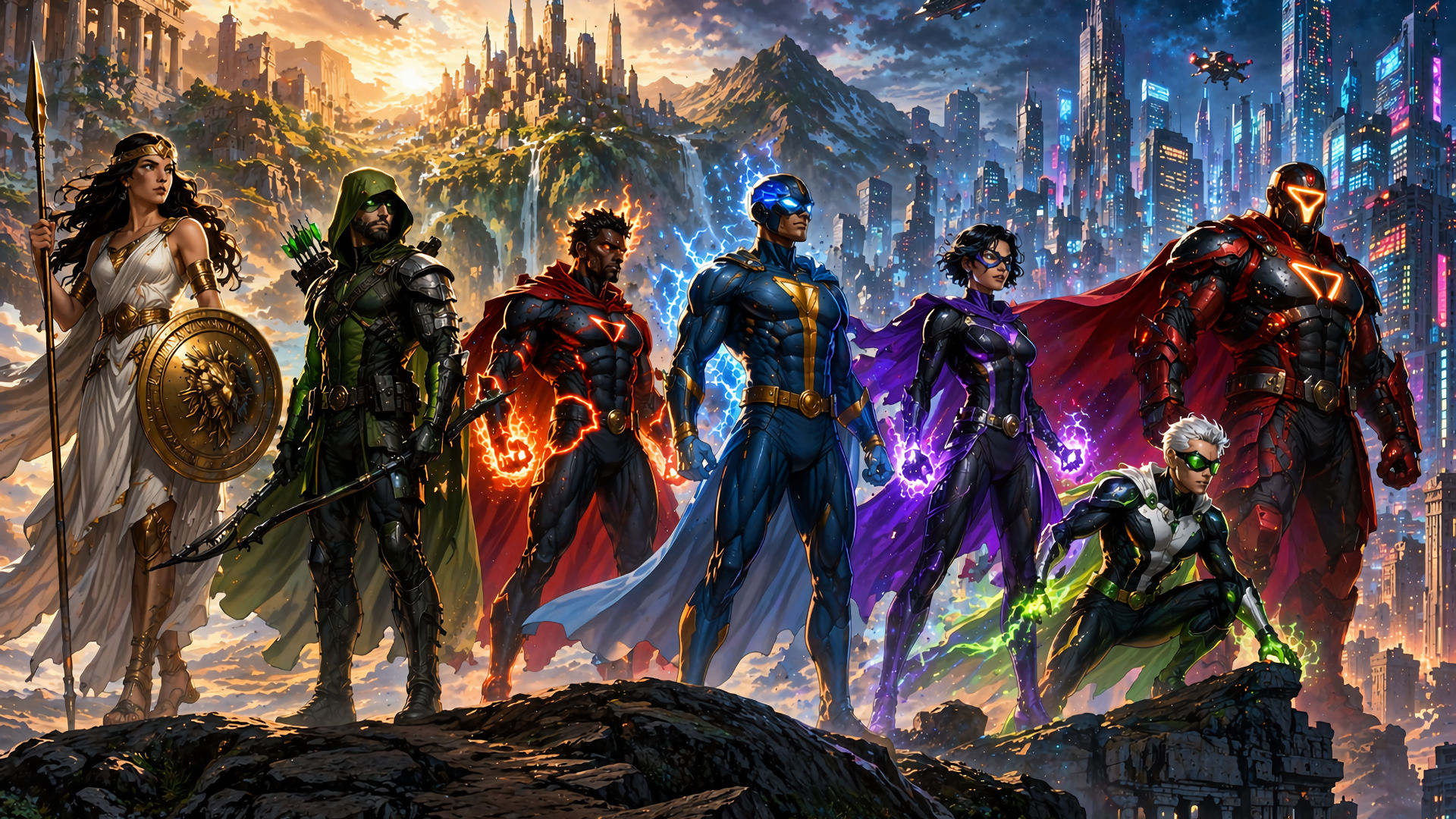
Critics sometimes argue that superhero culture has become too dominant, swallowing cinema and crowding out other forms of storytelling. There is some truth in the complaint. Capes have had a very long run at the box office, and even the most devoted fan may occasionally feel a little origin-story fatigue. Still, their staying power suggests something more than corporate success. Superheroes remain popular because they connect old mythic patterns to modern concerns with unusual effectiveness. From Gilgamesh to Superman, from Zorro to Spider-Man, the history of superheroes is really the history of how societies imagine strength, duty, justice, and hope. The costumes have changed, the media have changed, and the audiences have changed, but the basic longing has remained surprisingly constant. People still want stories about individuals who confront danger, carry burdens, and try, however imperfectly, to protect others. That is why superheroes matter. Underneath the masks and explosions, they are still answering one of humanity’s oldest questions: what might a hero look like in our time?
The History of Superheroes FAQ
Superman, who first appeared in Action Comics number 1 in 1938, is widely considered the first modern superhero because he combined superhuman powers, a costume, and a secret identity in a way that defined the genre.
Not in the modern sense, but ancient myths, legends, and pulp fiction featured heroic figures with extraordinary powers or abilities who helped shape the superhero idea.
Superheroes became popular through comic books in the 1930s and 1940s, then expanded through radio, television, films, toys, and video games until they became major global cultural icons.
A hero may simply act bravely or selflessly, while a superhero usually has an exaggerated or symbolic identity, often including special powers, a costume, a distinctive mission, or a secret identity.
Superhero stories still matter because they explore timeless ideas such as justice, power, responsibility, fear, identity, and hope in forms that modern audiences can easily connect with.