
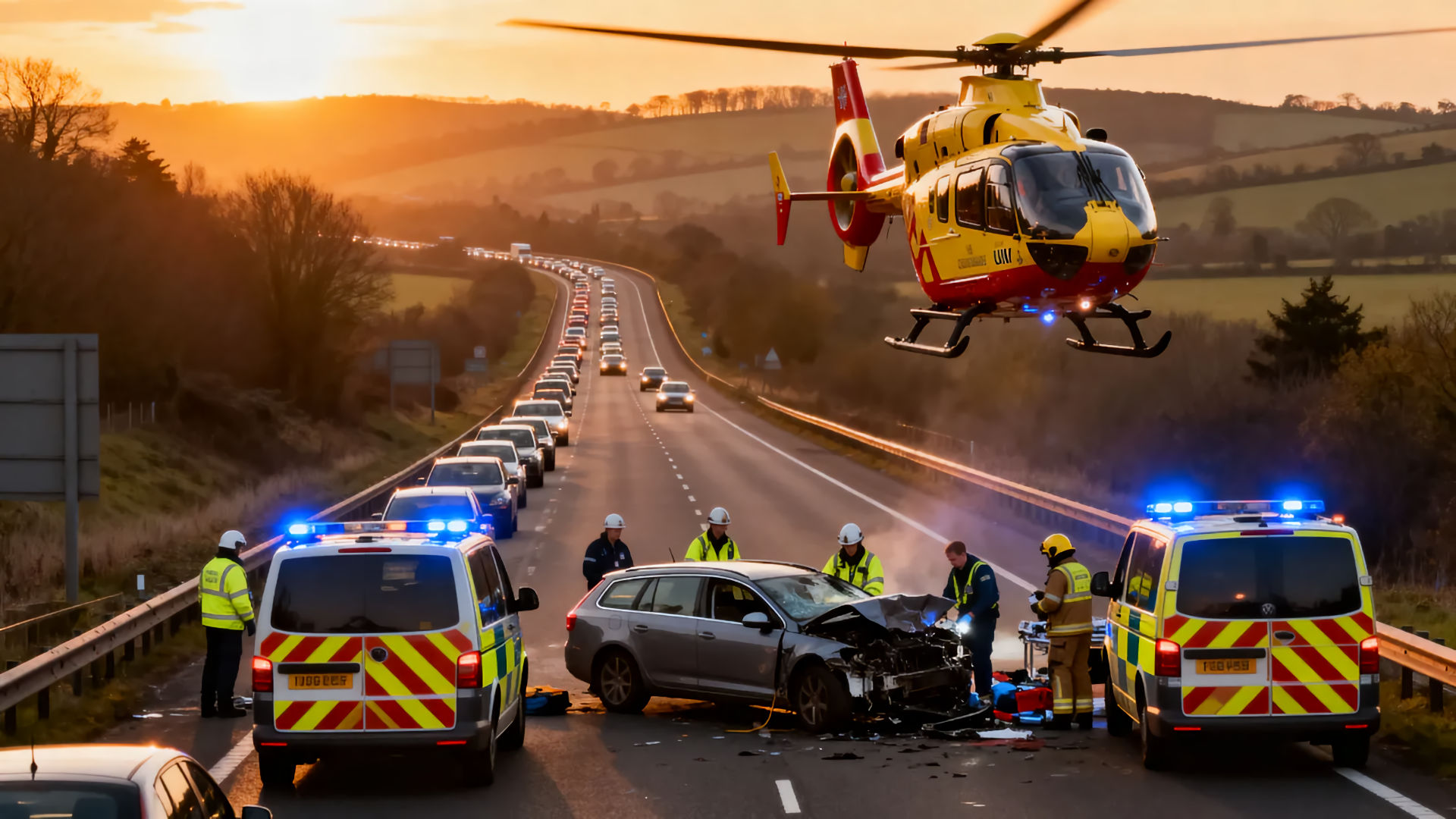
When Seconds Matter: The Life-Saving Work of the UK Air Ambulance
In medical emergencies, time is often the most critical factor in determining whether a patient survives. Doctors and paramedics frequently refer to what is known as the “golden hour,” the first sixty minutes after a serious injury occurs. During this window, rapid treatment can dramatically increase the chances of survival and reduce the risk of long-term complications. If medical care is delayed, however, the odds can change quickly, especially in cases involving severe trauma, major blood loss, or life-threatening medical conditions.
Across the United Kingdom, thousands of emergencies occur every year in places where reaching a hospital quickly is difficult. Serious road traffic collisions can happen on rural roads miles from the nearest major trauma centre. Farming accidents occur in isolated fields. Walkers and climbers can suffer injuries in remote areas of the countryside. Even in urban environments, heavy traffic and congestion can slow traditional ambulance response times when every minute matters.
For patients suffering from conditions such as cardiac arrest, stroke, or major trauma, those lost minutes can have devastating consequences. Brain cells begin to die within minutes when oxygen is cut off. Severe bleeding can quickly lead to shock and organ failure if it is not controlled rapidly. The longer a patient waits for advanced medical treatment, the greater the risk that their injuries will become fatal.
Traditional ground ambulances provide an essential service and respond to millions of emergencies each year across Britain. However, road travel has natural limitations. Ambulances must navigate traffic, road conditions, and distance, which can sometimes delay the arrival of specialist medical care. In rural or hard-to-reach locations, the journey to a hospital with the right facilities may take far longer than a patient can safely wait.
This is where air ambulance services play a crucial role. By travelling through the air rather than along busy roads, helicopters can dramatically shorten response times and bring highly trained medical teams directly to the scene of an emergency. Instead of waiting for a patient to reach the hospital, the hospital effectively comes to the patient.
Air ambulances are equipped with advanced medical equipment similar to what might be found in an emergency department or intensive care unit. This allows doctors and paramedics to begin life-saving treatments immediately after arrival. Procedures such as advanced airway management, blood transfusions, and critical trauma care can begin at the roadside, on a hillside, or wherever the emergency has occurred.
The ability to deliver this level of care so quickly can make a life-changing difference. Patients who might otherwise have died before reaching hospital now have a far greater chance of survival. For many people across the United Kingdom, the distinctive sound of helicopter blades overhead has become a symbol of hope during the most desperate moments of an emergency.
Understanding why seconds matter is the first step in understanding why the UK’s air ambulance services have become such an essential part of modern emergency medicine.
The Birth of Air Ambulance Services in the United Kingdom
The idea of transporting injured patients by air did not begin in the United Kingdom. The concept had its roots in military medicine, where helicopters were first used during conflicts such as the Korean War in the early 1950s. These aircraft proved incredibly effective at quickly evacuating wounded soldiers from battlefields to medical facilities. The ability to move critically injured patients within minutes rather than hours saved countless lives and demonstrated the enormous potential of air transport in emergency medicine.
For many years, however, civilian healthcare systems relied almost entirely on ground ambulances. While helicopters were occasionally used for search and rescue operations, they were not yet widely integrated into everyday emergency medical care. In Britain, most patients injured in serious accidents still had to wait for road ambulances to reach them and then face a potentially long journey to the hospital.
By the 1980s, medical professionals and emergency planners were beginning to realise that helicopter transport could play a much larger role in civilian healthcare. Advances in aviation technology had made helicopters more reliable and capable, while improvements in emergency medicine meant that highly trained doctors and paramedics could provide advanced treatment even outside the hospital environment.
One of the most important early developments came in 1989. Following on from a similar service launched in Cornwall two years earlier, the London Helicopter Emergency Medical Service (HEMS), otherwise known simply as London’s Air Ambulance, was launched. Based at the Royal London Hospital, the service was designed specifically to respond to serious trauma cases in the capital. It combined rapid helicopter transport with specialist medical teams trained to deliver advanced care at the scene of an accident.
The impact of the London service was immediate and significant. Doctors could now reach patients involved in serious road traffic collisions, industrial accidents, and other emergencies far more quickly than before. More importantly, they were able to begin complex medical procedures before the patient even arrived at the hospital. This approach, sometimes called “bringing the hospital to the patient,” began to transform trauma care in Britain.
The success of the Cornwall and London models inspired other regions to explore similar services. Over the following years, air ambulance charities began to appear across the United Kingdom. Counties such as Kent in 1989, Devon in 1992 and Lincolnshire & Nottinghamshire in 1994 established their own helicopter emergency medical services to cover rural areas where distance and geography made rapid road transport difficult.
Unlike many other emergency services, most UK air ambulances developed as charitable organisations rather than government-funded services. Communities played a major role in supporting them through fundraising events, donations, and partnerships with local businesses. This unique model allowed air ambulance services to expand steadily across the country.
By the early twenty-first century, air ambulance helicopters had become a familiar sight across Britain. What began as an experimental service in Cornwall had evolved into a nationwide network of life-saving aircraft, ready to respond whenever a medical emergency demanded speed, skill, and the ability to reach patients when every second counts.
Inside a Modern Air Ambulance Mission
When an emergency call is made in the United Kingdom, the first response usually begins in a regional ambulance control centre. Operators gather critical information from the caller, including the location of the incident, the number of people involved, and the severity of the injuries or illness. Using this information, trained dispatchers quickly decide which resources need to be sent. In particularly serious situations, the control room may deploy an air ambulance alongside traditional ground crews.
Air ambulances are typically dispatched to incidents involving major trauma or situations where rapid access to specialist medical care is essential. This can include severe road traffic collisions, falls from height, industrial accidents, cardiac arrests, or serious medical emergencies in remote areas. The goal is to get advanced medical professionals to the patient as quickly as possible, often within minutes of the call being received.
Once the helicopter crew receives the alert, preparations happen rapidly. Pilots, doctors, and critical care paramedics move quickly to the aircraft, where flight plans and weather conditions are confirmed. Within a short time, sometimes just a few minutes, the helicopter lifts off and heads directly toward the incident location. Unlike road ambulances, helicopters can travel in a straight line to their destination, avoiding traffic and covering large distances much faster.
As the aircraft approaches the scene, the pilot begins searching for a safe landing site. This could be a nearby field, a stretch of road closed by police, or even a school playground or sports field. Ground emergency crews and police officers often help secure a landing area, ensuring that bystanders are kept at a safe distance while the helicopter touches down.
Once on the ground, the medical team moves quickly to reach the patient. The crew usually includes a highly trained doctor alongside a critical care paramedic, allowing them to perform advanced procedures that would normally only be carried out inside a hospital. Their equipment often includes ventilators, blood transfusion supplies, advanced monitoring systems, and specialised trauma kits.
The team rapidly assesses the patient’s condition and begins treatment immediately. In cases of severe trauma, this can involve stabilising airways, controlling major bleeding, administering powerful medications, or performing emergency procedures that would otherwise have to wait until hospital arrival. These interventions can be the difference between life and death during the most critical moments following an accident.
Once the patient is stabilised, the team decides whether air transport to the hospital is the safest and fastest option. If so, the patient is carefully loaded into the helicopter and flown to the most appropriate medical centre, often a major trauma hospital equipped to handle complex injuries.
From the initial emergency call to the moment a patient arrives at hospital, a modern air ambulance mission is a carefully coordinated operation. Every step is designed to move quickly and efficiently, ensuring that patients receive life-saving treatment as soon as possible.
The Critical Care Teams Who Bring the Hospital to the Scene
At the heart of every air ambulance mission is a highly trained medical team capable of delivering advanced treatment in some of the most challenging environments imaginable. These teams are not simply transport crews moving patients from one location to another. Instead, they are mobile critical care units, bringing specialist hospital-level treatment directly to the scene of an emergency.
A typical UK air ambulance crew includes a pilot, a critical care paramedic, and often a doctor with advanced trauma training. Many of these doctors come from backgrounds in emergency medicine, anaesthetics, or major trauma care. Their experience allows them to perform complex medical procedures that would normally only take place in an operating theatre or intensive care unit.
The presence of these specialists means that life-saving treatment can begin immediately, sometimes within minutes of an incident occurring. In many serious trauma cases, the condition of the patient during those first moments after injury is the most critical factor in determining survival. Having a highly skilled team on scene so quickly dramatically improves the chances of stabilising patients before their injuries become fatal.
Air ambulance crews are trained to work in environments that are often chaotic and unpredictable. They may arrive at the scene of a motorway collision involving multiple vehicles, a farming accident in a remote field, or a serious fall in a mountainous area. In each situation, the team must assess the scene quickly, identify the most critically injured patients, and begin treatment without the controlled environment of a hospital.
The medical equipment carried on board the helicopter is remarkably sophisticated. Air ambulances are typically equipped with ventilators, cardiac monitors, ultrasound scanners, blood transfusion supplies, and advanced trauma kits. These tools allow the medical team to perform a wide range of interventions at the scene, including securing a patient’s airway, administering life-saving medications, and controlling severe bleeding.
One of the most important aspects of the air ambulance model is that the team can decide what treatment is best for the patient before they even leave the scene. Instead of automatically transporting patients to the nearest hospital, the crew can direct them to the most appropriate specialist centre. For example, a patient with severe head injuries might be flown directly to a major trauma unit with neurosurgical capabilities, saving precious time that could otherwise be lost during transfers between hospitals.
This ability to deliver immediate critical care and then transport patients to the right facility has transformed emergency medicine across the United Kingdom. Many patients who might once have died before reaching hospital now survive because specialist treatment began within minutes of their injury.
Behind every helicopter flight is a team of professionals whose training, skill, and rapid decision-making allow them to deliver hospital-level care wherever it is needed. Whether on a motorway, a hillside, or a city street, these crews bring the expertise of an emergency department directly to the patient when every second counts.
Charities, Communities, and the Funding Behind the Helicopters
One of the most remarkable aspects of the United Kingdom’s air ambulance network is how it is funded. Unlike many emergency services, such as the police, fire service, and NHS ambulances, most air ambulance services in the UK are not fully financed by government funding. Instead, they operate largely as independent charities supported by public donations, fundraising events, and community support.
This charitable model developed as air ambulance services began expanding beyond the original HEMS services in the late 1980s and early 1990s. Regional groups recognised the enormous value that helicopter medical teams could provide, particularly in rural areas where distance from hospitals could be a serious problem. However, establishing and maintaining these services required significant financial resources, including the cost of aircraft, specialist medical equipment, maintenance, training, and crew salaries.
Running an air ambulance service is extremely expensive. A single helicopter can cost several million pounds to purchase, and operating costs can reach several thousand pounds for every hour the aircraft is in the air. When fuel, maintenance, medical supplies, insurance, and highly trained staff are all taken into account, the annual cost of operating a regional air ambulance service can reach several million pounds.
Because of these costs, local charities began forming across the country to raise the necessary funds. Organisations such as the Great North Air Ambulance Service, Kent Surrey Sussex Air Ambulance, and Lincolnshire & Nottinghamshire Air Ambulance service rely heavily on the generosity of the public. Donations from individuals, businesses, and community groups help keep these helicopters flying and ensure that medical teams are available whenever they are needed.
Fundraising efforts take many forms. Charity shops operated by air ambulance organisations appear in towns and cities throughout the country, generating steady income to support operations. Community events such as sponsored runs, charity auctions, and fundraising challenges also play a major role. Some supporters even leave donations to air ambulance charities in their wills, recognising the life-saving work these organisations perform.
Corporate partnerships and major donors also contribute significant support. Businesses often sponsor equipment, vehicles, or training programmes, while larger charitable foundations sometimes provide funding for new helicopters or upgrades to medical technology. These partnerships help ensure that air ambulance services can continue expanding their capabilities and improving the care they provide.
Despite the reliance on charitable funding, air ambulance services work closely with the NHS and local emergency services. They are integrated into regional emergency response systems, meaning they can be dispatched alongside ground ambulances and other emergency teams whenever a serious incident occurs. This cooperation ensures that patients receive the fastest and most appropriate care possible.
The result is a unique partnership between professional emergency services and the communities they serve. Every time an air ambulance helicopter takes off in the UK, it represents not only the work of highly skilled medical teams but also the generosity of thousands of people whose donations help keep these life-saving aircraft in the sky.
How Air Ambulances Continue to Save Thousands of Lives Each Year
Today, air ambulance services have become a vital part of the United Kingdom’s emergency response system. Across England, Scotland, Wales, and Northern Ireland, a network of helicopter emergency medical services operates every day of the year, ready to respond whenever a serious incident occurs. Each aircraft is staffed by highly trained pilots and medical professionals who can be airborne within minutes of receiving a call for help.
On average, UK air ambulance charities respond to tens of thousands of missions every year. These calls range from major road traffic collisions and industrial accidents to medical emergencies such as cardiac arrests and severe strokes. Many incidents occur in places where rapid access to hospital care would otherwise be difficult, including rural countryside, coastal areas, and remote mountain regions.
One of the most significant developments in recent years has been the growth of specialist trauma networks across the UK. Major trauma centres have been established in key hospitals to provide advanced care for patients with the most serious injuries. Air ambulances play a crucial role in this system by transporting critically injured patients directly to these specialist facilities, bypassing smaller hospitals that may not have the equipment or expertise needed to treat complex trauma cases.
Air ambulance crews also continue to expand the types of treatment they can deliver at the scene of an emergency. Many helicopters now carry blood and plasma for transfusions, allowing teams to treat severe bleeding immediately rather than waiting until arrival at hospital. Portable ultrasound machines help doctors identify internal injuries, while advanced monitoring equipment allows the crew to track a patient’s condition throughout the journey.
Technology has also improved the way air ambulance services operate. Modern helicopters are equipped with sophisticated navigation systems, night vision technology, and advanced communication equipment that allows crews to operate safely even in difficult conditions. Some services now operate around the clock, ensuring that patients can receive rapid care even during the night.
Despite these advances, the core mission of the air ambulance remains the same as it was when the first UK services were established decades ago. The goal is simple but critical: to get highly skilled medical teams to patients as quickly as possible and begin life-saving treatment without delay.
For many people, the distinctive sound of a helicopter approaching an accident scene has become a powerful symbol of hope. It signals that expert help is arriving and that someone’s life may still be saved. Behind that sound is an extraordinary system involving pilots, doctors, paramedics, dispatch teams, engineers, and countless supporters who help keep the service running. Every successful mission represents a combination of speed, expertise, and community support. When seconds matter, the UK’s air ambulance services continue to prove that rapid response and advanced medical care can make the difference between tragedy and survival.
The UK Air Ambulance FAQ
An air ambulance is a helicopter or aircraft used to transport critically ill or injured patients quickly while providing advanced medical care during the journey.
Most air ambulance services in the UK are operated by regional charities working alongside the NHS and emergency services.
Air ambulances are often dispatched to serious road traffic collisions, major trauma incidents, cardiac arrests, and emergencies in remote locations where rapid access to hospital care is critical.
Helicopters can travel in straight lines and avoid traffic, allowing medical teams to reach patients and hospitals much faster in time-critical situations.
Most UK air ambulance services rely heavily on charitable donations, fundraising events, and community support to cover their operating costs.