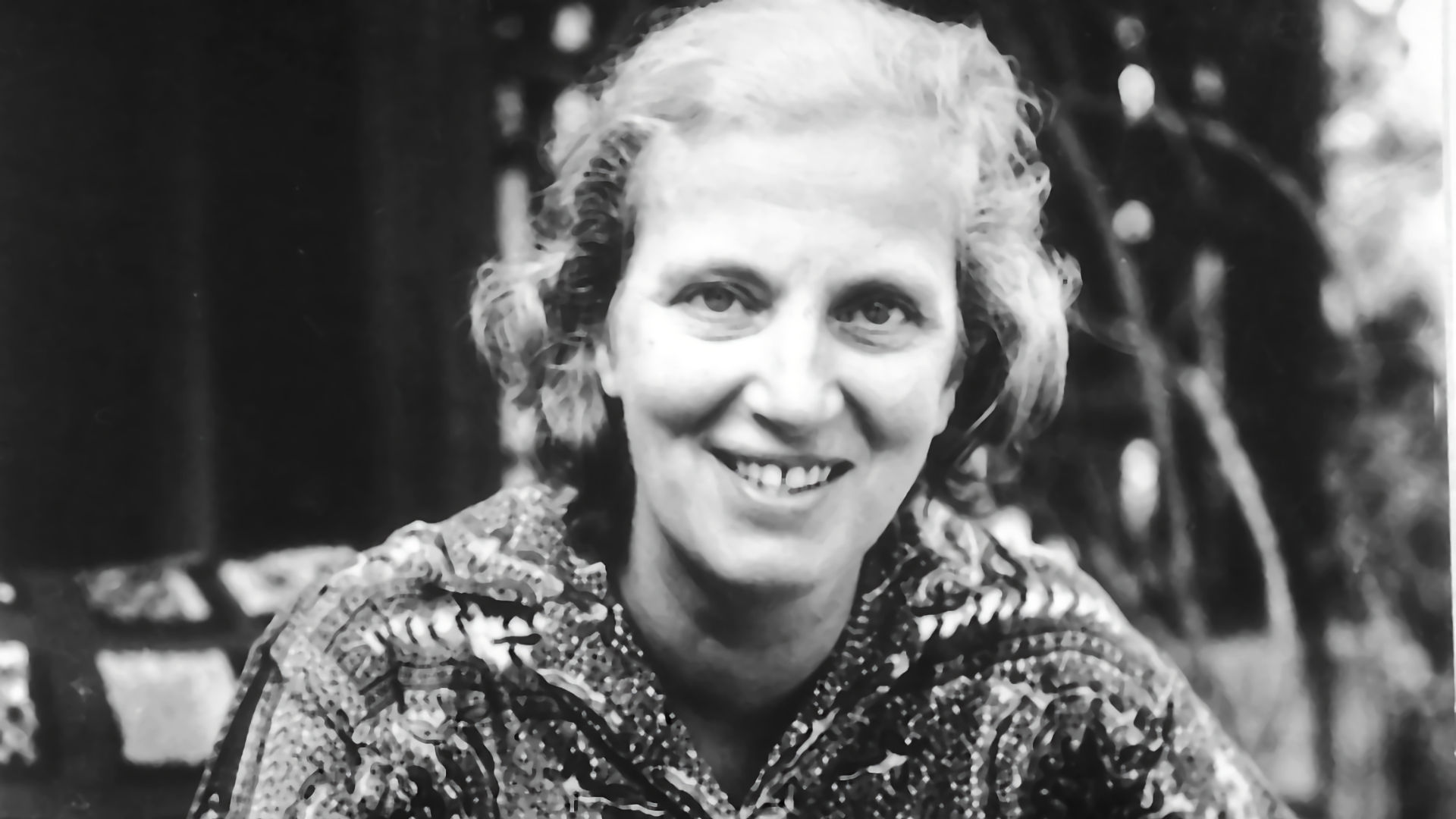
Dorothy Hodgkin
Some scientists change the world by discovering new things. Dorothy Hodgkin changed it by learning how to see what had always been there. Her gift was not speed or spectacle, but perception. She revealed the invisible architecture of life, showing how atoms arrange themselves into the molecules that sustain human existence. Long before her work was widely understood, it was already transforming medicine, chemistry, and biology.
Hodgkin worked in a realm that resisted easy explanation. The structures she studied were far too small to be seen directly, yet they determined how substances behaved, how drugs worked, and how life functioned at its most basic level. Her achievement lay in translating abstract patterns of diffraction into three-dimensional reality, turning mathematical shadows into precise molecular forms.
What set Hodgkin apart was not only intelligence, but patience. She was willing to spend years, even decades, on a single problem, confident that careful observation and persistence would eventually yield clarity. While others moved on when progress slowed, Hodgkin stayed. She trusted method over intuition, accumulation over breakthrough, and collaboration over individual acclaim.
To those outside her field, her work could appear arcane. To those within it, she was quietly revolutionary. By solving structures that others believed impossible, she expanded the limits of what science could attempt. The consequences were profound. Her discoveries reshaped the development of antibiotics, hormones, and treatments that affected millions of lives.
Yet Hodgkin never cultivated an image of authority. She avoided grand statements and personal mythmaking. Her confidence came from evidence, not ego. She believed that science advanced best when pursued with humility, curiosity, and a sense of shared purpose.
This combination of intellectual rigour and moral steadiness defined her career. To understand how she came to see what others could not, it is necessary to begin far from laboratories and Nobel ceremonies, in a childhood shaped by curiosity, independence, and the quiet encouragement to look closely at the world.
An Unlikely Path into Science
Dorothy Hodgkin was born Dorothy Mary Crowfoot on 12 May 1910 in Cairo, then part of British-controlled Egypt. Her parents were archaeologists, scholars whose work took them across North Africa and the Middle East. From an early age, Dorothy grew up surrounded by artefacts, excavation sites, and the idea that patient study could recover hidden truths from fragments. It was an unusual childhood, intellectually rich but often physically distant. Her parents travelled frequently, and much of Dorothy’s early education took place in England, where she lived with relatives or at boarding school.
This separation fostered independence rather than insecurity. Dorothy learned early to occupy her own mental space, to work quietly and persistently without constant supervision. She developed a habit of close observation, whether studying minerals, plants, or the small scientific experiments she set up for herself. At the age of ten, she was given a chemistry set, and it proved decisive. Unlike many children who treated such gifts as toys, Dorothy approached it as a serious tool. She followed instructions carefully, recorded results, and began to grasp that chemistry was not magic but a system governed by rules that could be learned and tested.
Her formal education took place against a background of low expectations for women in science. In the early twentieth century, scientific careers for women were possible but constrained, often limited to teaching or auxiliary roles. Yet Dorothy’s aptitude was unmistakable. At Sir John Leman High School in Beccles, she excelled in science subjects and was encouraged by teachers who recognised her talent. Their support mattered. Without it, her path might easily have been diverted into something considered more suitable.
In 1928, she won a scholarship to Somerville College, Oxford, one of the few colleges at the university that admitted women. Oxford at that time was still ambivalent about female students. Women could attend lectures and sit examinations, but they were not awarded full degrees until 1920, only eight years before Dorothy arrived. The atmosphere was formally polite but structurally unequal.
Dorothy approached Oxford with quiet determination. She studied chemistry with intense focus, gravitating toward problems that required spatial imagination as well as mathematical reasoning. She was less interested in rote learning than in understanding how substances behaved at a fundamental level. During her undergraduate years, she encountered early research into X-ray diffraction, a technique that hinted at the possibility of seeing atomic structures indirectly. The idea fascinated her.
By the time she completed her degree in 1932, Dorothy had already decided that research, not teaching or applied chemistry, was her future. It was an unusual ambition for a woman of her generation, but she pursued it without drama. Her path into science was not driven by rebellion or ideology, but by curiosity and a growing conviction that the most critical questions lay beneath the surface, waiting patiently for someone prepared to look closely enough.
Learning to Read Crystals
Dorothy Hodgkin’s scientific direction became clear in 1932, when she left Oxford to pursue doctoral research at the University of Cambridge. There she worked at the Cavendish Laboratory under the supervision of John Desmond Bernal, one of the most imaginative scientists of the period. Bernal believed that the structure of biological molecules could be revealed using X-ray crystallography, a technique still in its infancy and viewed by many as impractical for complex substances. Hodgkin arrived at precisely the moment when possibility outweighed precedent.
X-ray crystallography was conceptually simple and technically punishing. A crystal is bombarded with X-rays, producing a diffraction pattern of spots recorded on photographic film. Those spots encode the positions of atoms within the crystal, but only indirectly. Turning the pattern into a three-dimensional structure requires painstaking mathematical interpretation, informed guesswork, and repeated refinement. In the early 1930s, much of the necessary theory existed, but the calculations were slow, manual, and unforgiving. Errors could invalidate months of work.
Hodgkin was drawn to the challenge. She possessed an unusual combination of spatial imagination and numerical discipline, allowing her to move between abstract patterns and physical structures with confidence. While others focused on simpler inorganic crystals, she became interested in biological molecules, which produced far more complex diffraction patterns. Many senior chemists considered such targets unrealistic. Hodgkin saw them as inevitable.
Her doctoral work focused on sterols, including cholesterol, a substance of immense biological importance. In 1937, she published a landmark paper that revealed the structure of cholesterol, demonstrating conclusively that X-ray crystallography could be applied to biologically relevant molecules. The achievement was not a dramatic breakthrough but the culmination of careful, incremental progress. It established her reputation as someone capable of turning theoretical possibility into a practical method.
That same year, Hodgkin returned to Oxford, accepting a fellowship and research position at Somerville College. She would remain based there for the rest of her career. Oxford offered fewer resources than Cambridge, but it gave her independence. She assembled a small research group and continued refining crystallographic techniques, often working with limited equipment and modest funding.
The outbreak of the Second World War in September 1939 reshaped her priorities. Penicillin, discovered earlier but not yet understood structurally, became a molecule of urgent interest. In 1942, Hodgkin began work on determining its structure, a task complicated by the molecule’s instability and irregular crystals. After years of effort, she succeeded in 1945, revealing how penicillin worked at an atomic level. The result had immediate implications for drug development and antibiotic research.
By mid-century, Hodgkin had mastered a way of reading crystals that others struggled to interpret. She treated diffraction patterns not as puzzles to be solved quickly, but as texts that required careful translation. Her approach was methodical, collaborative, and patient. Learning to read crystals was not simply a technical skill. For Hodgkin, it was a way of thinking, one that transformed scattered points of light into reliable knowledge about the architecture of life itself.
Years of Work for a Single Breakthrough
Dorothy Hodgkin’s career was defined less by sudden discoveries than by extraordinary endurance. She chose problems that resisted solution for years, sometimes decades, and accepted that progress would be slow, cumulative, and often invisible to those outside her field. Nowhere was this more evident than in her work on complex biological molecules, where each advance depended on thousands of careful decisions rather than moments of inspiration.
After determining the structure of penicillin in 1945, Hodgkin turned her attention to an even more formidable target: vitamin B12. The molecule was large, intricate, and unlike anything crystallographers had previously solved. Work on B12 began in 1948 and would occupy her and her collaborators for more than a decade. At the time, many believed the task was beyond the limits of existing methods. The diffraction patterns were bewilderingly complex, and the calculations required to interpret them were immense.
Hodgkin approached the problem systematically. She built international collaborations, shared data openly, and embraced emerging technologies as they became available. One of the turning points came in the early 1950s with the increasing use of electronic computers, which allowed calculations that would previously have taken years to be completed in weeks. Even so, progress was incremental. Intermediate results had to be checked and rechecked, and errors could derail months of work.
In 1956, key features of the vitamin B12 structure were finally resolved, and on 8 May 1957, the complete structure was announced. It was a triumph not only of technique but of persistence. The solution revealed a complex cobalt-containing ring system that reshaped understanding of how vitamins function at a molecular level. For Hodgkin, the achievement validated her belief that patience and collaboration could extend the reach of science beyond what any individual breakthrough might suggest.
Almost immediately, she turned to another challenge that would test that belief even further: insulin. Hodgkin had first obtained insulin crystals in 1934, when she was still a young researcher, but the molecule proved vastly more difficult than anticipated. Unlike penicillin or vitamin B12, insulin’s flexibility and size made crystallographic analysis exceptionally challenging. Rather than abandoning the problem, Hodgkin returned to it repeatedly over the next three decades.
Work on insulin continued through the 1960s, with partial results emerging as techniques improved. Finally, in 1969, the complete three-dimensional structure of insulin was determined. By then, Hodgkin was nearly sixty years old. The achievement underscored a defining feature of her career: she was willing to wait as long as necessary to see a problem through.
These years of work for single breakthroughs illustrate why Hodgkin’s science carried such authority. Her discoveries were not products of haste or competition, but of sustained attention. She demonstrated that some truths reveal themselves only to those prepared to stay with a question long after others have moved on.
Recognition, Responsibility, and Quiet Authority
Dorothy Hodgkin’s achievements did not go unnoticed, but recognition arrived slowly and often long after the work itself had been done. This suited her temperament. She was never driven by prizes or public acclaim, and she regarded honours as acknowledgements of collective effort rather than personal triumphs. Even so, by the early 1960s, it had become impossible to ignore the scale of her contribution to science.
In 1964, Hodgkin was awarded the Nobel Prize in Chemistry for her determinations by X-ray techniques of the structures of important biochemical substances. The citation explicitly referenced her work on penicillin and vitamin B12, as insulin was still unresolved at the time. The award made her only the third woman to receive the chemistry prize, and the first British woman scientist to do so. Public attention briefly followed, but Hodgkin handled it with characteristic understatement. She spoke about the science rather than herself, emphasising the long chains of collaboration that made such work possible.
With recognition came responsibility. Hodgkin took her role as a senior scientist seriously, not as an authority figure issuing instructions, but as a facilitator of others’ work. At Oxford, she continued to teach and supervise students, many of whom would go on to distinguished scientific careers of their own. She encouraged independence, resisted hierarchy, and created an environment in which ideas could be tested without fear of embarrassment. Her authority came not from status, but from trust.
Hodgkin also became an international figure, travelling widely and maintaining scientific relationships across political boundaries. During the Cold War, she was a strong advocate for dialogue between scientists in East and West, believing that shared knowledge could transcend ideological divisions. She served as president of the International Union of Crystallography from 1972 to 1975, using the role to promote cooperation and open exchange.
At the same time, she remained deeply committed to social and political causes. Hodgkin supported nuclear disarmament and was involved in organisations that sought to reduce the risk of scientific knowledge being used for destruction rather than benefit. Her views were principled but never strident. She believed that scientists had ethical responsibilities that extended beyond the laboratory, and she acted on those beliefs through sustained engagement rather than public confrontation.
Despite global recognition, Hodgkin’s daily working life changed little. She continued to work in modest surroundings, often despite severe rheumatoid arthritis that affected her hands and caused chronic pain. Colleagues were struck by her resilience and lack of complaint. She adapted her methods, relied on collaboration, and refused to allow illness to define her contribution.
This combination of achievement, humility, and moral seriousness gave Hodgkin a distinctive form of authority. She did not dominate conversations or institutions. Instead, she shaped them quietly, through example. Recognition followed her work, but it never replaced it.
Science, Conscience, and a Lasting Legacy
Dorothy Hodgkin never separated scientific achievement from social responsibility. For her, understanding the structure of molecules carried an implicit obligation to consider how that knowledge would be used. This belief shaped her life beyond the laboratory, particularly in her sustained engagement with issues of peace, equality, and international cooperation.
Hodgkin was an active supporter of nuclear disarmament and played a long-standing role in the Pugwash Conferences on Science and World Affairs, an organisation founded in 1957 to reduce the threat of armed conflict through dialogue between scientists. She believed that scientists, precisely because of their expertise, had a duty to speak across political boundaries. Her friendships and collaborations extended into the Soviet Union and China during periods when such contacts were viewed with suspicion, yet she persisted, convinced that shared knowledge could outlast ideology.
Despite her global stature, Hodgkin remained rooted in Oxford, continuing to teach, supervise, and collaborate well into later life. Severe rheumatoid arthritis increasingly limited her mobility, yet she adapted without self-pity, relying on colleagues and students while maintaining intellectual leadership. Her commitment to insulin research continued until its structure was finally resolved in 1969, a triumph that crowned work begun more than three decades earlier.
Dorothy Hodgkin died on 29 July 1994 at the age of eighty-four. Tributes emphasised not only her scientific brilliance, but her generosity, patience, and moral seriousness. She left behind more than solved structures. She left a model of how science can be practised with humility, persistence, and ethical awareness.
Her legacy endures in modern medicine, structural biology, and in the generations of scientists she mentored. Hodgkin demonstrated that seeing clearly, whether in crystals or in conscience, can change the world quietly and permanently.
Dorothy Hodgkin FAQ
Dorothy Hodgkin was a British chemist and Nobel laureate known for pioneering X-ray crystallography to determine molecular structures.
She determined the structures of penicillin, vitamin B12, and insulin, discoveries that transformed modern medicine.
She was awarded the Nobel Prize in Chemistry in 1964.
She is best known for developing and applying X-ray crystallography to complex biological molecules.
Dorothy Hodgkin died on 29 July 1994 at the age of eighty-four.