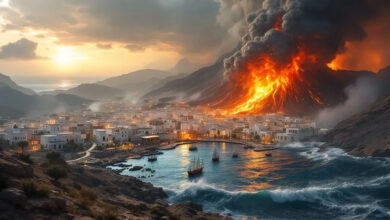

The Sinking of the Prestige
On a stormy November day in 2002, the Greek-owned oil tanker MV Prestige began to break apart off the coast of Galicia, Spain. What followed wasn’t just a maritime accident; it was a slow, chaotic descent into one of Europe’s worst environmental disasters. By the time the ship finally sank, over 60,000 tonnes of heavy fuel oil had been released into the Atlantic, coating thousands of kilometres of pristine coastline in toxic sludge.
The Prestige disaster wasn’t just about a ship going down. It was about poor decisions, political finger-pointing, and the devastating price of ignoring warnings until it’s far too late.
The Tanker That Shouldn’t Have Been at Sea
The Prestige was a single-hulled oil tanker, 26 years old at the time of its final voyage. Registered under a Bahamian flag of convenience, operated by a Liberian company, owned by a Greek businessman, and carrying a cargo of heavy fuel oil for a Russian client, it was, in many ways, a symbol of the complex and murky world of international shipping.
On 13 November 2002, the MV Prestige was travelling through rough waters about 250 kilometres off the coast of Spain when disaster struck. A storm battered the vessel, and one of its twelve cargo tanks burst. The tanker began listing to starboard and losing oil into the sea.
The captain, Apostolos Mangouras, immediately issued a distress call. He requested permission to dock in a nearby Spanish port, where he could unload the cargo, stabilise the vessel, and prevent a full-blown catastrophe.
What he got was… nothing. Or worse.
Nobody Wanted It
As the situation worsened aboard the Prestige, Spanish authorities made a fateful decision: the ship would not be allowed to enter any port. Fearing the environmental consequences of an oil spill near the coast, the government ordered the tanker to be towed away, further out to sea.
Portugal and France soon followed suit, refusing entry and effectively exiling the crippled vessel to open waters in worsening conditions. For six agonising days, the Prestige drifted, leaking thick black oil the entire time. Satellite images captured the growing slick trailing behind the ship like a wound in the water.
Inside the hull, the structural damage continued to grow. Eventually, on 19 November, the Prestige broke in two. Both sections sank, the bow and stern slipping beneath the waves to rest more than 3,000 metres below the surface.
But the oil didn’t stay there.
A Coastline Drenched in Oil
The Prestige’s cargo, roughly 77,000 tonnes of heavy fuel oil, began to wash ashore in great black waves. The coastlines of Galicia, Asturias, Cantabria, and the Basque Country were the hardest hit. Spain’s rugged, beautiful northwest, known for its fishing villages and biodiversity, became a scene of ecological devastation.
Fishing was banned. Beaches were closed. Birds, fish, and marine mammals were coated in oil, suffocating and poisoned by the thick, tar-like substance. Entire ecosystems were disrupted. Thousands of volunteers arrived to help, dressed in hazmat suits and wielding buckets and shovels, scraping the sludge off the rocks by hand.
The black tide didn’t stop at Spain. The oil reached the French coast. Traces were later found in the waters off the UK and even as far away as the Caribbean. The scale of the contamination was staggering: over 1,000 beaches were affected, more than 20,000 tonnes of oil were recovered from the sea surface, and untold amounts were absorbed into the environment.
The damage to the fishing industry alone ran into hundreds of millions of euros. Some species, including goose barnacles, a prized delicacy in Galicia, took years to recover.
The Blame Game Begins
As with many disasters, the sinking of the Prestige triggered a frenzy of blame, legal wrangling, and political scandal.
Why had an ageing, single-hulled tanker been allowed to operate with such a dangerous cargo? Why was it flying a flag of convenience from a country with little regulatory oversight? And above all, why was it forced out to sea instead of being brought safely to port?
Spain’s government at the time defended its decision, claiming that allowing the tanker near shore would have caused even greater damage. Environmental experts and maritime safety advocates strongly disagreed. By pushing the ship out to sea, they argued, the authorities ensured that the oil would spread more widely, last longer, and be much harder to contain.
Captain Mangouras was arrested shortly after the incident, charged with disobeying orders and causing harm to the environment. He spent over two months in jail before being released on bail. He always maintained that he did everything in his power to save his crew and the ship.
However, in 2016, 13 years after the incident, Spain’s Supreme Court overturned an earlier 2013 acquittal and found Captain Mangouras guilty of gross negligence, sentencing him to two years in prison, though the sentence was ultimately suspended. Following this verdict, the court also opened the door to possible financial claims against him and the ship’s insurers; however, the original 2013 decision, which cleared the vessel’s owner and the Spanish government of criminal responsibility, remains unchanged.
A Preventable Disaster?
What made the Prestige disaster so frustrating for many was that it felt preventable at multiple stages.
The tanker had known design flaws. Single-hulled oil tankers were already considered outdated and risky, especially for transporting heavy, toxic cargo like fuel oil. Just a year later, the International Maritime Organization accelerated its global phase-out of single-hulled tankers in response to the Prestige disaster.
Beyond that, there were opportunities to prevent the spill from becoming such a widespread catastrophe. Had the ship been brought to a sheltered port, the oil might have been contained, the damage minimised. Instead, political fear and indecision exacerbated the situation.
The case exposed critical weaknesses in international maritime law, specifically how a vessel could operate across multiple flags, nations, and jurisdictions while evading full responsibility and oversight.
Cleaning Up and Looking Ahead
The cleanup operation from the Prestige spill took years. Thousands of workers and volunteers rushed to the beaches, rescued wildlife, and attempted to repair the damage. The Spanish government spent billions on the response and economic recovery, and the fishing industry in the region took nearly a decade to bounce back.
But some damage couldn’t be undone.
The disaster led to significant reforms. The European Union passed new maritime safety rules, banning single-hulled tankers from its waters and demanding stricter controls on ship registration and oversight. The idea of designating “ports of refuge”-safe harbours for damaged ships gained traction globally.
Yet, the tragedy of the Prestige remains a cautionary tale: of bureaucratic delay, the perils of cost-cutting in high-risk industries, and how environmental disasters can unfold slowly, painfully, and in full view of the world.
Oil, Outrage and the Price of Inaction
The Prestige didn’t explode. It didn’t vanish. It didn’t sink with a single dramatic twist. It cracked, it leaked, and it drifted, leaking poison across the Atlantic for days while governments argued over what to do.
And when it finally went under, it dragged with it not only the hopes of its crew and the livelihoods of thousands of fishermen, but also the illusion that the world was ready for a crisis like this. The wreck of the Prestige still lies at the bottom of the ocean, a rusting reminder of a disaster that should never have been allowed to happen.
The Sinking of the Prestige FAQ
The Prestige oil spill occurred in November 2002 when the oil tanker Prestige sank off the coast of Galicia, Spain, leaking over 60,000 tonnes of heavy fuel oil into the Atlantic Ocean.
The ship suffered structural damage during a storm. Despite clear signs of distress, authorities refused it entry into port, forcing it to remain at sea where it eventually broke in two.
The spill devastated marine ecosystems and coastlines across Spain, Portugal, and France, contaminating beaches and killing numerous species of wildlife. It remains one of Europe’s worst environmental disasters.
Captain Apostolos Mangouras was initially found guilty of negligence in 2013 but received no prison time. However, in 2016, Spain’s Supreme Court sentenced him to two years, though the sentence was ultimately suspended. Legal responsibility for the ship’s owners and insurers remains a contentious issue.