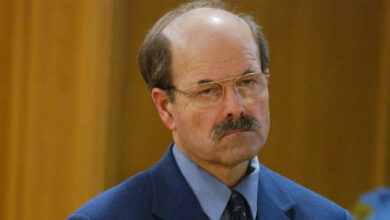
The John List Family Murders
In the quiet suburban town of Westfield, New Jersey, in the early 1970s, John Emil List appeared to be the sort of man people trusted without question. He was polite, soft spoken, neatly dressed, and deeply religious. Neighbours saw him as a devoted family man who attended church regularly and kept a respectable home. In many ways, he looked like the perfect example of middle-class American stability.
John List was born in Bay City, Michigan, in 1925 and grew up during the difficult years of the Great Depression. His early life shaped a personality that valued order, discipline, and traditional values. After serving in the United States Army during the Second World War, List went on to earn a degree in business administration and later became an accountant. His career path suited his methodical nature. He was careful with numbers, structured in his thinking, and intensely private.
By the late 1960s, List had built what appeared to be a successful life. He lived with his wife Helen, their three children, Patricia, John Jr, and Frederick, and his elderly mother Alma in a large Victorian mansion on Hillside Avenue in Westfield. The house itself was impressive. It was a nineteen-room property with a ballroom, stained glass windows, and enough space for the entire extended family. To outsiders, it suggested comfort and prosperity.
But the reality inside the List household was far more complicated.
John List was known to be strict and deeply conservative in his beliefs. Religion played a central role in his worldview. He was a committed Lutheran who believed strongly in discipline, moral behaviour, and traditional family roles. Those values shaped how he raised his children and how he viewed the world around him.
Yet beneath the surface, pressure was quietly building. List had recently lost his job as an accountant, a fact he kept secret from almost everyone, including his family. Instead of going to work each day, he spent hours riding trains, sitting in office lobbies, and scanning newspapers for employment opportunities. The fear of financial collapse weighed heavily on him.
Money was running out. Bills were piling up. The expensive house that once symbolised success had become a financial burden. Even basic expenses were becoming difficult to manage.

To make matters worse, List believed the world itself was deteriorating morally. The late 1960s and early 1970s were a time of enormous social change in America. Cultural shifts, political unrest, and changing attitudes toward religion and authority left him deeply uneasy. He saw the modern world as dangerous, corrupt, and spiritually lost.
To neighbours, however, none of this was visible.
John List still attended church. He still greeted people politely. The quiet accountant living in the large house on Hillside Avenue appeared calm and respectable.
But behind that calm exterior, a dark and disturbing plan was slowly taking shape.
Inside the List Family Home
John List’s wife, Helen, had once been a teacher, but by the early 1970s, she was dealing with serious medical problems that had begun to affect her behaviour. Years earlier, she had contracted syphilis, a disease that can damage the nervous system when left untreated. By the time the family was living in Westfield, the illness had reportedly begun causing mood swings, paranoia, and emotional instability, creating frequent tension within the home.
The three children were all entering the complicated years of adolescence. Patricia, the oldest at sixteen, was attending college and beginning to build a life outside the strict environment her father maintained. John Jr, who was fifteen, struggled academically and reportedly had difficulties with bullying at school, which added to the strain he felt at home.
Frederick, the youngest at thirteen, was quieter and more withdrawn than his siblings. He tended to avoid conflict and often kept to himself, spending time reading or working on school projects. Although the children outwardly followed their father’s rules, the pressures of the household environment were beginning to show.
A Carefully Planned Massacre
By the autumn of 1971, the pressures in John List’s life had reached a breaking point. His job was gone, his finances were collapsing, and the image of success he had carefully maintained for years was beginning to crumble. Instead of seeking help or admitting the truth to his family, List began to convince himself that drastic action was the only possible solution.
His thinking was shaped by a disturbing mixture of financial despair and rigid religious belief. List believed that modern society had become morally corrupt and spiritually dangerous, and he feared that his children would eventually be drawn into that corruption. In his mind, protecting their souls from what he saw as a sinful world became more important than protecting their lives.
Unlike many crimes driven by sudden anger or emotional breakdown, the murders that followed were not impulsive. List approached what he was planning with careful preparation and a chilling level of calculation. He had two handguns available to him, a 9mm Steyr 1912 semi-automatic and a .22-calibre revolver which had belonged to his father.
On the morning of 9 November 1971, John List put his plan into motion. The first victim was his wife, Helen, who was in the kitchen of their home on Hillside Avenue. He shot her in the back of the head, killing her quickly and without warning.
Later that morning, List moved to the upstairs apartment where his elderly mother Alma lived. She was eighty-five years old and depended heavily on her son for support and care. List shot her as well, ensuring that two members of the household were already dead before the children even returned home.
Then, his daughter Patricia and his youngest son Frederick were shot in the back of the head as they arrived home from school. List then went to his 15-year-old son John Jr’s school to watch him play soccer, and after driving him home, he shot him too.
There was no evidence of panic, rage, or chaos during the attacks, only the steady execution of a plan he had already decided upon. By the end of the day, five members of the List family were dead inside the house.
The House of Death
After killing his entire family, John List did not immediately flee the scene in panic. Instead, he spent hours carefully arranging the house in a way that reflected the same cold planning that had guided the murders themselves. His behaviour after the killings would later shock investigators, because it showed a level of calm organisation that was deeply unsettling.
List began by moving the bodies of his family members. He placed most of them in the mansion’s ballroom, laying them out side by side on sleeping bags. The careful placement suggested that he was treating the scene almost like a ritual rather than the aftermath of a violent crime.
Once the bodies were arranged, he covered their faces with towels. This detail would later strike investigators as particularly disturbing, as it suggested an attempt to maintain emotional distance from what he had done. Even in death, he seemed unwilling to confront the reality of his victims.
List then turned his attention to practical matters inside the house. He cleaned up parts of the scene and attempted to ensure that the murders would not be discovered quickly. In doing so, he hoped to buy himself as much time as possible to disappear.
Before leaving the house, he wrote several letters explaining his actions. One letter was addressed to his pastor, outlining the reasoning he believed justified the murders. In it, List claimed he had killed his family to save their souls from the corruption of the modern world.
He also wrote letters to relatives and made arrangements to cancel certain services connected to the house. These actions demonstrated how methodical he remained even after committing the murders. Rather than acting like someone overwhelmed by guilt or fear, he behaved more like a man tying up loose ends before a long journey.
Perhaps the most chilling detail was the music he left playing in the house. List turned on the radio and tuned it to a religious station before he left. The sound of church music continued to echo quietly through the large Victorian mansion as the bodies of his family lay undiscovered inside.
Before departing, List also contacted the children’s schools to inform them that the family would be travelling and that the children would be absent. This simple phone call delayed suspicion and helped ensure that no one would immediately come looking for them. It was another example of the careful planning that surrounded the crime.
Once everything was arranged, List locked the house and walked away. He abandoned the car at the airport and disappeared, leaving behind a silent mansion containing five bodies.
Eighteen Years on the Run
For nearly a month after the murders, no one realised anything was wrong at the List family home. The large Victorian mansion on Hillside Avenue sat quietly in the neighbourhood, with only one thing being a little unusual. All the lights in the house were left on, day and night. Neighbours assumed the family had gone away for a holiday or an extended trip, something that was not unusual during the colder months in New Jersey. It was not until 7 December 1971, when light bulbs started to fail, that police were finally asked to check on the house.
When officers entered the mansion, they discovered one of the most disturbing crime scenes in the state’s history. The bodies of Helen, Patricia, John Jr, Frederick, and Alma List were found inside the home exactly where John List had left them weeks earlier. The radio was still playing religious music, quietly echoing through the otherwise silent house. Investigators quickly realised that the killer had carefully arranged the scene before disappearing.
By the time police began searching for John List, he was already long gone. He had withdrawn money from his bank account, abandoned his car at John F. Kennedy International Airport in New York, and vanished without leaving a clear trail. Detectives launched a nationwide search, but List had planned his escape well enough to avoid immediate capture. As weeks turned into months and months turned into years, the case slowly grew colder.
For nearly two decades, John List lived under a false identity. He moved to Virginia, remarried, and began building an entirely new life under the name Robert Clark. Those who knew him in his new community described him as quiet, polite, and deeply religious, much like the man neighbours had once known in Westfield. Few suspected that the soft-spoken accountant living among them was one of the most wanted fugitives in America.
The breakthrough in the case came in 1989, thanks in part to a popular television programme. The show America’s Most Wanted aired a segment about the List murders, bringing national attention back to the long-forgotten case. During the broadcast, investigators presented a forensic sculpture created to show what John List might look like nearly twenty years after the crimes.
The sculpture proved to be remarkably accurate. A viewer who saw the programme recognised the man as a neighbour living under the name Robert Clark in Richmond, Virginia. Authorities were alerted, and after an investigation, the quiet accountant was arrested on 1 June.
After eighteen years of hiding in plain sight, John List’s long escape had finally come to an end.
Justice at Last
Following his arrest, John List was returned to New Jersey to face trial for the murders of his family. Prosecutors prepared to present a case built on both physical evidence from the crime scene and the long trail of deception that List had left behind. Despite the years that had passed, investigators believed they had more than enough evidence to prove his guilt.
During the trial in 1990, List did not deny that he had killed his wife, mother, and three children. Instead, his defence team focused on his mental state at the time of the murders, suggesting that he had been suffering from severe depression and emotional collapse. Psychiatrists testified about the intense pressure he had faced after losing his job and the rigid religious beliefs that shaped his thinking. The defence hoped to convince the jury that List’s actions were the result of a disturbed mind rather than calculated cruelty.
Prosecutors, however, presented a very different interpretation of the events. They argued that the murders had been carefully planned and executed with chilling precision. List had waited for each family member to return home, arranged the bodies, written explanatory letters, and organised his escape. To the prosecution, these actions showed the behaviour of a man who knew exactly what he was doing.
Perhaps the most disturbing aspect of the trial was List’s own explanation for the murders. He calmly stated that he believed he had saved his family from a world that he saw as morally corrupt. According to his reasoning, by killing them, he ensured that their souls would reach heaven before they could fall into sin. His words revealed a deeply unsettling mindset that many observers found almost impossible to comprehend.
The jury deliberated for less than a day before reaching its verdict. On 12 April 1990, John List was found guilty on five counts of first-degree murder. The court sentenced him to five consecutive life sentences, ensuring that he would spend the rest of his life behind bars. For the relatives of the victims and the community in Westfield, the verdict brought a sense of long-delayed justice. John List spent the remainder of his life in New Jersey State Prison. Even in prison, he remained calm, reserved, and deeply religious, maintaining the same quiet demeanour that had once allowed him to blend easily into ordinary suburban life. He died in custody on 21 March, 2008, at the age of eighty-two.
The John List Family Murders FAQ
John List was an American accountant who murdered his mother, wife, and three children in their Westfield, New Jersey home in 1971 before disappearing for nearly 18 years.
List claimed he believed his family would suffer financial ruin and moral decline. He later said he thought killing them would save their souls.
In 1989, a forensic sculpture created for the television show America’s Most Wanted closely resembled List’s aged appearance. A viewer recognised him, leading to his arrest.
List had been living in Virginia under the alias Robert Clark. He remarried, worked as an accountant, and lived a seemingly normal life.
John List was convicted of five counts of murder in 1990 and sentenced to five consecutive life sentences. He died in prison in 2008.