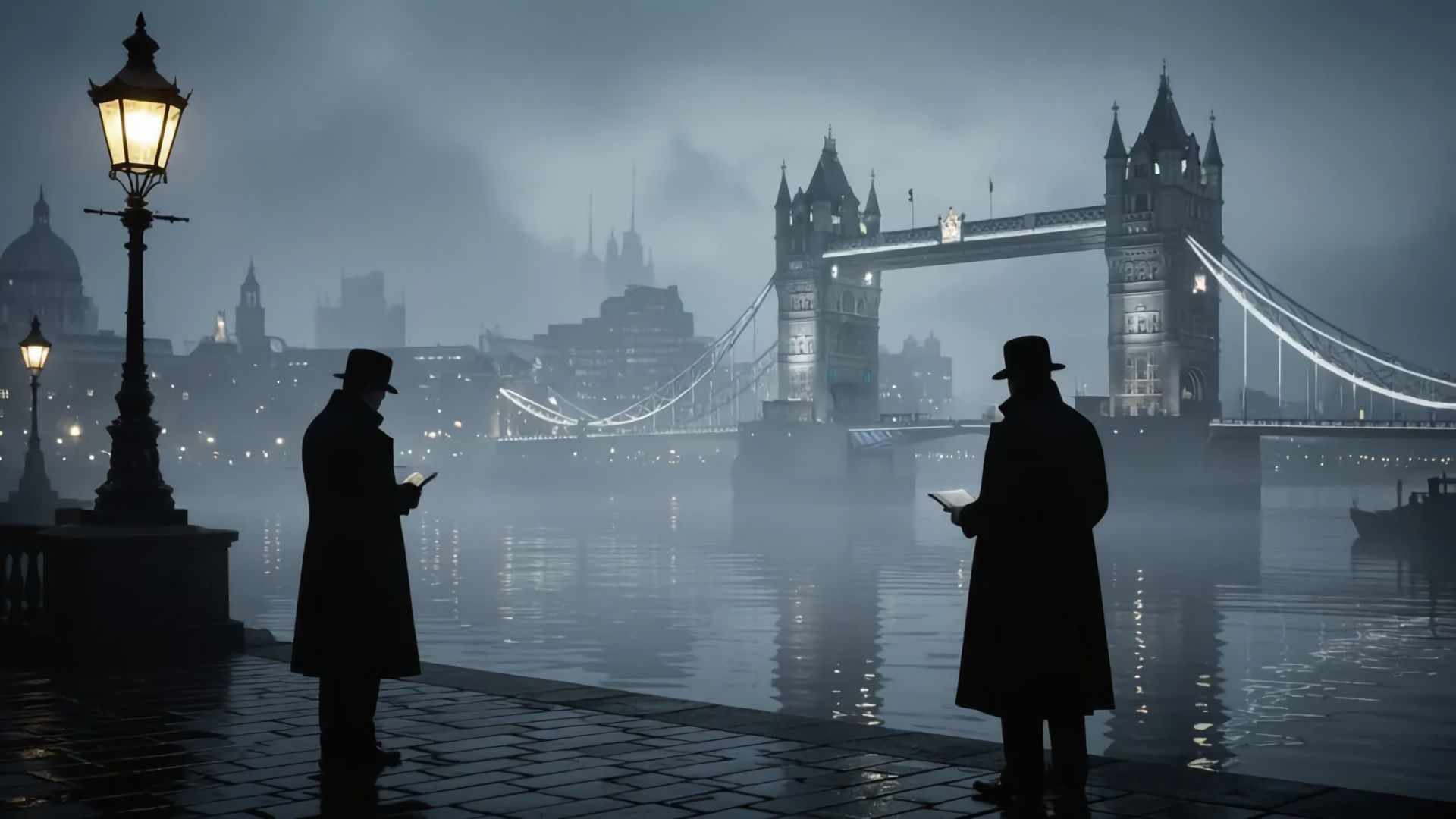
The Thames Torso Murders
In the shadow of the Victorian era’s most infamous killer, Jack the Ripper, another series of gruesome murders terrorised London. They began before the Ripper’s reign and continued even after it ended, suggesting that the horrors of Whitechapel were only part of a far wider nightmare.
These were the Thames Torso Murders, a string of killings between 1873 and 1889 in which the dismembered bodies of women were found floating in or near the River Thames. The crimes shared chilling similarities: victims mutilated beyond recognition, heads and limbs severed, torsos carefully wrapped or hidden. Unlike the Ripper’s attacks, these were not frenzied assaults in dark alleys but methodical acts of butchery, performed by someone with anatomical skill.
Though the Ripper became a legend, the Thames Torso murders remain one of the most unsettling unsolved cases in British history. Some believe the same man could have committed both sets of crimes. Others see the Torso killer as a separate predator altogether, one who hid his identity as effectively as he hid the identity of his victims.
The First Known Case: The Battersea Mystery, 1873
The story begins in September 1873, when a package was pulled from the Thames near Battersea. Inside was a human torso, crudely severed at the limbs. Over the next few days, other body parts surfaced along the river, including arms and legs. The remains belonged to a young woman, but her head was never found, and she was never identified.
The press called it the Battersea Mystery. The newspapers of the day, already fascinated by sensational crimes, speculated endlessly about who the woman might have been and why she was killed. The careful cutting and the way the remains were wrapped suggested knowledge of anatomy, possibly belonging to a butcher or medical man.
The police were baffled. With no victim, no suspect, and no apparent motive, the case soon went cold. But it would not be the last time the Thames would give up such grim cargo.
The 1874 “Thames Mystery”
Less than a year later, the pattern repeated. In June 1874, dockworkers near Putney discovered a female torso floating in the river. As before, the head and limbs had been removed with precision, and again, the body was wrapped, this time in cloth used by surgeons.
These early cases occurred during a period when London was expanding rapidly. The Thames was a dumping ground for all manner of refuse, human and otherwise. But the brutality of these discoveries was unlike anything the Metropolitan Police had previously seen. The victims were clearly being dismembered after death and disposed of strategically to hinder identification.
There was little forensic science at the time, and police procedures were primitive. Fingerprinting did not yet exist, and photography was still in its infancy. Without a face or name, a murder investigation in Victorian London often had nowhere to go.
The Rainham Mystery, 1887
After a long silence, the killings resumed. In May 1887, dockworkers near Rainham, in the east of London, spotted a package floating in the Thames. Inside was the decomposing trunk of a woman. Over the following weeks, more parcels washed ashore along the riverbanks between Rainham and Woolwich, each containing additional parts of the same body.
The remains had been cut with remarkable precision. A police surgeon noted that whoever dismembered the woman had a “perfect understanding of the human frame.” Once again, the head was missing.
The press dubbed it the Rainham Mystery. The tone of reporting had changed since the 1870s. London was now obsessed with crime and scandal, and sensational journalism was flourishing. The newspapers were relentless in their speculation, calling for decisive action from Scotland Yard. But the detectives were no closer to finding a suspect than they had been a decade earlier.
The Whitehall Mystery, 1888
The following year brought one of the most notorious discoveries of the entire series, the so-called Whitehall Mystery.
In September 1888, workers constructing the new Metropolitan Police headquarters near Whitehall, now known as New Scotland Yard, discovered a human arm buried in the foundations. A few weeks later, a female torso was found in the same area, hidden inside a vault beneath the unfinished building.
The victim was a woman believed to be in her mid-twenties. The remains showed the same deliberate, surgical dismemberment seen in the earlier Thames cases. The head and one arm were missing, and despite police sketches and public appeals, she was never identified.
The irony was macabre: the body of a murder victim, buried under the very building that would soon become the new headquarters for the Metropolitan Police.
The timing of the Whitehall Mystery was also remarkable. It occurred in the autumn of 1888, the same period when Jack the Ripper was terrorising Whitechapel. The overlap led many to wonder if two killers were hunting London at once or if all the murders were the work of the same perpetrator.
The Pinchin Street Torso, 1889
In September 1889, another body was found, this time under a railway arch in Pinchin Street, Whitechapel. The discovery brought the Torso Murders to the very heart of Ripper territory.
The torso, again belonging to a woman, had been freshly severed at the waist and thighs. As before, the head and limbs were missing. Police surgeons determined that the dismemberment had been performed after death and with considerable anatomical knowledge.
The Ripper was still headline news, and many suspected a link. However, there were differences. The Ripper mutilated his victims openly and violently, slashing at the abdomen and leaving the bodies in the street. The Torso killer, by contrast, killed in private, then carefully dismembered and disposed of the remains elsewhere.
Still, some investigators theorised that the same man could have alternated between methods, satisfying two distinct compulsions. Others believed that the Torso killer might have inspired or even pre-dated the Ripper.
Other Possible Cases
Though four major murders are officially classified as part of the Thames Torso series, similar discoveries around the same period suggest that the actual number of victims could be higher.
In June 1889, body parts were found near Tottenham Court Road, believed to belong to a woman named Elizabeth Jackson, a 24-year-old prostitute. In 1879, pieces of another unidentified woman were recovered near Chelsea. The similarities, clean cuts, missing heads, and river disposal were unmistakable.
Some modern researchers believe these killings form a continuous pattern stretching across nearly two decades. If true, it would make the Torso killer one of Britain’s longest-active and most elusive serial killers.
The Investigations
The investigations into the Thames Torso Murders reveal much about Victorian policing, both in its determination and its limitations.
Detectives from Scotland Yard, including Inspector Frederick Abberline, who would later lead the Jack the Ripper case, examined the Whitehall and Pinchin Street discoveries. They noted that the cutting was methodical, likely the work of someone accustomed to handling corpses.
At the time, London was home to thousands of butchers, slaughterhouse workers, and medical students, and anyone among them could have possessed the necessary skill, with the anonymity of the city working in the killer’s favour.
Police compared notes between the various cases, searching for links. They considered ship surgeons, morgue attendants, and medical students as possible suspects. However, with fingerprints not being used yet in forensic investigations and DNA not being available for another hundred years or so, the fact that no heads were found made identification nearly impossible.
In one instance, detectives traced a trunk used to transport body parts back to a second-hand shop in Drury Lane, but the buyer had given a false name. As leads were followed up on, they seemed to dissolve into nothing.
Theories and Suspects
Over the years, numerous theories have circulated about the identity of the Thames Torso killer.
One idea is that he was a surgeon or anatomy student who used his medical knowledge to conceal his crimes. Another suggests that he may have been a mortuary worker or butcher with access to knives and privacy.
A few authors have argued that the Torso killer and Jack the Ripper were the same man. The timing and geography of the crimes overlap, and both targeted vulnerable women, likely sex workers. However, most modern experts disagree. The styles of killing were too different. The Ripper attacked in frenzy and left his victims exposed, while the Torso killer worked with chilling calm and discretion.
Another possibility is that the Thames served as a convenient dumping ground for unrelated murders. Victorian London was a sprawling, grimy metropolis, and dismembered remains occasionally surfaced for reasons unconnected to serial killing. But the consistency of method and timing makes coincidence seem unlikely.
The Victims
The greatest tragedy of the Thames Torso murders is that most of the victims remain nameless.
One of the few who was ever identified was Elizabeth Jackson, believed to have been the victim whose remains were found in June 1889. She was a young woman from Chelsea whom the police believed had been working as a prostitute.
Her case added a layer of sorrow to the mystery. Like many women in Victorian London, she lived on the margins of society, vulnerable, unseen, and easily forgotten. And even more tragically, she had been about 8 months pregnant at the time of her murder.
The anonymity of the victims ensured that justice for them would be all but impossible.
Victorian Fear and Fascination
By the late 1880s, London had become obsessed with murder. The Industrial Revolution had created vast wealth and deeper poverty. The contrast between the glittering West End and the squalid East End provided perfect fuel for sensational journalism.
The Torso Murders fed into this growing appetite for the macabre. Newspapers published lurid illustrations, and crowds gathered at riverbanks whenever rumours of a new discovery spread. People speculated wildly about satanic cults, foreign surgeons, or secret societies.
The idea of an invisible killer stalking London’s underbelly reflected the anxieties of the age, a city too large to police, too divided to understand itself, and too fascinated by death to look away.
The End of the Killings
After 1889, the murders seemed to stop. Whether the killer died, was imprisoned for another crime, or simply changed his methods, no one knows. The police files remain open, the evidence long lost, the identities of the victims still uncertain.
In time, the name Jack the Ripper would eclipse the Thames Torso killer entirely. The Ripper’s letters, his taunts, and the theatrical horror of his crimes captured the public imagination. The Torso murders, quieter and colder, faded into obscurity.
Yet in some ways, the Torso killer was even more terrifying, not for what he revealed in frenzy, but for what he concealed with precision.
Final Word
The Thames Torso Murders remain one of the darkest enigmas in British criminal history. They show a side of Victorian London often forgotten, a city of shadows, where poverty, secrecy, and science could all be tools in the hands of a killer.
Whether committed by one murderer or several, these crimes revealed an intelligence and discipline unlike the chaotic violence of Jack the Ripper. They also left behind unanswered questions that have lingered for more than a century. In the end, the Thames itself became both witness and accomplice, carrying away the evidence, hiding the truth beneath its murky waters.
The Thames Torso Murders FAQ
The Thames Torso Murders were a series of gruesome killings in London between 1873 and 1889, in which the dismembered remains of women were discovered in or near the River Thames.
At least four confirmed cases, the Battersea Mystery (1873), the Rainham Mystery (1887), the Whitehall Mystery (1888), and the Pinchin Street Torso (1889). Some historians believe there were more victims linked by method and timing.
The crimes overlapped with the Ripper killings, and both targeted women in Victorian London. However, most experts believe they were the work of a separate killer, due to differences in method and motive.
Only one possible victim, Elizabeth Jackson, was identified. Most others remain unknown, as the killer removed heads and limbs to prevent recognition.