The Murder of Gianni Versace
On the morning of 15 July 1997, Miami Beach was already alive with heat, colour and routine. Palm trees swayed lazily along Ocean Drive, cafés prepared for their early customers, and the pastel art deco facades reflected a city built on spectacle. For Gianni Versace, this hour of the day was a moment of calm before the intensity of creative work. Each morning, he left his mansion, Casa Casuarina, walked a short distance to buy newspapers and returned home to read and plan his day. It was a habit so consistent that locals barely noticed him anymore.
That familiarity made what happened next all the more horrifying.
As Versace unlocked the gate of his mansion, a man approached from behind. Without warning, two gunshots shattered the morning air. Versace collapsed on the marble steps of his home, fatally wounded. The attacker turned calmly and walked away, disappearing into the city’s streets. In seconds, one of the most influential figures in modern fashion lay dying, his blood staining the steps of a home that had once symbolised creativity, success and sanctuary.
The murder of Gianni Versace shocked the world not just because of who he was, but because of how public, sudden and senseless the crime appeared. It was not a robbery. It was not a heated confrontation. It was an execution carried out in full daylight, in one of the most visible locations in the United States. As investigators scrambled to understand what had happened, the case quickly expanded beyond a celebrity killing into a haunting examination of obsession, notoriety and failure at every level of protection.
Gianni Versace was born in 1946 in Reggio Calabria, Italy, a region far removed from the glamour he would later define. His mother was a dressmaker, and her workshop became his first classroom. From an early age, Versace learned to view clothing as architecture for the human body, something that could convey power, sexuality and identity. Unlike many designers who emerged from elite fashion schools, Versace’s education was practical, instinctive and rooted in craftsmanship.
By the late 1970s, Versace had launched his own fashion house, quickly distinguishing himself through designs that defied convention. His work celebrated the body rather than concealing it, drawing inspiration from classical mythology, contemporary art and pop culture. Bold prints, gold accents and daring cuts became his signature. In the 1980s and 1990s, Versace helped redefine fashion as a global spectacle, merging high couture with celebrity culture in a way few had attempted before.
Versace did not simply dress stars; he collaborated with them. Musicians, actors and supermodels became living extensions of his vision. Runway shows felt closer to theatrical performances than traditional fashion events. He understood fame and embraced it, recognising that visibility itself was a form of power. Yet behind the glamour, those closest to him described a man who valued loyalty, routine and privacy. He was deeply attached to his family, particularly his sister Donatella, and relied on a small inner circle he trusted implicitly.
Miami offered Versace something he struggled to find elsewhere: creative inspiration combined with relative anonymity. He purchased Casa Casuarina in the early 1990s, transforming it into a lavish retreat filled with art, mosaics and references to classical antiquity. The mansion became a symbol of his success, but also a place where he felt safe. That sense of safety would prove tragically misplaced.
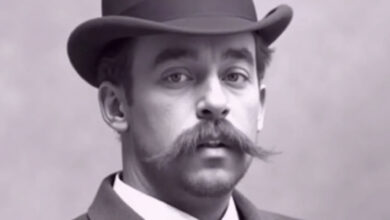
The man responsible for Versace’s death was Andrew Cunanan, a 27-year-old drifter who had already left a trail of death across the United States. Cunanan was intelligent, articulate and outwardly charismatic. He moved easily through wealthy social circles, often fabricating stories about his background to gain admiration and acceptance. Beneath the surface, however, he struggled with instability, resentment and a profound fear of obscurity.
In the months leading up to the murder, Cunanan had embarked on a violent spree that included the murders of former acquaintances and partners. Each killing escalated in brutality and confidence, suggesting a man growing increasingly detached from consequence. By the time he arrived in Miami, Cunanan was one of the FBI’s most wanted fugitives. Yet despite this, he managed to remain largely invisible.
On the morning of the murder, Cunanan had been observed pacing near Versace’s home. Surveillance footage later placed him in the area, moving calmly and without urgency. When Versace returned from his routine walk, Cunanan followed him to the gate and fired two shots at close range using a stolen handgun. He did not attempt to steal anything; he simply walked away, blending into the city as though nothing extraordinary had occurred.
The apparent randomness of the killing initially baffled investigators. Versace was not known to have enemies. There was no sign of a struggle or confrontation. Almost immediately, speculation filled the vacuum of uncertainty. Media outlets floated theories involving organised crime, jealous lovers, business disputes and international conspiracies. Given Versace’s fame, the appetite for dramatic explanations was insatiable.
As Cunanan’s identity emerged, however, the narrative shifted from conspiracy to psychology. Investigators found no credible evidence of a meaningful relationship between Cunanan and Versace. Although rumours persisted that the two had crossed paths years earlier, no documentation or reliable testimony confirmed this. The prevailing conclusion was unsettling in its simplicity: Versace had been chosen not for who he was personally, but for what he represented.
For Cunanan, Versace embodied everything he admired and resented: wealth, recognition, creative power and global fame. Killing him was not about revenge or personal grievance, but about visibility. It was a way to ensure that Cunanan himself would be remembered, his name permanently linked to someone whose life and work had shaped popular culture.
In the days following the murder, Miami descended into a state of heightened tension. Law enforcement agencies coordinated an intense manhunt, while the media transformed Ocean Drive into a continuous spectacle of flashing cameras and speculation. Despite being one of the most wanted men in the country, Cunanan managed to evade capture for eight days.
On 23 July 1997, police traced Cunanan to a houseboat moored in Miami Beach. Before officers could arrest him, Cunanan shot himself in the head using the same weapon that had killed Versace. His suicide ended the search but left behind a profound sense of incompleteness. With no confession or explanation, the deeper motivations behind the crime would remain forever unresolved.
The immediate aftermath was devastating for those closest to Versace. His family faced both personal grief and intense public scrutiny. Donatella Versace, already involved in the creative direction of the fashion house, was suddenly thrust into leadership during one of the most challenging moments imaginable. The question looming over the industry was whether Versace as a brand could survive without its founder.
Against expectations, it did. Under Donatella’s guidance, the fashion house continued to evolve, preserving Gianni’s vision while adapting to a changing industry. His influence remained embedded in every collection, every runway show and every campaign. Casa Casuarina, once a private retreat, was later transformed into a hotel, its walls bearing silent witness to a moment that changed fashion history forever.
The murder also forced uncomfortable reflection on the relationship between fame and violence. Cunanan received the global attention he appeared to crave, his name repeated endlessly alongside Versace’s. The media coverage often blurred the line between reporting and spectacle, raising questions about whether notoriety itself can become a motive for crime. In this sense, the case remains painfully relevant in an age where visibility is currency.
Over the years, the murder of Gianni Versace has been revisited through documentaries, books and dramatisations, each attempting to impose narrative clarity on a story that resists simple explanation. Yet at its core, the tragedy is defined by its absence of logic. Versace was not targeted because of a dispute or secret wrongdoing. He was targeted because he was visible, successful and symbolic.
There is a stark irony in that. Versace spent his life creating beauty, confidence and spectacle. His death became a spectacle of an entirely different kind. Yet his legacy endures far beyond the violence that ended his life. His designs continue to shape fashion, his influence echoes across music, film and art, and his name remains synonymous with fearless creativity.
The murder of Gianni Versace is a reminder that fame offers no protection, that obsession can turn deadly, and that the desire for recognition can destroy both its seeker and its target. Cunanan sought immortality through destruction. Versace achieved it through creation. History has made its verdict clear. One name is remembered for what it built. The other for what it destroyed.
The Murder of Gianni Versace FAQ
Gianni Versace was an Italian fashion designer and founder of the Versace fashion house, known for bold, glamorous designs.
He was murdered by Andrew Cunanan, an American serial killer already wanted for multiple murders.
There is no confirmed personal motive; investigators believe Cunanan targeted Versace as a symbol of fame and success.
Versace was shot on the steps of his Miami Beach mansion, Casa Casuarina, on Ocean Drive.
Andrew Cunanan died by suicide eight days later, leaving many questions unanswered.