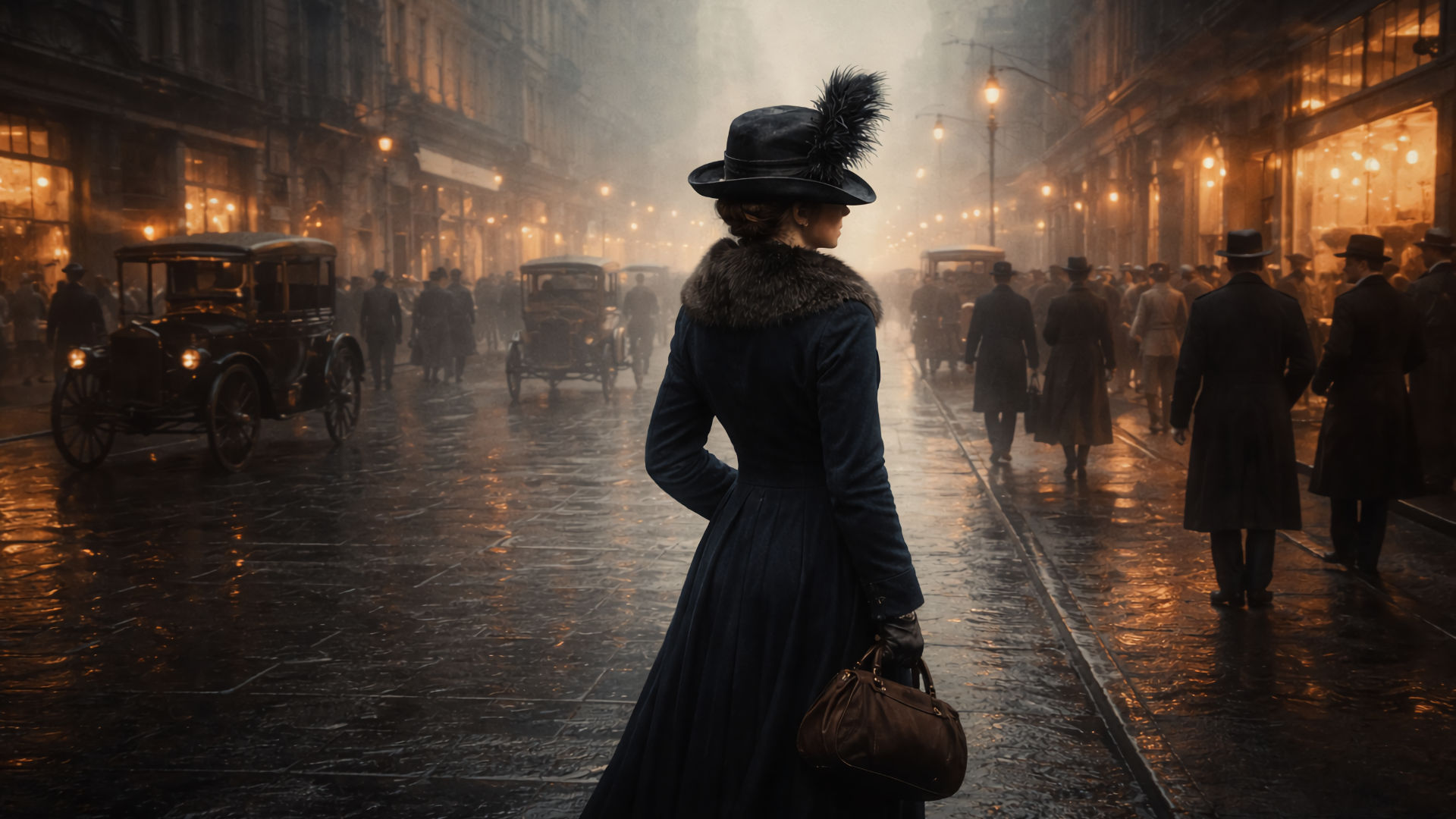
The Disappearance of Dorothy Arnold
Dorothy Harriet Camille Arnold was born in 1885 into one of New York’s most wealthy and socially connected families. Her father, Francis Arnold, was a successful perfume importer, which in early 20th-century Manhattan placed the Arnolds firmly among the upper crust. They lived in a world of Fifth Avenue addresses, society columns, and rigid expectations, especially for young women of Dorothy’s class. Money opened doors, but it also quietly locked a few.
By all outward measures, Dorothy’s life should have been enviable. She was educated, well-travelled, and moved comfortably within elite social circles. Yet those who knew her well described a young woman increasingly frustrated with the narrow path laid out for her. Society expected marriage, social duties, and a polite disappearance into respectability. Dorothy, inconveniently, wanted more.
She had literary ambitions and hoped to build a career as a writer, a desire that did not sit well with her family. In particular, her relationship with her father appears to have been strained. Francis Arnold reportedly disapproved of her writing aspirations and was known to discourage what he viewed as impractical ambitions. Rejection letters from magazines, which were common for aspiring writers of the era, may have added to Dorothy’s sense of isolation and disappointment. Whether this was crushing discouragement or simply part of the normal creative struggle remains debated, but it clearly mattered to her.
Dorothy was also navigating a complicated romantic situation. She had been involved with George Griscom Jr., a man her family strongly disapproved of. Their relationship was discouraged, and at one point reportedly forbidden, placing Dorothy in a familiar dilemma for women of her social class: follow your own emotional instincts or submit to family authority. Neither option came without consequences.
What makes Dorothy Arnold especially compelling is that she does not fit neatly into a single narrative. She was not reckless, nor was she known to be unstable. Friends described her as intelligent and composed, not prone to dramatic gestures. At the same time, there were signs of quiet unhappiness, a sense that her life was being tightly managed by others. She was caught between privilege and pressure, independence and obedience.
This context matters because Dorothy did not vanish from a life of chaos or desperation. She disappeared from a life that looked, on the surface, orderly and secure. And that contrast, between how her world appeared and how she may have felt inside it, sits at the heart of why her disappearance continues to unsettle more than a century later.
The Last Known Day
On the morning of 12 December 1910, Dorothy Arnold left her family home on East 79th Street in Manhattan and stepped into what appeared to be an entirely ordinary day. There was no drama, no argument, no packed suitcase hidden under her arm. She told her mother she was going shopping for an evening gown and planned to meet a friend later that afternoon. It was the sort of explanation that raised no eyebrows in a wealthy New York household where young women frequently moved about the city.
Dorothy was dressed smartly but not extravagantly. She carried around thirty dollars in cash, a significant but not unusual sum at the time, and did not take any additional luggage. This detail would later become important. Whatever she was planning, it did not outwardly resemble a permanent departure.
Her first confirmed stop was a bookstore near 27th Street. There, she purchased a volume of essays, reportedly on philosophy or criticism, and paid in cash. The transaction was unremarkable, but it placed Dorothy firmly in public view that day. From there, she visited a confectioner, where she bought chocolates. Again, nothing suspicious. No visible distress. No hurried behaviour.
The most significant moment came later that afternoon, when Dorothy encountered Gladys King, a family friend, on Fifth Avenue near 42nd Street. The meeting was brief and casual. Dorothy appeared calm and cheerful, chatting for a few minutes before explaining that she was on her way home. She declined an invitation to walk together, saying she had errands to finish. This would be the last confirmed sighting of her.
What makes this encounter so unsettling is how normal it was. Dorothy did not confide in Gladys, did not hint at fear or excitement, and did not behave like someone on the brink of vanishing. If anything, witnesses later recalled her as composed and polite, very much the society young woman she had been raised to be.
After that point, the trail goes cold. Dorothy never returned home. She did not meet the friend she had mentioned earlier, and she did not collect the dress she supposedly intended to buy. By evening, concern began to creep in, but even then, the family assumed there was a reasonable explanation. In their world, young women did not simply disappear.
Yet sometime between that casual farewell on Fifth Avenue and the end of the day, Dorothy Arnold vanished completely. No confirmed sightings followed. No belongings were recovered. A routine afternoon in Manhattan quietly became one of the city’s most enduring mysteries.
A Vanishing in Plain Sight
The most disturbing aspect of Dorothy Arnold’s case is not that she disappeared, but where she disappeared. Manhattan in 1910 was crowded, noisy, and relentlessly public. Streetcars clanged past, pedestrians packed the pavements, and shopkeepers watched the flow of customers all day long. This was not a remote country lane or an empty stretch of coastline. It was one of the busiest cities in the world. And yet Dorothy seems to have slipped through it without leaving a single reliable trace.
After her brief conversation with Gladys King on Fifth Avenue, there are no confirmed sightings. No shopkeepers recalled seeing her. No cab drivers remembered a young woman matching her description. No hotel registers recorded her name. In an era before CCTV, credit cards, or mobile phones, a person could still vanish, but doing so without witnesses in midtown Manhattan was astonishing even then.
Search efforts initially focused on obvious possibilities. Police checked hospitals, morgues, and charitable institutions. Nothing. Steamship passenger lists were examined in case Dorothy had fled abroad. Again, nothing. Train stations were canvassed, but no ticket purchases or sightings could be confirmed. If she had intended to leave New York that day, she did so without any documented trail.
The lack of physical evidence deepened the mystery. Dorothy carried only a modest amount of cash. She left behind her clothes, jewellery, and personal papers. No abandoned handbag was found. No letters or notes surfaced immediately after her disappearance. For investigators, there was nothing to anchor the search to a specific direction or theory.
What makes this absence so unsettling is that it defies patterns. People who disappear usually leave something behind, a witness, a transaction, a mistake. Dorothy left none. It was as though she simply stopped existing once she turned away from Fifth Avenue.
The city itself may have played a role. Manhattan was expanding rapidly, with construction sites, ferry terminals, and industrial areas along the riverfronts. Accidents were not uncommon, and records were imperfect. If Dorothy met with misfortune, whether accidental or intentional, it is possible that her death went unrecognised or misidentified. Yet even that explanation struggles to account for the complete lack of evidence.
In the days that followed, her disappearance began to attract quiet attention among police and private investigators, but publicly it remained oddly muted. No sensational headlines. No urgent appeals. This silence only added to the sense that something about the case was being carefully managed.
Dorothy Arnold did not vanish into darkness or wilderness. She vanished into daylight, into crowds, into normality. And that is precisely why her disappearance remains so haunting, a reminder that even the most visible places can still swallow someone whole.
The Family Response
When it became clear that Dorothy Arnold was not coming home, her family’s reaction was swift, determined, and unusually private. This was not the frantic public appeal that often follows a missing person case. Instead, the Arnolds chose control. Their priority was discretion, reputation, and handling the crisis behind closed doors.
At first, the family delayed notifying the police. This hesitation has often been criticised, but within elite Edwardian society, it was not entirely surprising. Scandal carried real social consequences, and a missing daughter invited gossip of the worst kind. For several weeks, the Arnolds quietly searched on their own, hiring private investigators and following leads discreetly, hoping Dorothy would return or be found without public involvement.
When police were eventually brought in, the search expanded but remained strangely muted. No reward was publicly offered. No posters flooded the streets. Newspapers were not immediately alerted. The family reportedly feared that publicity would encourage sensational rumours or permanently damage Dorothy’s reputation if she were found alive. In attempting to protect her, they may have limited the very exposure that could have helped locate her.
The Arnolds also pursued highly personal avenues of inquiry. They questioned friends, servants, and acquaintances, scrutinising Dorothy’s movements and emotional state in the months leading up to her disappearance. Private investigators travelled across the United States and even to Europe, chasing rumours of sightings and letters. None produced verifiable results.
As months passed with no answers, the family’s response grew more guarded. Public statements were minimal and carefully worded. In some cases, they actively denied or dismissed theories circulating in quiet social circles. The result was an information vacuum, one that allowed speculation to flourish without official correction.
Perhaps the most controversial aspect of the family response came years later. In 1916, Dorothy’s father quietly filed papers declaring her legally dead, citing a possible accidental overdose of sleeping pills. The explanation was presented without evidence and without a body. For many observers, it felt less like a conclusion and more like an attempt to close the story on the family’s terms.
Whether motivated by grief, shame, or a desire for peace, the Arnolds ultimately chose silence over scrutiny. Their actions shaped the course of the mystery, limiting public involvement and leaving crucial questions unanswered. In doing so, they ensured that Dorothy Arnold’s disappearance would remain unresolved, not only because she was never found, but because the truth was carefully, perhaps deliberately, kept just out of reach.
Theories, Sightings, and Rumours
With no body, no note, and no confirmed trail beyond Fifth Avenue, the disappearance of Dorothy Arnold quickly became a blank canvas for speculation. Almost immediately, theories began to circulate, some whispered in drawing rooms, others pursued quietly by investigators, and a few repeated so often they hardened into near folklore.
One of the earliest and most persistent theories was suicide. Dorothy had reportedly been prescribed sleeping pills, and years later, her father would suggest that she may have accidentally overdosed and died unnoticed. Supporters of this theory point to her frustrations, rejected writing submissions, and family pressure. Critics, however, note the lack of evidence. Dorothy’s body was never found, nor were her belongings, and no witnesses reported an incident consistent with this explanation. It remains a theory, but one built largely on assumptions rather than evidence.
Another possibility was accidental death. New York in 1910 was a dangerous place, with open construction sites, poorly lit streets, and busy riverfronts. A fall, a collision, or an unreported accident could, in theory, have claimed her life. Yet again, the problem is absence. Even unidentified bodies were typically recorded, and none matched Dorothy convincingly.
The idea that Dorothy deliberately disappeared has long fascinated researchers. Could she have used her modest cash to start a new life under an assumed name? Some believe she may have fled an unhappy home, escaping family control and social expectations. While this theory appeals emotionally, it raises practical questions. Dorothy had no known survival skills, no documented aliases, and no financial resources sufficient for long-term independence. Reinventing oneself was possible, but not easy, especially for a well-known society woman.
There were also darker rumours. Unverified reports suggested clandestine medical procedures, secret relationships, or violent encounters that were swiftly concealed. None of these claims was substantiated, but they persisted, fuelled by the family’s silence and the lack of official information.
Sightings were reported over the years, from cities across the United States and even Europe. Women resembling Dorothy were spotted in hotels, boarding houses, and theatres, but each sighting collapsed under scrutiny. No handwriting matched. No personal knowledge surfaced. No reunion ever occurred.
In the end, every theory suffers from the same flaw. They explain how Dorothy might have disappeared, but not why no trace of her has ever been found. The mystery survives not because of too many answers, but because none of them quite fit.
Why the Case Still Haunts Us
More than a century later, the disappearance of Dorothy Arnold continues to unsettle in a way many older missing person cases do not. Time has erased witnesses, records, and physical clues, yet the mystery feels oddly modern. A young woman leaves home on an ordinary day, is seen behaving normally, and then simply ceases to exist. No crime scene. No explanation. No ending.
Part of the enduring unease lies in how thoroughly Dorothy defied expectations. She was wealthy, protected, and visible. If anyone should have been traceable, it was her. Instead, her privilege seems to have worked against resolution. The family’s insistence on privacy limited press coverage and public involvement at a critical early stage. In trying to avoid scandal, they may have erased opportunities for answers. The case quietly slipped past the point where momentum could be regained.
There is also the unsettling possibility that the truth is painfully mundane. Not a grand escape or dramatic crime, but an accident, an illness, or a moment of despair that went unnoticed and unrecorded. Those explanations are unsatisfying precisely because they offer no villain, no revelation, no justice. They suggest that even in a city bursting with people, a life can end without witnesses or acknowledgement.
Dorothy’s story also resonates because it reflects broader themes that still feel relevant. The pressure placed on young women to conform. The tension between personal ambition and family expectation. The cost of silence, especially when reputation is prioritised over truth. Dorothy was not just a missing person; she was someone struggling quietly within a rigid social structure, and her disappearance forces uncomfortable questions about how much autonomy she truly had.
Unlike many mysteries, this one resists closure. There is no final document waiting to be discovered, no confession hidden in an archive. Every few decades, the case is revisited, reanalysed, and ultimately returned to the same unresolved state. Each generation projects its own fears and assumptions onto it, which keeps the story alive but never solved. Dorothy Arnold haunts us because her disappearance exposes a fragile illusion. We like to believe that visibility equals safety, that wealth brings protection, and that the past was somehow more orderly. Her vanishing proves otherwise. Sometimes, even surrounded by people, certainty, and privilege, someone can still disappear completely, leaving behind nothing but questions and the uneasy sense that the world noticed far less than it should have.
The Disappearance of Dorothy Arnold FAQ
Dorothy Arnold was a wealthy New York socialite and aspiring writer who disappeared in December 1910 without leaving any confirmed trace.
She vanished on 12 December 1910 after being last seen on Fifth Avenue in Manhattan.
No. Despite extensive private investigations and later police involvement, no confirmed evidence of her fate has ever been discovered.
Theories include suicide, accidental death, deliberate disappearance, and foul play, though none have been proven.
The combination of her social status, the lack of evidence, and her disappearance in a busy city has kept the mystery alive for over a century.