The Huascarán Debris Avalanche
High in the Peruvian Andes, Huascarán rises, a giant of ice and stone that towers above the surrounding valleys as Peru’s highest peak. For generations, the nearby communities lived beneath this colossal mountain, aware of its majesty but not always of its hidden dangers. On 31 May 1970, those dangers were unleashed in one of the deadliest natural disasters ever recorded in the Western Hemisphere. What began as a violent earthquake in the Pacific Ocean triggered a catastrophic collapse on the northern face of Huascarán. In a matter of moments, entire towns ceased to exist beneath a roaring avalanche of ice, rock, and earth. The tragedy remains a stark reminder that some of Earth’s most beautiful landscapes are also the most volatile.
The Setting
Huascarán lies within the Cordillera Blanca, a mountain range famed for its dramatic glaciated peaks. Peru’s tropical latitude means these massive glaciers exist in a surprisingly warm environment, constantly at the mercy of climate, gravity, and seismic activity. At 6,768 metres, the south summit of Huascarán is one of the highest points in the Americas. The lower slopes descend into the Santa River valley, home to farming communities that relied on fertile soils and water from the melting ice above. This region has always been earthquake-prone. The people understood the ground could shake. What many did not realise was how violently the mountain itself could respond.
Foreshadowing of Disaster
A frightening warning came eight years earlier. In January 1962, a massive chunk of ice detached from the mountain and thundered into the valley below. It caused devastation, but on a smaller scale than what would follow, although it still claimed the lives of around 4000 people. Some officials urged evacuations from the most vulnerable areas. Others assured residents that modern engineering and nature itself would prevent anything worse from occurring. As memories faded and daily life resumed, the earlier event became a cautionary tale rather than a catalyst for permanent changes.
The 1970 Ancash Earthquake
On the afternoon of 31 May 1970, a powerful undersea earthquake struck off the coast of Peru. Seismologists estimate it reached magnitude 7.9. Buildings crumbled across the region as the waves of energy rippled inland. In the mountains, the violent shaking destabilised ice cliffs and fractured rock formations that were already strained by gravity and meltwater. At that critical moment, the northern face of Huascarán gave way. A massive slab of glacier and rock broke free and began to accelerate downslope.
The Avalanche Takes Shape
What started as falling ice quickly transformed into a full-scale debris avalanche. As the broken glacier plummeted lower, it gathered rocks, soil, and mud, feeding on everything in its path. In seconds, it became a high-speed torrent, estimated at tens of millions of cubic metres in volume. The avalanche thundered down the valley at extraordinary velocity, likely exceeding 300 kilometres per hour. Witnesses described a deafening roar like continuous explosions. A massive cloud of dust and shattered ice rose into the sky, blocking out the sun.
Yungay and Ranrahirca
Two towns lay directly in the avalanche’s path. Ranrahirca had already suffered damage from the 1962 collapse. Now it was completely overwhelmed. Yungay, slightly to the north, stood little chance. Residents had only a few seconds to react. Some tried to flee, but the avalanche moved far faster than anyone could run. Others froze in confusion, struggling to comprehend the enormity of what was happening. The giant mass of debris swept across the town, burying it under tens of metres of ice and stone. Almost every home, school, and shop vanished beneath a new layer of landscape.
Survivors Among the Ruins
In the midst of such horror, there were astonishing stories of survival. A small group of children who had been visiting the local cemetery managed to climb to higher ground and were saved. A handful of individuals survived by scrambling up trees or clinging to floating debris. Rescue efforts were hampered by the scale of destruction and the arrival of night. Many who remained trapped beneath the avalanche perished long before help could reach them. The landscape itself had been completely altered, making navigation and recovery extraordinarily difficult.
A Nation in Shock
Across Peru, the earthquake had already caused widespread devastation, but the news from Huascarán multiplied the national grief. Entire families were gone. Whole towns were gone. The official death toll from the avalanche alone is estimated at around 20,000 people, though some believe the actual number was even higher. Overall, the earthquake and related disasters killed more than 70,000 people across the region. In the aftermath, Peru faced not only mourning but also immense logistical challenges. Roads were blocked by landslides. Communication lines had fallen. Relief teams struggled to reach remote areas where survivors waited in desperation.
Scientific Understanding
In the years following the catastrophe, scientists studied the event closely. They recognised that Huascarán’s glaciers are particularly vulnerable due to the combination of steep terrain, meltwater from warming temperatures, and frequent earthquakes. By examining geological deposits and historical accounts, researchers concluded that similar collapses had occurred in the past. This was not a new threat but an ongoing natural process. The key question, therefore, became how best to monitor and mitigate future hazards. Engineers have since implemented monitoring systems, hazard maps, and land use planning to reduce risk in the valleys below. Yet no method is foolproof when nature unleashes force on this scale.
The Human Side of the Disaster
Statistics and scientific data can only describe so much. Those who lived through the event remember not just the physical destruction but the emotional scars. Survivors spoke of the unbearable silence that followed the avalanche, broken only by distant cries. Communities were shattered in more ways than one. Homes and livelihoods disappeared in an instant. Schools without students. Farms without farmers. Families whose names now exist only in memorials. The survivors faced a lifetime of rebuilding both their surroundings and their sense of security.
Reconstruction and Remembrance
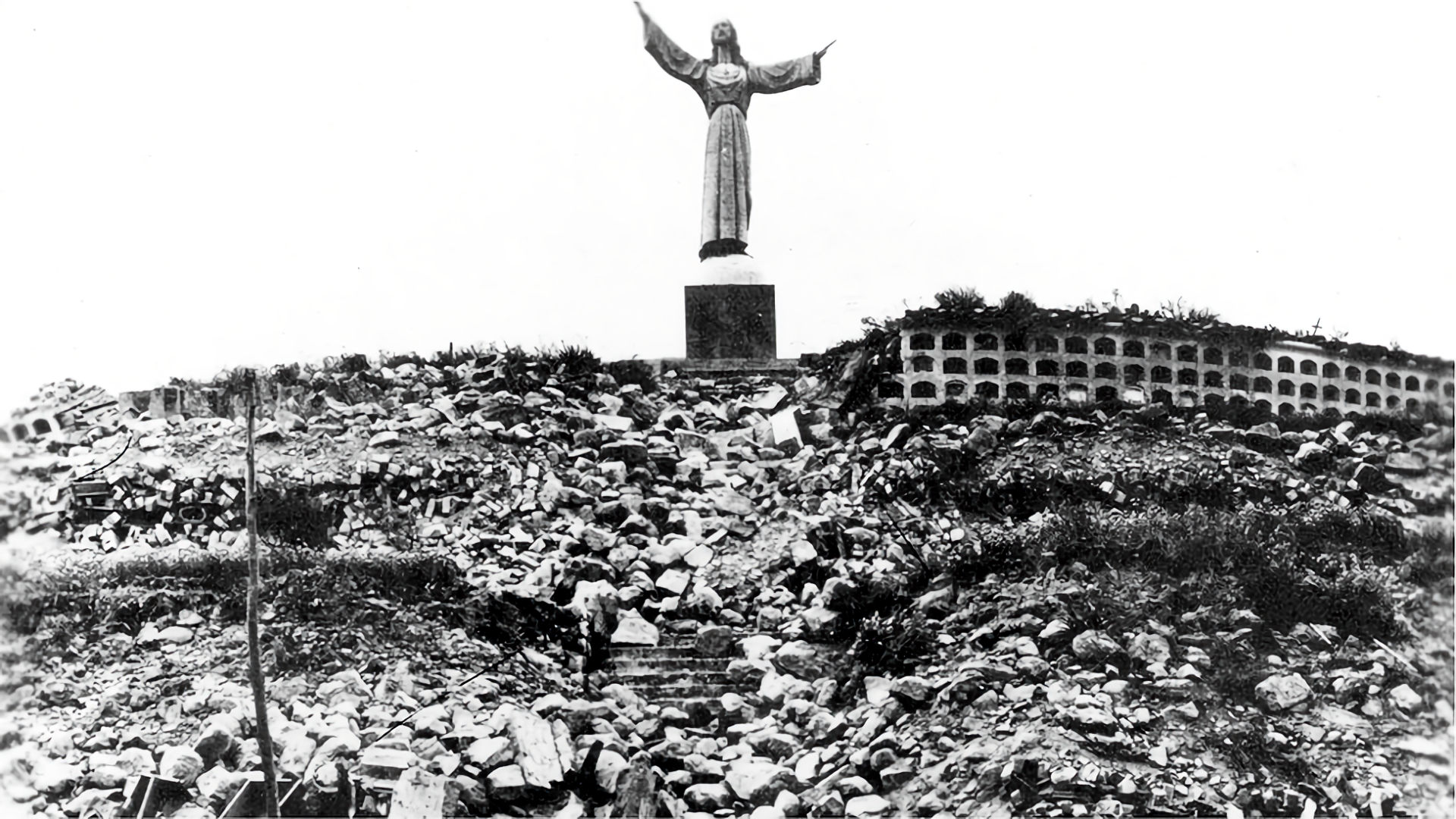
Despite overwhelming tragedy, the people of the Santa River valley persevered. A new town was established near the buried remains of Yungay. In 2000, the old town site was declared a national cemetery. The ruins still lie below, preserved as a memorial to those who were lost. Visitors will see a statue of Christ looking over the valley. It miraculously remained standing through the disaster and is now a symbol of resilience and remembrance. Each year, ceremonies commemorate the lives taken and remind future generations of the need to respect the power of the mountains above.
Lessons Learned
The Huascarán debris avalanche remains a critical case study in disaster science. It underscores how interconnected the planet’s systems are. A distant earthquake can trigger damage thousands of metres up a mountainside. A glacier weakened by seasonal melt can become a weapon of mass destruction. The tragedy also highlights the importance of listening to early warnings, whether scientific or anecdotal. The smaller 1962 event provided valuable information that, if acted on, might have saved lives. Today, improved surveillance offers new hope. Scientists monitor the Cordillera Blanca glaciers using satellite imagery and ground-based instruments to detect shifts before they become catastrophic.
Global Relevance
Huascarán’s story is not unique to Peru. Many mountain regions around the world face similar threats. As climate patterns shift, glaciers become more unstable. Warmer temperatures allow more water to infiltrate beneath ice masses, lubricating the slopes and weakening support structures. From the Himalayas to the European Alps, the potential for sudden, destructive avalanches increases year by year. The Peruvian experience offers vital lessons on preparedness, responsible development, and the value of geological research.
Final Word
The Huascarán debris avalanche is a haunting illustration of nature’s immense power and unpredictability. One moment, the mountain stood as it had for centuries. The next, a massive torrent of ice and rock obliterated towns that had existed for generations. The tragedy of 31 May 1970 left a permanent mark on Peru’s landscape and its history. Yet it also inspired a determination to improve safety and scientific understanding to reduce the chance of such a catastrophe in the future. As locals look up at the snow-capped summit of Huascarán today, they see not just beauty but also a solemn reminder. The earth beneath our feet is alive. The mountains that shelter us can also destroy. Remembering what happened ensures that the people who died are never forgotten and that their legacy becomes one of knowledge, resilience, and respect for the natural world.
The Huascarán Debris Avalanche FAQ
A powerful offshore earthquake on 31 May 1970 caused a section of the mountain to collapse.
Around 20,000 lives were lost in the avalanche, with over 70,000 fatalities from the wider earthquake impacts across Peru.
Yungay and Ranrahirca were almost completely buried beneath tens of metres of ice, rock, and soil.
Yes, smaller but destructive events occurred in previous decades and geological records show collapses have happened many times before.
Monitoring systems, hazard maps, and strict land use rules aim to reduce risk in vulnerable areas, though the region remains naturally hazardous.