The Siege of Troy
Few stories from the ancient world have captivated the imagination as much as the Siege of Troy. Immortalised by poets, embellished by historians, and debated by archaeologists, the fall of Troy sits at the intersection of myth and reality. But was it just an epic tale of gods and heroes, or was there a real siege behind the legend?
The Mythological Story
The most famous account of the Siege of Troy comes from ancient Greek mythology, particularly Homer’s Iliad, an epic poem composed around the 8th century BC. The Iliad focuses on the final weeks of the Trojan War, though the conflict itself is said to have lasted ten years.
According to myth, the war began after Paris, prince of Troy, abducted or eloped with Helen, the wife of Spartan King Menelaus and reputedly the most beautiful woman in the world. Outraged, the Greek states united under King Agamemnon and launched an expedition to retrieve Helen and avenge the insult to Troy.
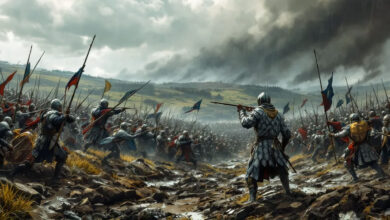
The Greeks assembled a vast army and fleet, laying siege to the city of Troy, located in what is now western Turkey. The war drew in many legendary figures, including Achilles, Hector, Odysseus, and Ajax, as well as interventions from the gods themselves, who took sides and manipulated events.
While the Iliad focuses on themes of honour, pride, and fate, it recounts only part of the story, the brutal fighting, the deaths of heroes, and the strained stalemate around Troy’s walls. The ultimate fall of the city, famously depicted in the Trojan Horse legend, is recounted in later works, including Virgil’s Aeneid and various Greek tragedies.
The Siege and the Fall of Troy
The myth tells of repeated battles outside Troy’s formidable walls. The Trojans, led by King Priam, his son Hector, and other defenders, held out against the Greeks for years.
The Greek hero Achilles, renowned for his near-invincibility, played a key role in the fighting, but even he met his end after being struck in his only weak spot: his heel.
After years of stalemate, the Greeks devised their most cunning plan: building a giant wooden horse, concealing soldiers inside, and presenting it as a gift to Troy. Believing the war was over, the Trojans brought the horse inside their city walls.
That night, the hidden Greek soldiers emerged, opened the gates for the returning army, and Troy was sacked, its defenders slaughtered or enslaved, and the city burned to the ground.
The Trojan Horse remains one of history’s most iconic tales of deception and military strategy.
Was the Siege of Troy Real?
For centuries, historians and archaeologists debated whether the Trojan War was pure myth or based on real events.
In the 19th century, German archaeologist Heinrich Schliemann excavated a site in modern-day Turkey known as Hisarlik, widely regarded as the location of ancient Troy. There, he uncovered ruins of a once-powerful city, along with evidence of destruction layers that could match a major conflict.
While Schliemann’s methods were controversial, his work reignited interest in separating fact from fiction.
Today, many scholars believe the myth of the Trojan War may be rooted in real events, possibly reflecting a series of conflicts between Mycenaean Greeks and wealthy city-states in Anatolia during the Bronze Age, around the 12th or 13th century BC.
Evidence of trade, warfare, and cultural exchange between Greece and Anatolia during this period suggests a complex relationship, marked by occasional hostilities.
It’s likely that the Trojan War, as told by Homer, is a blend of historical memory, exaggerated legend, and literary embellishment, shaped over generations before being recorded.
Why Troy was So Important
Whether entirely historical or partially mythical, Troy occupied a strategic position. The city lay near the entrance to the Dardanelles, a narrow waterway connecting the Aegean and Black Seas.
Control of this area meant influence over lucrative trade routes and naval movements between Europe and Asia. For ambitious powers like the Mycenaean Greeks, Troy’s wealth and position would have been a tempting target.
The idea that a conflict erupted over trade, power, and regional dominance is far more plausible historically than the romantic cause of rescuing Helen, although the allure of beauty and pride certainly make for a more compelling epic.
Lasting Legacy of the Siege of Troy
The tale of Troy has endured for over 3,000 years, becoming one of Western civilisation’s foundational stories. Its influence is vast, shaping literature, art, and cultural identity across Europe and beyond.
In many ways, the Siege of Troy became a symbol of several things, including:
- The tragic cost of pride and vengeance
- The bravery and flaws of heroes
- The deceptive nature of war
- The intertwined roles of fate and free will.
Even today, phrases like “Trojan Horse” are part of our everyday language, used to describe hidden threats or deceptive tactics; a nod to the ancient siege.
The archaeological site of Troy is now a UNESCO World Heritage Site, attracting visitors eager to explore the ruins and connect with the legendary past.
Conclusion: Where Myth Meets History
The Siege of Troy sits in that fascinating space between myth and reality. While Homer’s epics may embellish events with gods and heroes, there is compelling evidence that a powerful city named Troy existed, that it faced destruction, and that echoes of these events became the foundation for one of history’s greatest stories.
Whether entirely factual or partly poetic invention, the legend of Troy has endured because it speaks to universal human themes, including love, pride, war, honour, and the rise and fall of civilisations.
The wooden horse may or may not have rolled through the gates of Troy, but the story has left an indelible mark on history, reminding us that even the mightiest cities can fall, sometimes not by brute force, but by cunning and patience.
The Siege of Troy FAQ
The Siege of Troy is a legendary conflict from ancient Greek mythology, where Greek forces besieged the city of Troy after the abduction of Helen.
While the myth is highly embellished, many historians believe it is based on real conflicts that took place around the ancient city of Troy during the Bronze Age.
Key figures include Helen of Troy, King Priam, Hector, Achilles, and Odysseus, as well as the gods and goddesses who played significant roles in the legendary events.
According to legend, the Greeks built a giant wooden horse, hid soldiers inside it, and tricked the Trojans into bringing it into the city, leading to Troy’s downfall.