The Mystery of the Nazca Lines
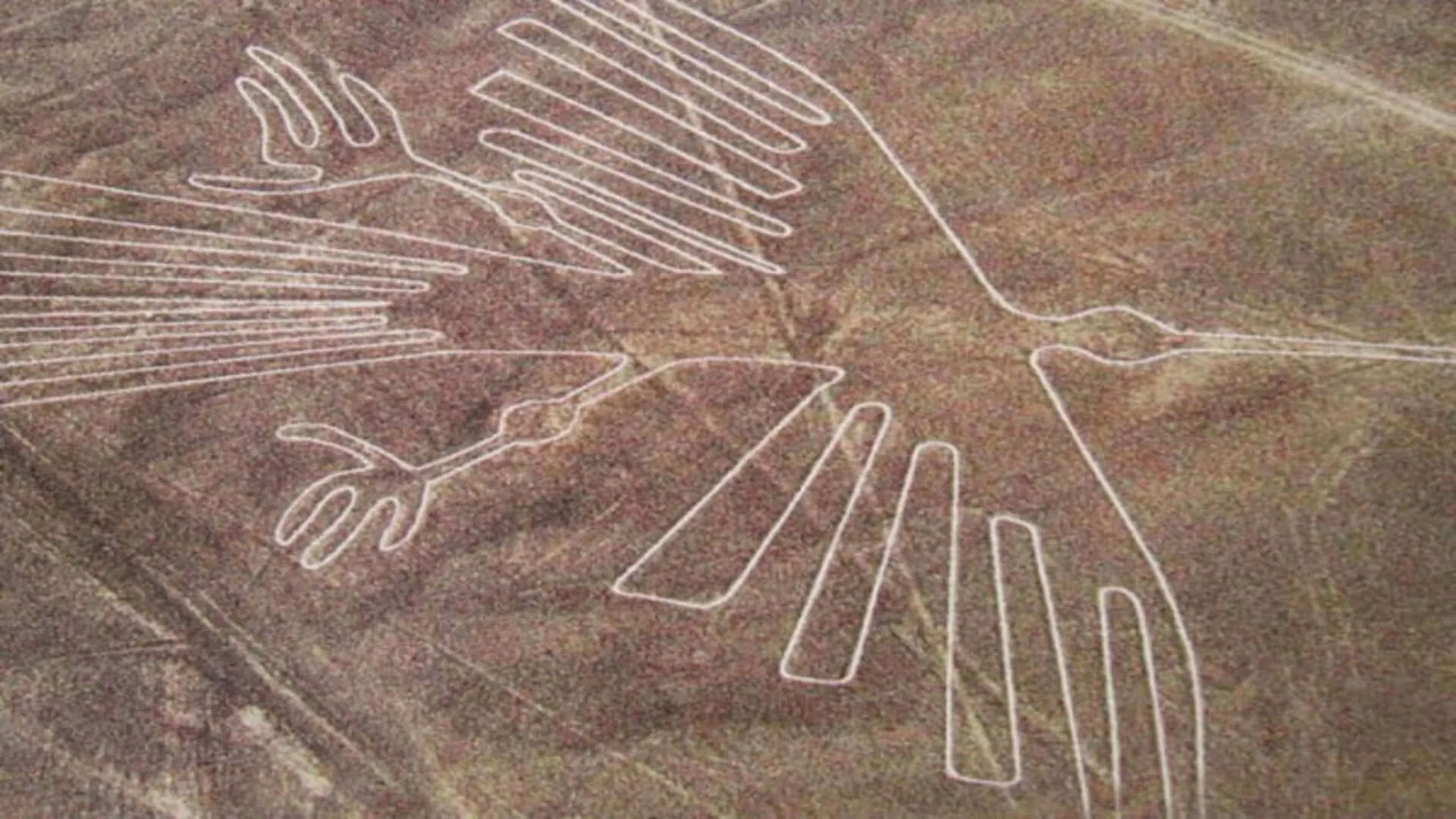
High above the desert plains of southern Peru, where the sun is relentless, and rain is almost unheard of, the land looks empty, at least from the ground. But take to the air, and the Earth suddenly reveals enormous shapes carved into the surface: a monkey with a curling tail, a hummingbird with elegant wings, enormous geometric pathways stretching to the horizon. These are the Nazca Lines, a sprawling collection of geoglyphs created by a civilisation without flight, industry, or satellites. And yet, what they made can only be fully understood from the sky.
For decades, archaeologists, historians, and conspiracy theorists alike have tried to decode them. What message were these giant artworks meant to convey? Who were they for? And how did people living between 500 BCE and 500 CE manage to create such a precise, large-scale masterpiece in the dust of the desert? The Nazca Lines are ancient. They are stunning. And they remain one of the most enduring mysteries in human history.
The First Discoveries
Local people had always known the lines were there. After all, when your village sits on the edge of a desert, you cannot help but notice long, straight trenches running across the landscape. But for centuries, their true scale remained hidden. The first outsiders to record them appeared in the 16th century, Spanish conquistadors noting odd marks on the land in their reports. Still, they assumed the lines were old roadways or irrigation remnants. Their true significance — and grandeur — was invisible without altitude.
Then in the 1920s, aeroplanes began flying commercial routes over Peru. Pilots peering down from the cockpit stared, confused, at shapes stretched across the ground: a giant bird, a perfect whale, a spider etched into the desert floor. News spread quickly. Something remarkable had been lying under the sun for over a thousand years, silently waiting to be seen from above.
Patterns Too Large to Walk
There are hundreds of different forms carved into the Nazca desert, from giant animals to intricate spirals and long straight lines that defy the rugged terrain. Some extend more than a kilometre in length. If you were to walk along one, the shape would make no sense. You could spend hours tracing what looks like nothing more than a dusty path. Only from the sky does the complete design reveal itself. It is like trying to appreciate a mural while standing with your nose pressed against it. You must take several steps back, or in this case, several thousand feet up.
That raises a perplexing question. Why create enormous images meant to be viewed from a perspective no human at the time could access? Unless, of course, the intended viewer was not human.
And that idea is exactly what launched some of the more colourful theories.
A Civilisation Without Rain
To understand the Nazca Lines, you first have to understand the people who made them. The Nazca civilisation thrived in one of the driest places on Earth. Rain rarely falls here. When it does, it often skips entire years. Rivers shrink to thin lifelines. Farming requires innovation and the careful worship of whatever forces might bring water.
The desert surface, baked and rust-coloured, hides a lighter layer of sand beneath. The Nazca people learned that by scraping away the top layer, they could create stark white lines that would endure for centuries. No wind or rain to erase them. The ground itself became a canvas.
For the Nazca, survival depended on their relationship with unpredictable natural forces. The sky, the sun, and the mountains that trapped what little moisture existed. These were sacred. And if you look closely, many of the shapes carved into the ground seem focused on the heavens.
The Astronomical Theory
In the 1940s, a German mathematician named Maria Reiche dedicated her life to understanding the lines. She believed they were an enormous astronomical calendar. The giant figures might represent constellations. The long straight lines might align with the rising and setting of the sun or certain stars. Perhaps the people of Nazca were predicting the seasons, mapping the solstices, and signalling to the sky gods who controlled their water supply.
Reiche spent decades in that desert, measuring, calculating, and advocating for the protection of the geoglyphs. Thanks to her work, they became recognised as a heritage site worth preserving. Her theory helped shift the Nazca Lines from a strange curiosity to a scientific wonder.
But while celestial alignments appear in some figures, they do not explain them all.
Ritual Pathways and Sacred Offerings
Another compelling interpretation suggests that the Nazca Lines formed a ceremonial landscape, a place where people walked in rituals honouring gods who lived above the mountains. The geometric pathways, straight and unwavering, may have been routes for sacred processions. Imagine priests carrying offerings through the desert, following a line that eventually leads them to a point where a ritual is performed.
This explanation roots the mystery in the very human desire to communicate with the divine. The figures, animals like the spider, the condor, or the dog, could represent spiritual symbols or totemic protectors. By carving them into the Earth, the Nazca people could be calling upon those powers for fertility, protection, or rain.
But even with that framework, the sheer scale is still astonishing. These were not small tributes. They were messages large enough for the sky itself to read.
The Water Connection
Perhaps the most persuasive modern interpretation centres on water. More specifically, the desperate need for it. Geological studies reveal that many lines point toward underground water sources, aquifers hidden beneath the ground. The animal shapes could represent water deities or guides. The hummingbird, for instance, appears with the return of seasonal rains. The whale connects directly to distant waters far beyond the desert.
If this theory is correct, the Nazca Lines may be a map of hope, a public prayer across the Earth’s surface, asking the unseen water below to rise and nourish life above.
Engineering Genius in the Sand
Every explanation still depends on one extraordinary fact: the Nazca created these shapes with astonishing precision. They did not have drones, helicopters, or hot-air balloons, at least none that archaeology has uncovered. Instead, they used simple tools. Wooden stakes. Ropes. Careful geometry.
Teams would stake out turning points. They could create perfect curves by rotating ropes like giant compasses. By working section by section, they gradually revealed the full figure. It required organisation, patience, and a level of mathematical understanding far beyond what casual assumptions of ancient life suggest.
When modern experimenters try the same techniques, the results prove the Nazca were highly skilled. They may not have flown, but they knew exactly how things would look from above.
The More Unusual Theories
Of course, where mystery thrives, speculation follows. Over the years, some have enthusiastically leapt from plausible hypotheses to script-ready science fiction. Ideas of ancient astronauts, airborne priest-kings, and extraterrestrial landing strips have all been proposed.
The reasoning is simple enough: giant pictures meant for sky-viewing must have been made for visitors from the sky. And while there is no evidence to support that, the thought is undeniably fun. The Nazca Lines, after all, occupy that sweet spot between what we can explain and what just might lie beyond our imagination.
But most archaeologists smile politely at those theories and return to the measurable facts on the ground.
Fragility Beneath the Sun
In a twist of irony, the lines have survived so long because the desert refuses to change. But now, change has arrived. Human activity threatens the artwork in ways nature never did. Tourism leaves footprints where no footprints should be. New roads and commercial interests carve into the desert where the ancient lines still stretch.
Climate change, too, brings unpredictable weather, and rain is the enemy of the Nazca Lines. A single powerful storm could erase parts of a figure that has survived a thousand years of sun.
Preservation has become a race between cultural value and modern intrusion. The mystery of the Nazca is extraordinary, but losing the lines before we fully understand them would be a tragedy.
Final Word
The Nazca Lines remain a monument to human ingenuity, faith, and imagination. They are proof that ancient people looked up at the sky with just as much curiosity as we do today. Whether they were ritual pathways, cosmic calendars, or messages to the water gods, they demonstrate that the Nazca civilisation was deeply invested in the forces that controlled their world.
Standing in the desert beside one of these lines, you might struggle to see anything at all. But from above, the Earth transforms into a gallery of astonishing scale. The Nazca engineered something not for human eyes alone, but for the very heavens they worshipped.
Their mystery endures not because we know nothing about them, but because everything we learn opens another possibility, another layer of meaning. The Nazca Lines remind us that ancient minds were not primitive. They were bold, creative, and remarkably scientific. They dared to carve their beliefs into the planet itself.
And the question that still hovers above the desert like a small aircraft turning slowly in the heat is this: Who did they hope would finally understand their message? The sky, perhaps, is still reading.
The Mystery of the Nazca Lines FAQ
The Nazca Lines are enormous geoglyphs carved into the desert in southern Peru, depicting animals, plants, shapes, and lines, created by the Nazca culture over 1,500 years ago.
The lines were made by removing the top layer of dark pebbles to reveal lighter soil underneath. This technique allowed the designs to stand out across the desert.
The true purpose remains unknown. Theories include religious rituals, astronomical calendars, or water-related ceremonies. Some even suggest alien involvement, though there’s no evidence.
While some designs can be partially seen from nearby hills, the full scope of the Nazca Lines is best appreciated from the air, where their enormous scale becomes clear.