The Green Bicycle Murder
On Saturday, 5 July 1919, Annie Bella Wright, aged 21, set out on her bicycle from Stoughton, Leicestershire, in the sort of summer-evening routine that rarely makes history. Bella worked at a local factory and was known as independent and capable, the kind of young woman who cycled where she needed to go and didn’t think twice about it. That Saturday, she was heading to Gaulby, a village a few miles away, to visit her uncle George Measures at his cottage.
Bella’s trip had a simple logic: country lanes, familiar landmarks, daylight still holding on. The war was over, the country was trying to settle into peacetime again, and a young woman cycling between villages didn’t feel like a headline. If anything about this story sounded unusual later, it was because of what happened next, not because of how it began.
At around 6.45 pm, near the crossroads where Gaulby Lane meets Houghton Lane, Bella encountered a man on a distinctive green bicycle. The meeting, at least on the surface, had the feel of an ordinary roadside interaction: Bella had been struggling with her bike, and she asked whether he had a spanner to help tighten a loosened part. He didn’t, but he stopped anyway and did what he could.
The man was Ronald Light, a former soldier who lived in Leicester. According to his later account, the conversation was brief, friendly, and practical. Bella mentioned she was going to Gaulby, and Light offered to accompany her. She accepted. That decision, mundane in the moment, became one of the most scrutinised choices in the entire case.
As they rode together, they were noticed. It wasn’t just that a man and woman were cycling in the same direction; it was that the man’s bicycle stood out. Green was uncommon enough to stick in memory, and multiple people later recalled seeing Bella with a companion on that unmistakable machine.
They reached George Measures’ cottage in Gaulby. Bella went inside. Light waited outside. If this were any other evening, this is where the story would end, with Bella re-emerging, saying goodbye, and cycling home to Stoughton as the light softened into dusk. But Bella never made it back.
The Shot That Broke the Silence
Bella Wright left her uncle’s cottage in Gaulby sometime after 7.00 pm on 5 July 1919, remounting her bicycle for the short ride back toward Stoughton. The light was beginning to fade, but it was still early evening, the kind of hour when neighbours were awake, and movement on the lanes was unremarkable. She never arrived home.
When Bella failed to return that night, concern was muted rather than immediate. Delays were easy to explain. A puncture, a longer visit than planned, a conversation with someone along the road. It was only the following morning, Sunday 6 July, when her absence became alarming enough to prompt a search.
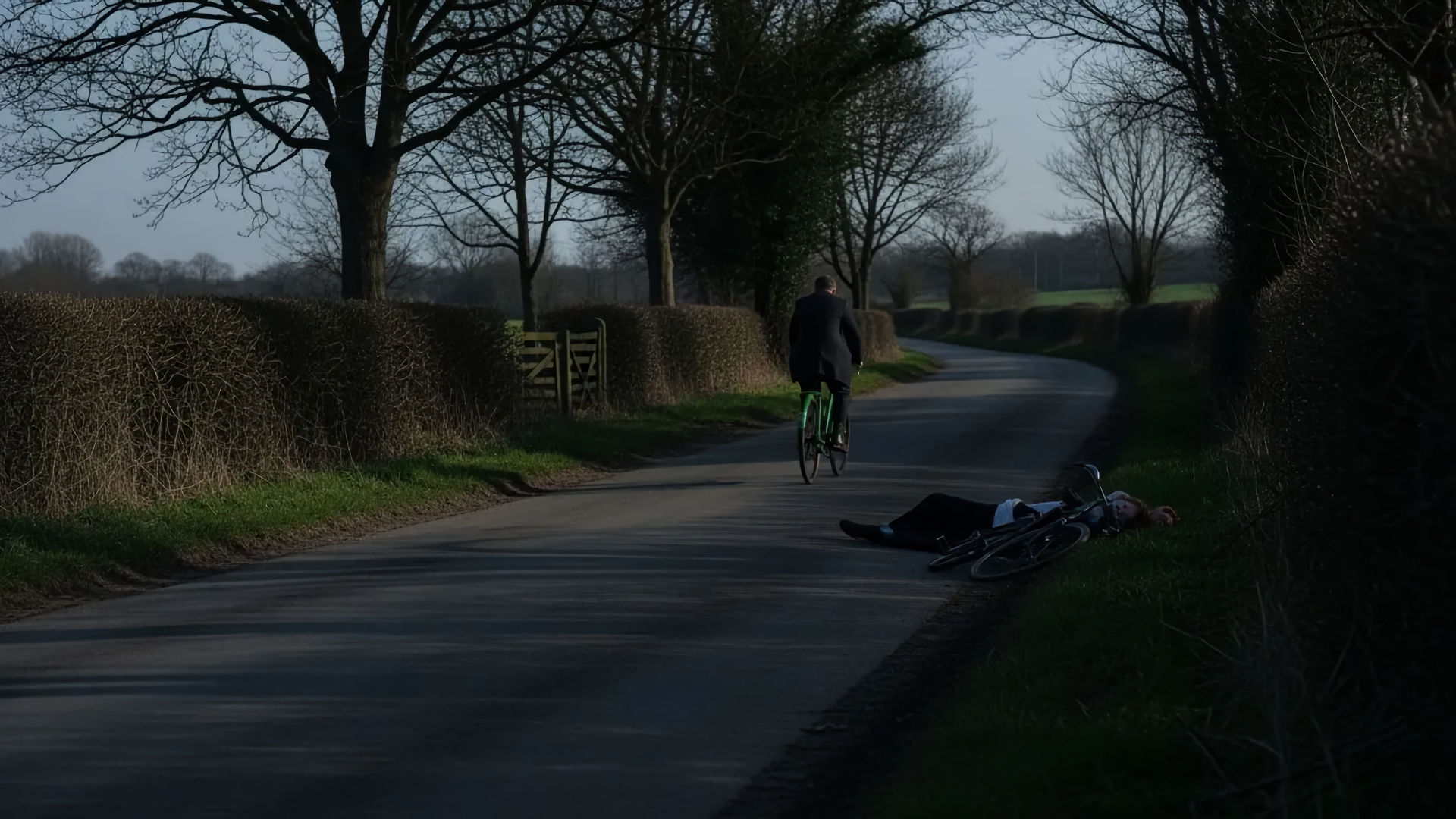
Her body was discovered beside Gaulby Lane, close to where she had last been seen cycling. She was lying near her bicycle, but the scene immediately defied the idea of an accident. Bella had been shot once in the head at close range. A revolver had been used. There was no evidence of a collision, no indication she had fallen and injured herself. This was unmistakably a homicide.
The location unsettled investigators. Gaulby Lane was not a remote wilderness but open countryside used regularly by locals. The shooting had taken place in an area where sound could carry and where interruption was possible. Whoever fired the shot had acted quickly and decisively, either unconcerned about being seen or confident they would not be.
A post-mortem confirmed that Bella had died quickly from the gunshot wound. There were no signs of a prolonged struggle. This pointed away from a chaotic confrontation and toward a brief, controlled encounter. Whether the shooting followed an argument, a rejection, or something premeditated could not be determined from the physical evidence alone.
By the end of that Sunday, the case had already taken a sharp and disturbing shape. A young woman had been shot dead in daylight, on a familiar road, potentially by someone she had willingly ridden with the evening before. Attention now turned to identifying who had last been with her, and whether that person could explain what happened in the final minutes before the shot was fired.
The Green Bicycle and a Narrowing Investigation
With the cause of death established, the investigation moved quickly away from the body and toward the circumstances of Bella Wright’s final journey. What mattered now was not only how she died, but who had been with her, and how far that person could be traced after they parted company. Almost immediately, one detail began to dominate every line of inquiry: the green bicycle.
Multiple witnesses had seen Bella cycling the previous evening in the company of a man riding a bicycle painted a distinctive green. In rural Leicestershire in 1919, that detail was unusually memorable. Most bicycles were dark, practical, and unremarkable. A green frame stood out, and it stayed in people’s minds. These sightings were not vague or retrospective. They placed Bella and her companion together on specific stretches of road, at identifiable times, moving toward Gaulby.
Police were able to identify the cyclist as Ronald Light, a former soldier living in Leicester. Light did not attempt to conceal his involvement. When questioned, he openly admitted meeting Bella Wright, cycling with her to Gaulby, and waiting outside her uncle’s cottage while she went inside. He acknowledged that he then rode part of the return journey with her before they separated.
That admission made Light central to the investigation. He was the last confirmed person to see Bella alive. However, the case did not rest on that fact alone. Witnesses also reported seeing Light later that evening and the following morning with his green bicycle, placing him in the general area after Bella’s death. Crucially, no one reported seeing anyone else with her once she left Gaulby.
What investigators lacked was direct evidence of violence. No one heard a gunshot. No weapon was found. Light’s clothing showed no obvious signs of bloodstains or struggle. The bicycle itself revealed nothing incriminating. Every step forward seemed to raise another unanswered question.
Light’s explanation was consistent. He stated that he parted from Bella without incident and rode home. He denied possessing a firearm and denied any argument or confrontation. Police were left in an uncomfortable position. The circumstantial evidence pointed firmly toward one man, yet nothing conclusively tied him to the act of shooting.
By the end of the initial investigation, the case had narrowed to a single suspect, not because the evidence was overwhelming, but because no alternative narrative fit the known facts. The green bicycle had done its work, pulling the inquiry inward, until everything rested on whether proximity, opportunity, and probability were enough to justify what would come next.
Ronald Light Under Scrutiny
As the investigation progressed, Ronald Light moved from being a person of interest to the central figure in the case. Light was 23 years old, a former army officer who had served during the First World War and was now working in Leicester. He was educated, well spoken, and outwardly respectable, attributes that both reassured and unsettled those examining his role in Bella Wright’s final hours.
Light did not deny his involvement in the evening’s events. From the outset, he admitted that he had met Bella Wright on Gaulby Lane when she stopped to ask if he had a spanner to fix a loose part on her bicycle. He confirmed that they cycled together to her uncle’s cottage in Gaulby and that he waited outside while she went in. He also stated that he rode part of the return journey with her before turning off toward Leicester.
This openness worked in two ways. On one hand, it lent his account an air of credibility. On the other hand, it placed him closer to the crime than anyone else. Bella was shot only a short distance from where Light said they had parted. With no evidence of another companion, the timeline inevitably closed around him.
Police searched Light’s lodgings and questioned him repeatedly. They found no firearm, no ammunition, and no physical evidence directly linking him to the shooting. He denied owning a revolver and maintained that he had never carried a gun since leaving the army. His clothing showed no signs of blood or damage, and his bicycle revealed nothing of evidential value.
What troubled investigators most was not a specific inconsistency, but the absence of a convincing alternative explanation. Light’s account required the presence of an unknown killer who encountered Bella within minutes of their separation, shot her at close range, and disappeared without being seen or heard. While possible, it strained belief given the quietness of the area and the lack of witnesses.
Light’s demeanour also became a point of quiet contention. He remained calm throughout questioning, neither evasive nor emotional. To some, this suggested composure and innocence. To others, it felt detached, even cold. In a case already short on certainty, interpretation of character began to fill the gaps left by evidence.
By late summer 1919, the investigation had effectively stalled. No new suspects emerged, no weapon was recovered, and no fresh leads appeared. With pressure mounting to resolve the killing of a young woman in daylight, authorities faced a difficult decision. They could accept that the case might remain unsolved, or they could test their circumstantial case against Ronald Light before a jury. They chose the latter, setting the stage for a trial that would hinge not on proof, but on persuasion.
A Trial That Stopped Short of Certainty
The trial of Ronald Light opened at Leicester Assizes in October 1919, less than four months after the death of Bella Wright. Public interest was intense. A young woman had been shot dead on a country road in daylight, and the man accused was educated, articulate, and openly admitted to being with her shortly before her death. The court was tasked with deciding whether suspicion could be transformed into proof.
The prosecution’s case was entirely circumstantial. They established that Light had encountered Bella on Gaulby Lane, cycled with her to her uncle’s cottage, and accompanied her for part of the return journey. Witnesses confirmed seeing the pair together and identified Light’s distinctive green bicycle. The prosecution argued that Light had been alone with Bella at the critical time and that no credible evidence placed anyone else with her after they parted company.
Attention focused on opportunity rather than motive. The prosecution could not point to an argument, a threat, or any known grievance. Instead, they suggested that the shooting occurred during a private encounter on the road and that Light, having fired the shot, left the scene quickly, disposing of the weapon before returning home. The absence of the revolver was framed not as weakness, but as evidence of successful concealment.
The defence dismantled this narrative piece by piece. They emphasised that no gun was ever found, that Light had no known access to a firearm, and that no witness heard a gunshot despite the open nature of the countryside. They stressed that Light’s admission of meeting Bella showed cooperation, not guilt, and that possession of a green bicycle proved nothing beyond coincidence. Crucially, they argued that the prosecution had failed to prove that Light was present at the moment the shot was fired.
Light took the stand in his own defence. He denied killing Bella Wright and repeated his account without contradiction. His manner was calm and controlled, a trait that prosecutors hinted at as suspicious but which the defence framed as the natural composure of an innocent man under strain.
After deliberation, the jury returned a verdict of not guilty. The decision reflected the limits of the case rather than confidence in an alternative explanation. The evidence raised suspicion, but it did not eliminate reasonable doubt.
Ronald Light walked free. Bella Wright’s killer remained unidentified. The trial ended not with resolution, but with an absence, a legal acknowledgement that certainty had not been achieved, and that in the face of doubt, the law could not convict.
An Unsolved Killing and the Questions That Remain
Ronald Light’s acquittal brought the trial to an end, but it did not bring resolution to the murder of Bella Wright. No new suspects were identified in the aftermath of the verdict, and no further evidence emerged that could explain who shot her on Gaulby Lane on the evening of 5 July 1919. The revolver used in the killing was never recovered, and the case quietly slipped into the category of unsolved crimes.
For Bella’s family, the acquittal offered neither justice nor certainty. The man who had last been seen with her had been tried and cleared, yet no alternative account of her final moments replaced the one that had failed in court. The absence of answers left a lasting void, one made more painful by the ordinary nature of her journey and the public setting in which it ended.
Ronald Light’s life also bore the weight of the case. Though legally cleared, he remained indelibly associated with the murder. Public suspicion did not disappear with the verdict, and for many, the acquittal felt like an unsatisfying technicality rather than a conclusion. Light rarely spoke publicly about the case in later years, and the shadow of Gaulby Lane followed him long after the courtroom doors closed.
Over time, the Green Bicycle Murder became a reference point in discussions about circumstantial evidence and reasonable doubt. It illustrated how proximity and opportunity, while compelling, are not substitutes for proof. The case is often cited as an example of the legal system functioning as intended, resisting the pressure to convict in the absence of definitive evidence, even when suspicion is strong.
Yet the unanswered questions remain. Who encountered Bella Wright in the final moments after she left her uncle’s cottage? Why was a firearm used in such an exposed location, and how did the killer escape without being seen or heard? And how did a routine evening ride end in a deliberate act of violence that left no trail behind? More than a century later, the Green Bicycle Murder endures not because of what was proven, but because of what never was. It shows that some crimes resist closure, and that history must sometimes settle for uncertainty, even when the cost is a life lost and questions that will never fully fade.
The Green Bicycle Murder FAQ
Bella Wright was a 21-year-old factory worker from Little Stretton, Leicestershire. She was shot dead on 5 July 1919 while cycling home from her uncle’s house.
Bella Wright was killed by a single gunshot wound. Evidence showed she had been shot at close range while on or beside her bicycle on a rural lane near Little Stretton.
Ronald Light, a local man and former acquaintance of Bella Wright, was arrested and charged with her murder. He admitted being with her but denied killing her.
No. Ronald Light was tried at Leicester Castle in 1920 and was acquitted by the jury. The verdict failed to satisfy public opinion and the case has remained controversial ever since.
The case remains disputed due to conflicting witness testimony, limited forensic evidence, and unanswered questions about sightings near the scene. With no alternative suspect ever conclusively identified, doubts about what truly happened persist more than a century later.