The Mystery of the Lost Civilisation of the Indus Valley
More than four thousand years ago, long before the Roman Empire rose and about the same time as the pyramids of Giza were weathering their first sandstorm, a vast civilisation flourished along the fertile plains of what is now Pakistan and northwest India. Its cities were sophisticated, its people skilled engineers and traders, its culture advanced in ways the ancient world should not yet have known. And then, almost as suddenly as it arrived, this civilisation faded into silence.
We call them the people of the Indus Valley, or the Harappans, named after the first of their cities discovered in modern times. They left behind sprawling ruins, intricate artwork, remarkably standardised architecture, and a writing system we still cannot decipher. They built the earliest known grid-plan cities in the world, with advanced drainage and sanitation that would not be matched again for thousands of years. Yet we do not know who ruled them, what they believed, or even why they vanished.
The Indus Valley civilisation is one of history’s greatest puzzles, a powerful society hiding its story behind walls of time and undeciphered symbols. To investigate their mystery, we must sift through the relics they left behind and listen to the silence that swallowed them.
A Lost World Unearthed
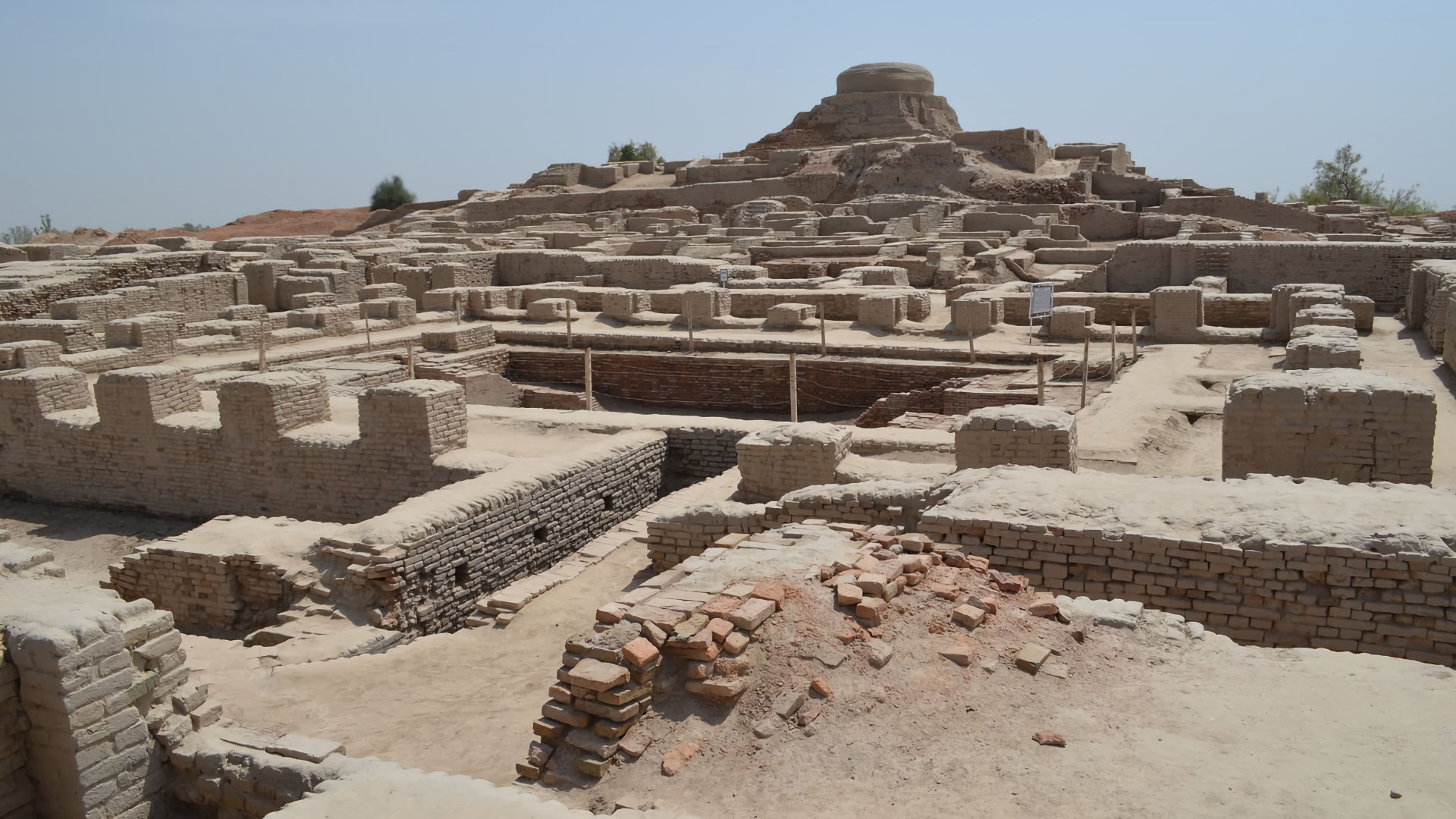
The rediscovery began by accident. In the 1920s, British and Indian archaeologists surveying for railway construction stumbled upon ancient bricks and buried structures in the Punjab region. What they found did not belong to any known empire. It was older and, in some respects, more organised than the ruins of Egypt and Mesopotamia. Soon, another site emerged further south at Mohenjo-Daro, and suddenly history had to make room for a civilisation lost to memory.
But this was not just a couple of cities. Excavations eventually revealed more than a thousand settlements across a region larger than ancient Egypt and Mesopotamia combined. At its height, the Indus civilisation may have supported over five million people, one of the world’s earliest urban societies.
Yet the discovery raised more questions than answers. How did a civilisation this impressive go unnoticed by written history? And why did it collapse?
Cities Beyond Their Time
If you could walk through the streets of Harappa or Mohenjo-Daro at their peak, you would see a city layout astonishingly familiar, straight roads crossing at right angles, neatly divided neighbourhoods, multi-storey homes built of standardised bricks. There were public baths, granaries, markets, and workshops to support thriving industries.
What truly sets the Indus cities apart is their drainage system. While much of the ancient world simply tossed waste onto the streets, the Harappans engineered covered sewage channels beneath their roads and private bathrooms inside homes. Their urban planning suggests a deep respect for cleanliness, order, and community welfare.
But what you would not see is equally striking. No palaces. No grand tombs. No colossal statues of kings or gods. No evidence of armies. Power, it seems, was not displayed through monuments or violence. It was something quieter, maybe communal, maybe administrative, maybe spiritual in a way we no longer recognise.
A civilisation that organised so much left remarkably little evidence of hierarchy.
The Script That Defies Us
On seals, pottery, and tools, the Harappans left behind tiny inscriptions of a script no one can read. It appears in short bursts, a few characters at a time, like names or labels. The symbols show people, plants, and abstract marks that might represent sounds or entire words. But without a bilingual key like the Rosetta Stone, its meaning remains locked away.
This indecipherable writing separates the Indus civilisation from almost every other major ancient culture. We can read the Egyptians. We can read the Sumerians. We cannot yet read the Harappans.
What stories are trapped in those symbols? Laws? Trade records? Poetry? Religious hymns? Their own explanation of who they were?
Until the code is cracked, their voice remains muted.
A Network That Reached Far Beyond Their Borders
The Indus Valley people were not isolated. Archaeologists have found their distinctive square seals as far away as Mesopotamia. Their goods, beads of carnelian, expertly crafted pottery, cotton textiles, moved along early trade routes that stitched together different cultures. In return, they imported metals, luxury items, and ideas from afar.
Their economy appears to have been both centralised and efficient. Standardised weights ensured fair trade. Workshops produced goods in bulk. Ports along the Arabian Sea connected the inland cities to the world.
This was not a forgotten corner of antiquity. It was a powerhouse of early globalisation.
Faith Without Monuments
Religion in the Indus Valley is a tantalising mystery. Small statues suggest worship of goddesses associated with fertility and nature. Some seals depict a figure seated cross-legged with horns, possibly a proto-Shiva, a hint that their beliefs may have influenced later Hindu traditions.
But there are no temples towering over the city, no vast complexes dedicated to deities. If organised religion existed, it was woven into everyday life rather than elevated above it.
Their spirituality, like much of their culture, feels practical and quietly profound.
A Civilisation Built on Balance
The Harappans enjoyed centuries of stability. Their cities show little sign of warfare, no battle scars or weapons caches. Instead, they mastered agriculture by harnessing the seasonal floods of the Indus River, turning dry plains into fertile farmland.
Their prosperity was rooted in cooperation with the land. Until that balance shifted.
A Vanishing Act Without a Scream
Around 1900 BCE, the cities began to decline. Trade networks collapsed. Urban centres were abandoned. Populations moved eastward. And then, silence. By 1300 BCE, the great cities were gone.
What happened?
Many theories exist, none conclusive:
Climate change is likely to have played a significant role. Geological studies show that the rivers feeding the civilisation changed course or dried up, turning farmland into dustbowls. Without water, cities lose their lifeblood.
Flooding may have repeatedly overwhelmed settlements, forcing migrations.
Disease could have followed stagnating water systems.
Economic collapse may have toppled their finely tuned structure.
Some once blamed invading Aryan tribes, but evidence for large-scale violent takeover is scarce. The decline seems less like conquest and more like exhaustion.
The Harappans simply… dispersed. And without great monuments to preserve their story or readable texts to explain their fate, they faded into history’s blind spot.
Echoes in Modern India and Pakistan
Though the cities crumbled, threads of their culture might still run through daily life in the region today. Some Indus Valley deities resemble early Hindu gods. Certain symbols survive in folk traditions. Ancient bead-making techniques remain in use. Town planning principles echo in later civilisations.
It is entirely possible that the descendants of these people continued to live in South Asia, but their identity changed over time, and their achievements were forgotten.
Their story might not be lost, only obscured beneath new chapters.
Science Redraws an Ancient Map
Modern technology has begun to revive the Harappan world. Satellite imaging reveals buried riverbeds and lost settlements. DNA analysis is unlocking clues about migration and ancestry. Chemical studies of artefacts trace trade paths across oceans and deserts.
Bit by bit, the Indus civilisation is emerging from the dust, not as a minor culture overshadowed by its contemporaries, but as a global equal that pushed the boundaries of what humans could build so early in history.
They engineered cities with mathematical precision. They created art with delicate beauty. They lived in relative peace for centuries.
And they left us staring at ruins, wondering how a society so advanced could slip away almost without a trace.
Final Word
The Mystery of the Lost Civilisation of the Indus Valley lingers because it reveals the fragility of greatness. A society that mastered sanitation, architecture, and long-distance trade, achievements humanity took thousands of years to replicate, vanished not due to conquest or collapse of morals, but perhaps because nature shifted ever so slightly out of balance.
Their writing awaits a translator. Their rulers remain unidentified. Their beliefs whisper through artefacts but refuse to be fully interpreted.
The Harappans remind us that history is not a straight line of progress, but a series of peaks and forgotten victories. Civilisations rise. Civilisations fall. And sometimes, their most valuable lessons are buried in the silence they leave behind.
In the hum of ancient drainage systems and the layout of their perfect streets, we hear hints of a people who chose order over chaos, cleanliness over squalor, cooperation over conquest. They were, in many ways, ahead of us.
Yet time swept them aside. Their cities stand as reminders that even the most advanced societies are vulnerable to forces beyond their control, climate, environment, and the unpredictable turn of the earth itself.
The puzzle of the Indus Valley is still being assembled. With every discovery, a piece clicks into place. But the whole picture, who they were in their hearts, why they built the way they did, how they viewed the world, remains just beyond our reach.
And perhaps that is why we find them so captivating. They built a civilisation designed to last, and in ruins and riddles, it has.
The Mystery of the Lost Civilisation of the Indus Valley FAQ
It was an advanced Bronze Age civilisation that flourished between roughly 2600 and 1900 BCE across parts of modern-day Pakistan and India.
Its writing system remains undeciphered, and there is no definitive explanation for why its major cities were abandoned.
Leading theories include climate change, shifting river systems, economic disruption, and gradual societal transformation rather than sudden collapse.
There is little evidence of widespread warfare or invasion, suggesting a slow decline rather than a catastrophic end.
Understanding how complex societies respond to environmental and economic stress has clear relevance to the modern world.