The Mystery of the Anasazi Civilisation
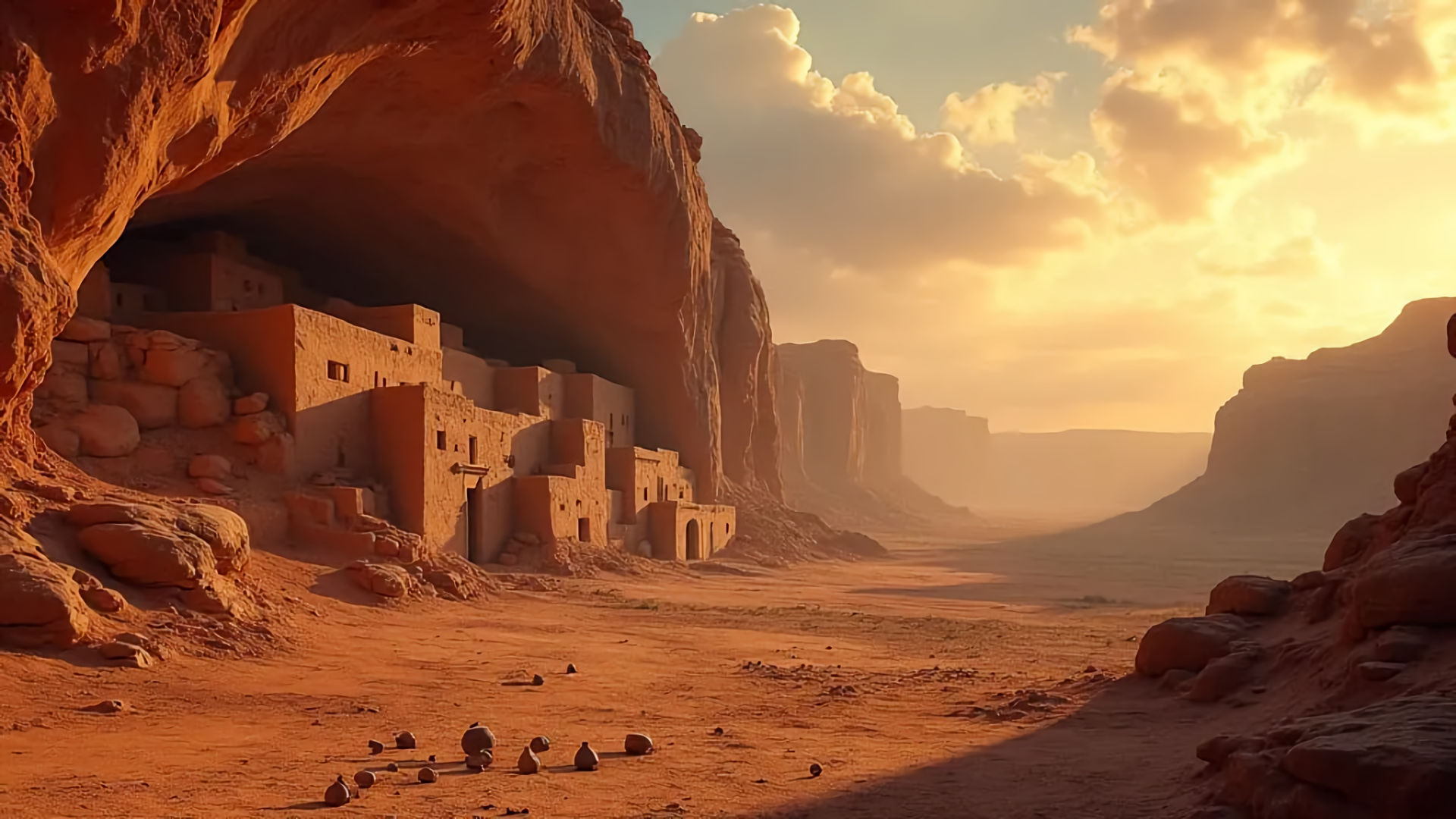
High in the cliffs of the American Southwest, carved into red rock and perched beneath natural stone overhangs, the remnants of a once-thriving culture remain. These are the cliff dwellings of the Ancestral Puebloans, also known as the Anasazi. This civilisation flourished for centuries before mysteriously abandoning its great stone cities around the year 1300.
Who were these people? Why did they build such complex communities in seemingly inhospitable terrain? And what led them to vanish so suddenly?
The story of the Anasazi is one of ingenuity, adaptation, and lingering mystery.
Who Were the Anasazi?
The term “Anasazi” comes from a Navajo word often translated as “ancient enemies” or “ancient ones.” Today, many prefer the name Ancestral Puebloans, out of respect for their descendants, who include the modern Hopi, Zuni, and other Pueblo tribes of the American Southwest.
These people lived across the Four Corners region, where the present-day states of Utah, Colorado, Arizona, and New Mexico meet. From approximately 100 AD to 1300 AD, they constructed intricate stone dwellings, established extensive trade networks, and developed a sophisticated society deeply rooted in the land.
Their architecture ranged from simple pit houses to vast multi-storey stone complexes containing hundreds of rooms. Some of their most impressive structures, such as those at Chaco Canyon and Mesa Verde, were built directly into the cliffs, providing shelter and defence while showcasing remarkable engineering skills.
Life in the High Desert
The Ancestral Puebloans were farmers who cultivated maise, beans, and squash in a landscape characterised by arid deserts and unpredictable rainfall. They used dry farming techniques and built systems of canals and dams to collect and store precious water.
They also hunted game and gathered wild plants. However, survival in such a harsh environment required more than just practical knowledge; it necessitated a profound spiritual connection. The Ancestral Puebloan culture was deeply religious, with ceremonies tied to celestial events and agricultural cycles. Kivas, circular underground chambers found in many of their settlements, served as spiritual and community centres, and were often aligned with astronomical points.
Their artwork, including petroglyphs carved into stone and pottery painted with intricate patterns, reveals a culture rich in symbolism and storytelling.
Chaco Canyon: A Centre of Power
Between the 9th and 12th centuries, Chaco Canyon in northwestern New Mexico became a central hub of Ancestral Puebloan civilisation. Great houses like Pueblo Bonito were constructed using tens of thousands of sandstone blocks, hauled and shaped without the use of metal tools or pack animals.
The scale of these buildings is staggering. Some rose four or five storeys high and contained hundreds of rooms. Roads, some incredibly straight and stretching for miles, connected Chaco to distant settlements, suggesting a vast and organised regional system.
Chaco Canyon is also notable for its astronomical alignments. Many buildings were positioned to mark the solstices and equinoxes, indicating that Ancestral Puebloans carefully observed the skies and tied their lives to the movement of the sun and stars.
The Mysterious Disappearance
Despite their achievements, the Ancestral Puebloans began to abandon their cliff dwellings and large settlements around 1300 AD. By the time Spanish explorers arrived in the 1500s, the great stone cities were silent.
So what happened?
This question has long puzzled archaeologists and historians. There is no single answer, but several likely factors combined to cause the widespread migration and cultural shift.
One primary reason is climate. Tree ring data and other environmental evidence point to a prolonged period of drought that began in the late 1200s. This would have devastated crops, strained resources, and made survival increasingly difficult in already challenging conditions.
Conflict may have also played a role. Evidence of fortifications, weapons, and even burned dwellings suggests periods of violence and unrest, possibly as groups competed for limited food and water. There are also signs that some communities turned inward, with social and political fragmentation weakening the broader system.
Still, it’s essential to note that the Ancestral Puebloans did not completely vanish. Their descendants moved to other areas of the Southwest, including the Rio Grande Valley, where they continued to farm, build, and maintain many cultural traditions that persist to this day.
Cultural Legacy
The mystery of the Ancestral Puebloan civilisation is not just about disappearance. It’s also about resilience and continuity. Modern Pueblo peoples, including the Hopi, Zuni, and others, maintain oral histories that connect them to the cliff dwellers of the past. Their traditions, ceremonies, and languages are living links to a culture that once thrived among the mesas and canyons.
In recent decades, there has been a growing movement to recognise the Ancestral Puebloans as part of a continuous cultural lineage rather than an extinct people. Archaeologists increasingly work in collaboration with Native communities, who provide valuable insight into ancient sites and artefacts.
Respecting this heritage is essential, especially when visiting places like Mesa Verde or Chaco Canyon. These are not just archaeological wonders; they are sacred spaces with ongoing cultural significance.
Why the Ancestral Puebloans Still Fascinate Us
The ruins of the Ancestral Puebloan cliff dwellings continue to captivate visitors and researchers alike. Their stone cities seem to rise organically from the rock, blending seamlessly into the landscape, evoking a people who achieved great things in the face of adversity.
There is something deeply compelling about a civilisation that flourished in isolation, created monumental architecture, and then quietly faded into the shadows. It challenges our assumptions about progress and permanence.
Why did they leave? Where did they go? How did they live? These questions remain partially unanswered, and that mystery keeps the Ancestral Puebloans alive in our imagination.
Whether viewed as master builders, careful observers of the stars, or simply survivors of a harsh environment, the Ancestral Puebloans have left a legacy that stretches far beyond their time. They offer lessons in sustainability, adaptability, and respect for the land, values that still resonate today.
Why We Want to Believe
The mystery of the Ancestral Puebloans may never be fully solved, and perhaps it doesn’t need to be. Part of their allure lies in what they left behind, not just structures and artefacts, but a sense of wonder and curiosity.
They remind us that civilisations rise and fall, not always with a bang but sometimes with a quiet migration. They demonstrate that even in the most challenging environments, humans have consistently found ways to thrive, build, and connect with something greater than themselves.
Ultimately, the story of the Ancestral Puebloan people is not just about disappearance, but also about survival. Their descendants are still here, their spirit still embedded in the stone, the soil, and the stars above the Southwest.
Ancetral Puebloan Civilisation FAQ
The Anasazi, now more appropriately called the Ancestral Puebloans, were an ancient civilisation in the American Southwest known for their cliff dwellings and advanced cultural practices.
Scholars believe a combination of factors, such as prolonged drought, resource scarcity, and social upheaval, may have led to their migration from sites like Mesa Verde and Chaco Canyon.
Yes, modern Pueblo peoples such as the Hopi, Zuni, and others are considered descendants of the Ancestral Puebloans.
The term “Anasazi” is falling out of use due to its Navajo origin, meaning “enemy ancestors.” “Ancestral Puebloans” is the preferred and respectful term.