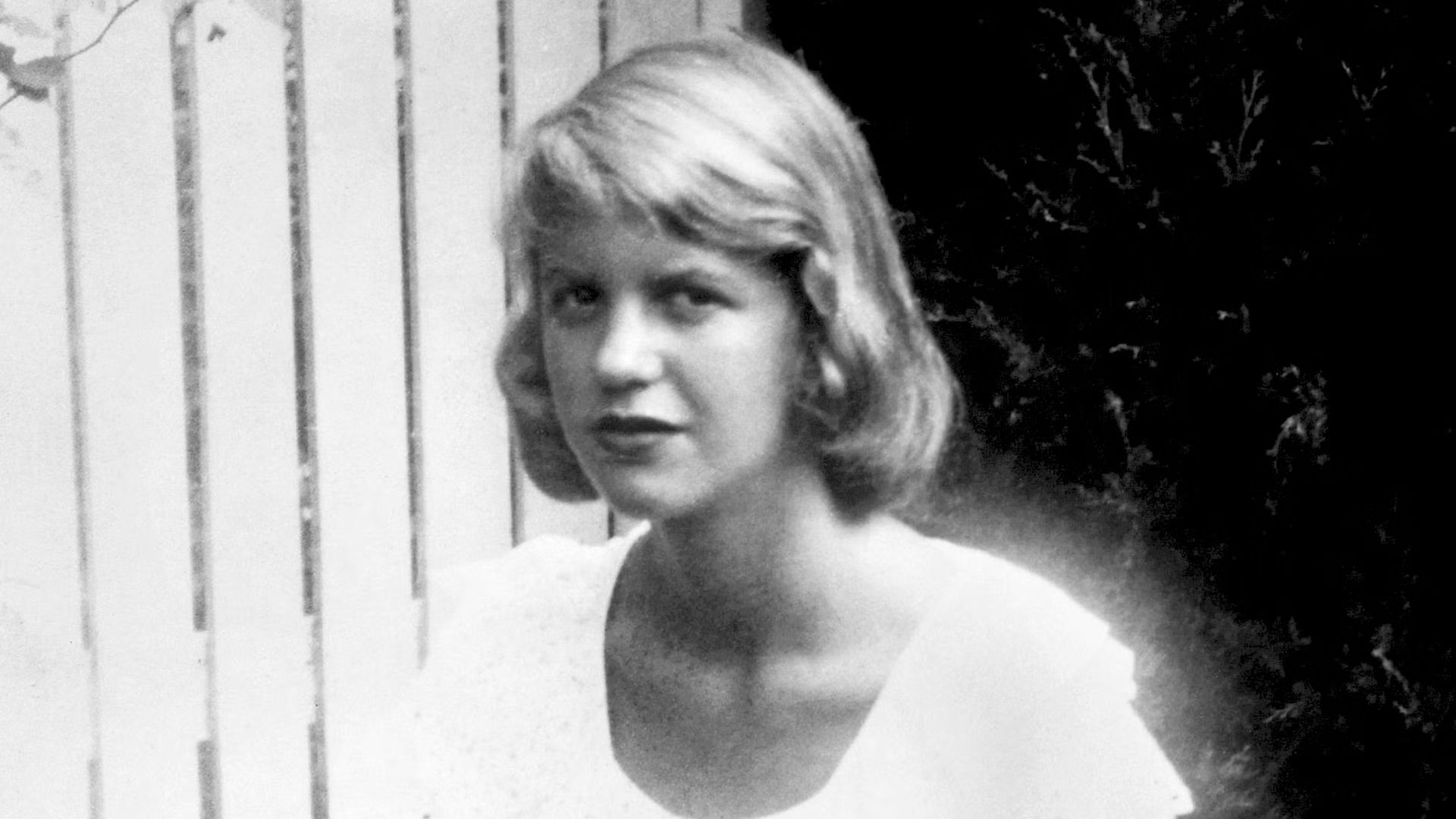
Sylvia Plath
Sylvia Plath remains one of the most haunting and distinctive voices in modern literature. Her poetry and prose gave shape to private anguish and personal triumph, capturing emotions with a clarity that was sometimes uncomfortably sharp. Although her life was tragically brief, her influence has endured for decades. She wrote not simply to express but to survive, transforming her inner storms into art that continues to stir readers across generations.
Childhood in Massachusetts
Sylvia Plath was born on 27 October 1932 in Boston, Massachusetts, to Otto and Aurelia Plath. Her father, a German-born professor of biology, was a stern and commanding presence, dedicated to his academic work on bees. Her mother, born in America to Austrian parents, was passionate about education and encouraged young Sylvia’s developing intellect and imagination.
The family moved to the coastal town of Winthrop when Sylvia was a child. The proximity to the sea left a lasting impression on her future writing. But when she was only eight years old, tragedy arrived. Otto Plath died suddenly following complications from untreated diabetes. His death cast a shadow that lingered throughout Sylvia’s life, surfacing again and again in her poetry’s recurring themes of abandonment, anger, and longing.
Despite the grief that shaped her early years, Plath excelled academically. She was known for her artistic curiosity, her drive, and her determination to meet the highest standards she set for herself.
The Early Writer Emerges
Plath’s talent appeared early and brightly. At eight years old, she published her first poem in a local newspaper. During her teenage years, her stories and poems appeared in national magazines, marking her as a rising literary star. Yet, even as her achievements grew, she experienced a pressure that felt increasingly unbearable.
In 1950, she entered Smith College, one of the most prestigious women’s colleges in the United States. There she thrived outwardly: she earned top marks, edited the college magazine, and won multiple awards for her writing. The life she presented to the world was one of success and ambition fulfilled.
Inside, however, Plath struggled. The pressure to excel, along with a deep sense of perfectionism, fed a growing unease. In 1953, after a summer internship at a prominent New York magazine left her exhausted and disillusioned, she suffered a severe mental health crisis. Plath attempted suicide and was found days later after an extensive search. Her recovery included hospitalisation and electroconvulsive therapy, experiences she would later immortalise in her novel The Bell Jar.
This episode marked both a turning point and a powerful source of creative fuel. It revealed to Plath the depths of her own despair, but it also reaffirmed her drive to write with honesty about the complexities of the human psyche.
Cambridge and Ted Hughes
In 1955, Plath won a Fulbright scholarship to study at the University of Cambridge in England. The move opened a new chapter in her life. She embraced the excitement of living abroad, attending poetry readings, and developing her voice as a writer.
It was in Cambridge that she met the poet Ted Hughes. Their connection was quick, intense, and creative. They married in 1956 and later moved back to the United States, where Plath taught and continued to publish. The pair returned to England in 1959, seeking a life sustained by poetry rather than academic obligations.
In London and later in the Devon countryside, Plath balanced work, writing, and motherhood. The couple had two children, Frieda and Nicholas. Though family life brought her joy, the pressures of domestic responsibilities and professional ambition often weighed heavily on her. At the same time, she faced frustrations in achieving the recognition she desired for her poetry. Plath wanted to be valued not merely as a talented young writer but as a major poet.
The Poetry of Confession
Sylvia Plath’s poetry stands apart for its emotional courage. Her work is intensely personal yet universally resonant, exploring mental illness, identity, motherhood, the female body, and the complex interplay between love and loss.
Plath was part of a movement later described as confessional poetry, a style marked by intimate revelations and a willingness to confront subjects once deemed too raw or private for literature. But Plath’s writing was not simply a diary in verse. She crafted her language with precision. Her metaphors were fierce and unusual. Her voice blended vulnerability with power.
Collections such as The Colossus displayed her mastery of form, while the poems written during the final months of her life revealed a striking evolution. These later works, many of which were included in Ariel, carried a chilling brilliance, marked by sharp imagery and a sense of unstoppable momentum. In these poems, Plath gave voice to anguish with such clarity that the lines still feel alive and electric decades later.
The Bell Jar
In 1963, Plath published The Bell Jar under the pseudonym Victoria Lucas. The novel is a thinly fictionalised account of her time in New York and her subsequent breakdown. It portrays the stifling expectations placed on young women and the terrifying fragility of mental health.
The title refers to a sensation that consumed the protagonist: feeling trapped under a glass dome, suffocated by her own mind. The book received praise for its dark wit and emotional insight, though Plath herself never saw its full acclaim.
Today, The Bell Jar remains a touchstone in discussions about mental health, gender, and society. Many readers recognise their own struggles within its pages, a testament to Plath’s ability to articulate experiences that others find difficult to name.
Crisis and Creativity
The final months of Plath’s life were marked by upheaval. Her marriage to Hughes collapsed after his infidelity, leaving her to care for her children alone. She moved into a small flat in London during one of the coldest winters on record.
Yet in this bleak setting, her creativity surged. She wrote some of her most astonishing poems during this time. The tension between her artistic brilliance and emotional turmoil was painfully evident. Friends described her as living at a heightened level of intensity, as though she were writing against time.
On 11 February 1963, Sylvia Plath died by suicide at the age of 30. Her death left a gaping absence in the literary world. Those close to her grieved the loss not only of a friend and mother but also of the promise of what her still-unfolding talent might have achieved.
A Complicated Legacy
After her death, Ted Hughes took responsibility for editing and publishing Plath’s remaining poems, including the posthumous collections Ariel and Crossing the Water. The decisions he made about the ordering and inclusion of poems later sparked significant debate among scholars and readers. Some felt that Hughes’s edits softened elements of Plath’s original vision, while others argued that without his intervention, the work might never have reached the world at all.
The public’s fascination with Plath’s life sometimes overshadows the artistry of her writing. She has been cast variously as a tragedy, a feminist icon, a martyr of creativity, and a symbol of mental illness. Each interpretation holds partial truth but risks simplifying a person who contained contradictions and complexities.
Plath’s life encourages empathy, not myth-making. She was not only a figure of sorrow but also of wit, ambition, confidence, maternal love, and artistic triumph. Her writing was not an attempt to glamorise suffering but a relentless effort to understand it.
Influence Across Generations
Sylvia Plath’s work continues to reach new audiences. Her poetry appears on school curricula worldwide, and The Bell Jar remains a staple of literary education. Countless writers cite Plath as inspiration, and her voice continues to reverberate in the work of poets who explore identity and emotion with candour.
Her willingness to write about the inner self helped widen the scope of literature itself. She opened the door for future generations to find dignity in vulnerability and strength in expression.
In an era when discussions of mental health remain urgent, Plath’s legacy offers both a caution and a call to compassion. Her story highlights the importance of support, understanding, and humanity when confronting the invisible battles people carry inside themselves.
Final Word
Sylvia Plath lived a life filled with intensity, ambition, love, and heartache. Her writing transformed her experiences into art that remains challenging, unsettling, and profoundly moving. She understood that the human mind can be both brilliant and fragile, and she captured that truth with unmatched clarity.
While her life ended far too soon, her voice did not fade. It continues to echo through libraries, classrooms, and the private spaces where readers seek understanding of themselves. Plath once wrote about the desire to live fully, to embrace joy, pain, and every shade of feeling in between. Through her poetry and prose, she did just that. Her flame burned bright enough to light the world long after she was gone.
Sylvia Plath
Sylvia Plath was an American poet, novelist, and short story writer known for her emotionally powerful writing and her novel The Bell Jar.
She is celebrated for her poetry collections and for pioneering the confessional style, bringing personal struggles and mental health into literary focus.
It offers a vivid portrayal of mental illness and social pressures faced by young women, resonating strongly with readers and students.
Her bold imagery, introspection, and honesty set a new standard for emotional expression in poetry and inspired generations of writers.
Identity, womanhood, perfectionism, love, loss, and the complexities of the human mind feature prominently throughout her writing.